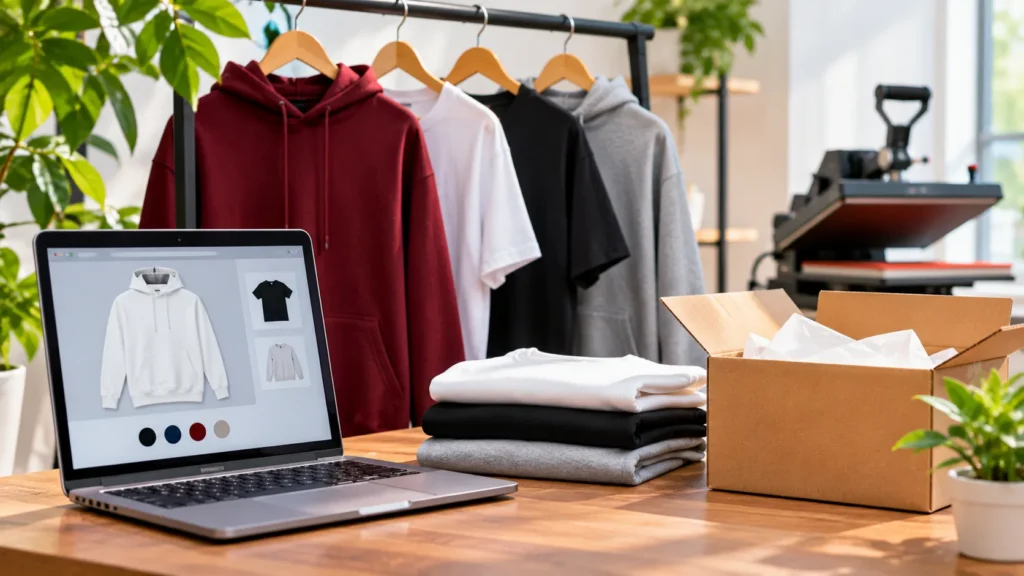
Branded clothing is one of the more approachable side hustles in the UK. You don’t need a warehouse, a fashion degree or a large budget.
What you do need is a clear audience, a decent product and a realistic idea of what each garment costs you to make and sell.
Plenty of people get the first part right and trip over the rest. They fall for a design, order far too many pieces and discover that the margin vanishes once postage, packaging and returns are counted.
This guide looks at the practical decisions that tend to separate a small clothing line that turns a profit from one that turns into a garage full of boxes.
How to Start a Branded Clothing Side Hustle on a Small Budget?
Start With the Product, Not the Logo
Most sellers begin with a blank garment and add their own artwork. Choosing plain hoodies for printing gives you a neutral base and keeps your costs predictable, because you’re paying for the garment, the decoration and nothing else.
Hoodies suit a side hustle well: they sell at a higher price than T-shirts, they get worn for much of the year in the UK, and customers tend to see them as a considered purchase rather than an impulse buy.
The quality of the base garment matters more than most beginners expect.
A customer who buys one thin hoodie that shrinks in the wash won’t buy a second, and they’ll tell people why. Order a sample, wear it, wash it several times and check what happens to the cuffs, seams and print.
Fit and colour deserve the same scrutiny. Neutral shades such as black, navy and grey are safe sellers and suit almost any design, while a brighter colour works well for a limited drop.
A decent size range, with clear measurements on your product page, cuts down on returns, which eat into margin faster than almost anything else.
Work Out Your Numbers Before You Order
Write down every cost per item: the garment, the decoration, packaging, postage, platform or payment fees, and anything you spend on photos or advertising.
Then set a price that leaves a margin you’re genuinely happy with, rather than copying a high street rival.
A small run costs more per piece than a mass-produced one, and customers who care about your brand will usually accept that.
It also helps to decide what a successful first month looks like.
That might be twenty sales, or simply covering the cost of your samples. A small, specific target is far easier to manage than a vague hope of making extra income.
Test With a Short Run
The biggest financial risk in clothing is unsold stock. Rather than ordering a hundred pieces in six colours and eight sizes, start with a short run in one or two colours and the most popular sizes.
Many sellers use pre-orders, which let you gauge demand before you spend anything. If a design sells out, reorder. If it doesn’t, you’ve lost a lot less.
Keep a note of what sells. Sizes, colours and the time of year all tell you something, and that information makes your second order sharper than your first.
Choose the Right Decoration Method
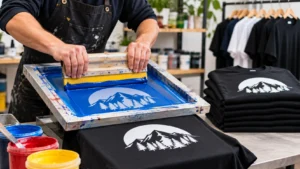
Different techniques suit different jobs. Screen printing is cost-effective for simple, bold designs in larger quantities.
Direct-to-fabric printing copes with detailed artwork and smaller runs. Embroidery looks premium and lasts, which suits a logo or a short phrase.
Speak to your printer before you finalise the artwork, because they’ll know what works on which fabric and can often save you a costly reprint.
Placement affects both looks and cost. A small chest mark is the cheapest to produce and the easiest to wear, while a full back print can justify a higher price if the artwork’s strong.
Test the position on a sample so you know how it sits on a real person.
Think About Tax and Admin Early
Even a small side hustle can create tax obligations. Check HMRC’s current guidance on the trading allowance and whether you need to register for Self Assessment, and keep records of income and expenses from day one.
It’s far easier to track receipts as you go than to rebuild them at the end of the tax year. If you’re unsure, an accountant can clear things up quickly.
Build the Brand Around the Product
A clothing line isn’t just a garment. People buy into a feeling, a community or a joke they’re in on. Keep your branding consistent across your product, packaging and social media, and be open about how your products are made.
Customers respond well to honesty, and trust brings repeat purchases, which are the cheapest sales you’ll ever make.
Marketing and photography benefit from a simple routine. Post regularly, show real people wearing the product, and reply to messages quickly.
Early customers are often friends and followers, so treat them well and ask for honest feedback.
Don’t neglect fulfilment either. Late or damaged parcels do more harm than a mediocre design, so decide early whether you’ll pack orders yourself or hand them to a partner as volumes grow.
Keep costs honest, start small and let real sales guide your next order.

More in By Profession

How to Avoid the Afternoon Energy Slump at Work?
t’s 2:47pm. You’ve got two hours until the end of the working day, a list of tasks that isn’t getting any shorter, and a brain that feels like it’s running on dial-up. You reach for another coffee, stare at the screen, and wonder why the morning version of you seemed so capable. If that sounds […]

Highest Paid Jobs UK: Top 20 Careers by Salary in 2026
The highest paid jobs in the UK are concentrated around senior business leadership, medicine, technology, aviation, finance, transport and specialist management. But there is an important difference between the highest typical salary and the highest salary someone could potentially earn. For the clearest comparison, this guide ranks occupations using median full-time gross annual earnings from […]