
Cashback apps are the most passive form of side income available in the UK. You spend money you would have spent anyway on groceries, insurance, broadband, travel and receive a percentage back. No skills required, no clients, no schedule, no inventory.
The honest caveat: cashback is supplementary income, not a side hustle in the entrepreneurial sense. A realistic, well-optimised cashback stack in 2026 generates £150–£400 per year for a typical household.
For some people in the right circumstances those switching insurance, broadband or utilities regularly, or making occasional large purchases through high-rate retailers that figure can reach £500–£800 annually.
This guide covers the six cashback apps genuinely worth using in the UK in 2026, how to stack them for maximum return, the exact mechanics of each, and the honest answer to whether cashback counts as taxable income.
For a broader view of all UK side hustle options, see our complete guide to UK side hustles.
The Three Types of Cashback
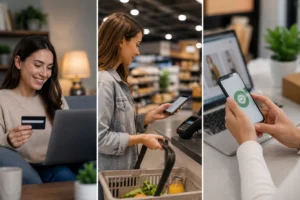
Not all cashback apps work the same way. Understanding the three mechanisms helps you choose the right one for each purchase.
Type 1: Affiliate Cashback (Topcashback, Quidco)
You visit the cashback site or app first, search for the retailer you intend to buy from, click through to the retailer’s website from the cashback site, and make your purchase normally. The cashback site tracks the transaction and receives a referral commission from the retailer. It shares a portion of that commission with you as cashback.
- The advantages: wide retailer coverage (TopCashback lists over 6,000 UK retailers), high rates on large purchases like insurance and broadband, and genuinely significant returns on annual contract renewals.
- The disadvantages: you must remember to click through before every purchase, tracking occasionally fails (requiring you to raise a claim), and cashback can take weeks or months to become payable particularly on insurance and financial products.
Type 2: Card-linked Cashback (Airtime Rewards, Cheddar)
You link your debit or credit card to the app once. Thereafter, whenever you spend at participating retailers using that linked card, cashback is awarded automatically, no clicking through required. Airtime Rewards converts your cashback into phone bill credit; Cheddar pays into a cash balance.
- The advantages: fully passive, no action required per purchase, works in-store and online.
- The disadvantages: the retailer selection is narrower than affiliate sites, rates tend to be lower (typically 1–5%), and Airtime Rewards is phone bill credit rather than cash.
Type 3: Gift Card Cashback (Jamdoughnut, Everup)
You buy a discounted gift card through the app at face value minus a cashback amount, then spend the gift card at the retailer. Cashback is instant — the discount is built into the gift card price. No tracking required.
The advantages: instant cashback, no waiting for confirmation.
The disadvantages: you need to pre-fund a gift card, which ties up money; and not every retailer is available.
The Six Apps Worth Using in 2026

Topcashback — the Anchor App
Best for: online shopping, annual contract renewals, financial product switching.
TopCashback is the UK’s largest cashback site with over 15 million members and around 6,000 listed retailers. It consistently offers the highest rates among affiliate cashback sites for most retailers.
Rates range from 1–3% on standard retail purchases to 1–5% on broadband and utilities, and up to £50–£150 on insurance policy switches and financial product applications.
The free tier works well. A paid “Plus” membership (around £5/year via deducting from your cashback balance) removes the small commission TopCashback takes on the free tier, making your net rate slightly higher.
TopCashback’s browser extension automatically shows available cashback rates when you visit retailers directly — useful for catching cashback on purchases you did not specifically plan through the site.
Realistic annual earnings for an active household: £80–£250.
Quidco — the Rate Comparison Partner
Best for: comparing rates against TopCashback before large purchases.
Quidco operates identically to TopCashback: click through, buy, receive cashback. It covers most of the same retailers but typically at slightly lower rates — though it occasionally beats TopCashback on specific deals.
The practical advice from virtually every cashback community: keep accounts at both, and spend 60 seconds checking both rates before any large purchase.
Quidco Premium (£1/month deducted from cashback) provides marginally higher rates on some retailers. For frequent users of specific retailers where Quidco leads, this can pay for itself; for most people, the free tier is sufficient.
Realistic annual earnings used alongside TopCashback: £30–£100 in rate arbitrage.
Airtime Rewards — the Background Earner
Best for: passive, automatic cashback on everyday spending.
Link your debit or credit card once. Shop as normal. Airtime Rewards tracks spending with participating retailers automatically and credits your account. The cashback is converted to phone bill credit — reducing your monthly mobile bill.
The limitation: cashback only goes to your phone bill, not to cash. If you have a low mobile bill or pay it through a contract that cannot be reduced by Airtime credits, the value is constrained.
Participating retailers include McDonald’s, BP, Greggs, Nando’s, Just Eat, Argos, and others. Rates are typically 1–5%. Annual earnings for a typical household: £20–£80 in phone bill credit.
The real value of Airtime Rewards is that it stacks with affiliate cashback. If you shop online via TopCashback and pay with your Airtime-linked card, you can receive both the TopCashback rate and the Airtime card-linked rate on the same transaction — subject to retailer terms, which vary.
Shopmium — Grocery Cashback
Best for: cashback on branded grocery products at supermarkets.
Shopmium works differently from the other apps here. You browse offers within the app, each tied to a specific branded product (for example, a specific brand of yoghurt, cereal, or cleaning product). You buy the product at a participating supermarket (Tesco, Sainsbury’s, Asda, Morrisons), scan your receipt or loyalty card barcode, and receive cashback — typically ranging from 50p to £3 per product.
Realistic monthly earnings: £5–£20, depending on how many of the available products overlap with your usual shopping. Not transformative, but genuinely passive for products you already buy.
Jamdoughnut — Instant Gift Card Cashback
Best for: purchases where you know in advance what you are buying.
JamDoughnut lets you buy gift cards for UK retailers at a small discount — effectively instant cashback without tracking. Buy a £50 gift card for £47.50 and you have £2.50 cashback immediately, before you have even made your purchase.
Retailers available include Marks & Spencer, Argos, TUI, Currys, and others. Rates are typically 3–8%.
The limitation: you need to pre-fund the gift card, which requires planning. Not practical for spontaneous or emergency purchases.
For planned purchases (a new appliance, a gift, a holiday booking), comparing JamDoughnut’s instant rate with TopCashback’s tracked rate before committing is worth a minute.
Cheddar — Open Banking Cashback
Best for: passive everyday spending cashback paid in actual cash.
Cheddar uses open banking to connect to your bank account, automatically detecting purchases with participating retailers and awarding cashback. Unlike Airtime Rewards, Cheddar pays into a cash balance (withdrawable to your bank) rather than phone bill credit. Participating retailers include Just Eat, Trainline, HelloFresh, and others.
Rates are modest (1–10%) and retailer selection is narrower than the major affiliate sites, but the experience is genuinely passive — no action required per purchase.
The Stacking Strategy

The most effective cashback approach in 2026 uses multiple apps simultaneously, each covering a different part of your spending:
TopCashback or Quidco for planned online purchases where you have time to click through and the rate justifies it. Compare both before large purchases.
Airtime Rewards on your main debit or credit card for in-store and online spending where TopCashback is not practical. This runs in the background.
JamDoughnut for planned larger purchases at specific retailers where an instant rate is available.
Shopmium for grocery items you already buy that have offers.
The triple-stack opportunity: if you shop online via TopCashback or Quidco and pay with a card linked to Airtime, you can earn two separate cashback streams on one transaction — TopCashback for the online referral and Airtime for the card payment.
Some users also earn from their credit card’s reward programme on top, creating three cashback sources on a single purchase. This is not guaranteed and depends on retailer terms, but it works consistently for many participating retailers.
Realistic Earnings Table
| Cashback Type | App | Annual Earnings (Typical Household) | Effort Level |
|---|---|---|---|
| Affiliate — Shopping | TopCashback | £80–£250 | Low (click-through required) |
| Affiliate — Comparison | Quidco | £30–£100 | Low (when beating TopCashback) |
| Card-Linked | Airtime Rewards | £20–£80 (phone credit) | Near-zero |
| Grocery | Shopmium | £60–£240 | Low (receipt scanning) |
| Gift Card | JamDoughnut | £30–£120 (planned purchases) | Low |
| Open Banking | Cheddar | £20–£60 | Near-zero |
Combined stack realistic total: £150–£400/year for a typical household. Households making major annual purchases (car insurance, home insurance, broadband renewals, energy switching) through TopCashback can reach £500–£800+ in years when switching is due.
Where Cashback Earns the Most?
The highest individual cashback returns come not from everyday shopping but from annual purchases and financial products:
- Car and home insurance renewals: £30–£150 cashback per policy via TopCashback or Quidco. The rate on insurance switches is consistently one of the highest categories on both platforms. Never renew auto-renew without checking both cashback sites first.
- Broadband switching: £50–£120 cashback for switching providers via the major sites. Combined with any switching discount from the broadband provider, this can significantly reduce the effective cost of a new contract.
- Energy tariffs: where market conditions allow switching, cashback of £30–£100 is available for moving to certain tariffs via cashback portals.
- Credit cards and bank accounts: some bank account switching offers carry £30–£100 cashback alongside the bank’s own switching bonus.
Is Cashback Taxable Income in the UK?

HMRC’s position on personal cashback is that cashback received from purchases you made for personal use is generally not treated as trading income. It is considered a discount or rebate on spending, not income. For personal cashback use — buying things for yourself — no tax reporting is required regardless of the amount.
The position changes if you are using cashback apps commercially as part of a business — for example, buying business expenses through cashback portals. In that case, business cashback may be treated as trading income, and HMRC requires consistent treatment. Most side hustlers using cashback for personal spending fall clearly outside the taxable category.
For the full picture of what constitutes taxable side hustle income, see our guide on how cashback counts under the UK tax rules.
Frequently Asked Questions
Is cashback legitimate or a scam?
Completely legitimate. Established platforms like TopCashback and Quidco have been operating for 15+ years and paid out billions to UK shoppers. The mechanism is simple: retailers pay affiliate commissions to the cashback site for directing customers, and the site shares a portion with you. The retailer is paying marketing costs they would spend anyway.
Why does cashback sometimes fail to track?
Tracking relies on cookies and referral links. If you use an ad blocker, open an incognito browser window, click another link between the cashback site and the purchase, or if the retailer’s tracking system has a glitch, the cashback may not register.
Always disable ad blockers when clicking through from cashback sites, and raise a missing cashback claim promptly if it does not appear within the expected timeframe.
How long does cashback take to become payable?
It varies enormously by retailer and purchase type. Simple retail purchases may become payable within a few weeks. Insurance cashback typically takes 90+ days the retailer wants to confirm you have not cancelled the policy before paying the commission. Financial products can take six months or more. Patience is required.
Can I combine Airtime Rewards with TopCashback?
Often yes, on the same transaction. TopCashback tracks the online referral; Airtime tracks the card payment. They operate through different mechanisms and do not typically interfere with each other. Check the retailer’s specific terms a small number explicitly prohibit stacking.
What to Read Next?
For a review of another zero-effort earning option that stacks well with cashback, see our guide on a related review of UK paid survey sites.
For the tax rules on whether cashback counts as income, see our guide on how cashback counts under the UK tax rules.
Verified against current UK cashback platform terms and HMRC guidance as of 15 June 2026. Earnings ranges are estimates based on 2026 platform data and household spending research, actual results vary by individual spending patterns and available offers.

More in Platforms & Apps

How to Sell Tickets on Ticketmaster in the UK?
To sell tickets on Ticketmaster, sign in to your Ticketmaster account, open My Tickets, select the relevant booking and choose Sell. Select the tickets you want to list, set an allowed resale price, enter your payout details and confirm the listing. The Sell option is not available for every ticket. Resale must be enabled by […]

AI Side Hustles UK 2026: Real Platforms, Real Earnings
AI training and evaluation is the most genuinely new side hustle category of the past three years. It did not exist in any meaningful scale before 2022, and by 2026 it is one of the most searched UK side hustle categories — partly because the pay rates are genuinely high for specialist contributors, and partly […]