
The 2026 fiscal year brought two government statements side hustlers needed to track: the Autumn Budget 2025 (delivered 26 November 2025) which set the 2026/27 tax parameters, and the Spring Statement 2026 (delivered 3 March 2026) which confirmed the position with no new tax changes.
This article separates what actually changed for side hustlers from what stayed the same — and cuts through the media noise about a “budget crackdown on side hustles” that conflated unrelated policy announcements.
The headline summary: for most UK side hustlers, the core tax rules are unchanged. The personal allowance remains at £12,570, the self-employed NIC rates are the same, the £1,000 trading allowance is unchanged, and the Self Assessment filing process continues as before.
What did change materially is the threshold freeze extension to 2030/31, Making Tax Digital’s arrival for higher earners from April 2026, and the platform reporting regime that was already live from January 2024.
For the full overview of all UK side hustle tax rules, see our complete guide to UK side hustles.
The Two Government Statements

The Autumn Budget 2025 (26 November 2025)
The Autumn Budget was the substantive fiscal event. Chancellor Rachel Reeves set the 2026/27 tax parameters, confirmed the threshold freeze extension, and confirmed the Making Tax Digital timeline. The Budget received Royal Assent as the Finance (No. 2) Act 2026 on 18 March 2026.
The Spring Statement 2026 (3 March 2026)
The Spring Statement was designed to project steadiness rather than to launch new policy initiatives. The Baker McKenzie legal briefing from March 2026 confirmed there were no announcements of new tax rises or headline policy shifts.
For side hustlers, the Spring Statement changed nothing operationally. It provided updated OBR economic forecasts and confirmed previously scheduled measures coming into force on 6 April 2026.
What Did Not Change for Side Hustlers?

The following are unchanged for 2026/27 versus 2025/26, confirmed by HM Treasury and HMRC:
Income tax rates and personal allowance: Personal allowance £12,570. Basic rate 20% up to £50,270. Higher rate 40% up to £125,140. All unchanged.
Self-employment tax rules: The £1,000 trading allowance is unchanged. Class 4 NIC remains at 6% on profits from £12,570 to £50,270, and 2% above. Class 2 NIC remains abolished (since April 2024). Self Assessment deadlines unchanged (register by 5 October, file and pay by 31 January).
VAT threshold: £90,000 registration threshold unchanged since April 2024.
The Threshold Freeze Extended to 2030/31
The most significant change affecting side hustlers’ long-term tax position is the extension of the threshold freeze.
Income tax thresholds have been frozen since 2021. The Finance (No. 2) Act 2026 confirmed the freeze on income tax thresholds continues until 2030/31. The House of Commons Library research briefing from April 2026 confirms that income tax thresholds are frozen until 2031, so any pay rises until then could push workers into higher tax bands.
For side hustlers, the practical impact is this: as salaries rise with inflation and wage growth, more of your salary eats into the basic rate band — leaving less room before your combined income (salary plus side hustle profit) crosses into the 40% higher rate band. The effective tax rate on your side hustle rises even if nominal rates stay the same.
The OBR estimated in the Spring Statement that income tax and NIC receipts are forecast to increase from £480 billion in 2025/26 to £600 billion by 2030/31, driven primarily by frozen thresholds and strong earnings growth — not by rate changes.
Making Tax Digital for Income Tax — Arrived April 2026

Making Tax Digital for Income Tax (MTD ITSA) became mandatory from 6 April 2026 for the first cohort of taxpayers — a change confirmed at the Autumn Budget and long anticipated.
Who is Affected From April 2026?
From April 2026, individuals with qualifying self-employed or property income exceeding £50,000 per year must use MTD-compatible software, keep digital records, and submit quarterly updates to HMRC.
The Richard Riley & Associates 2026 guidance confirms the threshold then falls to £30,000 in April 2027 and £20,000 in April 2028.
The vast majority of side hustlers — those earning less than £50,000 from self-employment — are unaffected in 2026/27 and file annual Self Assessment returns exactly as before.
The Schedule Going Forward
- April 2026: above £50,000 gross (mandatory now)
- April 2027: drops to £30,000
- April 2028: drops to £20,000
Anyone growing their side hustle rapidly should begin preparing for MTD before 2027 if approaching the £30,000 threshold.
The Spring Statement 2026 — What It Added?

For side hustlers, the Spring Statement added nothing operationally. The EQ Chartered Accountants summary of the Spring Statement confirms no change to personal allowances or main tax bands was announced.
The statement confirmed updated OBR forecasts: expected GDP growth for 2026 is 1.1%, down from 1.5% in 2025. Falling inflation and lower interest rates are expected to gradually ease pressure on household budgets — relevant context for the side hustle market, where many earners started supplementing income during the cost-of-living squeeze of 2022-2024.
Coming Changes in 2027 to Plan for Now
While 2026/27 is stable for most side hustlers, several 2027 changes deserve early attention.
New Penalty Regime From April 2027
A new points-based late filing penalty system replaces the current automatic £100 fine from April 2027. Under the new system, each missed deadline earns one penalty point; reaching four points (for annual filers) triggers a £200 penalty.
Points are cleared by filing on time for a sustained period. The intent is lighter penalties for occasional errors, stricter treatment for persistent non-compliance.
The current penalty regime — £100 on day one, £10/day from 3 months, 5% surcharges at 6 and 12 months — applies for 2025/26 and 2026/27 tax year returns. For current penalty details, see our guide on the penalty rules for 2026.
MTD Threshold Drops to £30,000 From April 2027
Side hustlers earning above £30,000 gross from self-employment will need MTD-compatible software and quarterly submissions from their 2027/28 tax year. Now is the time to research suitable software (HMRC maintains a list at gov.uk) and begin practising digital record-keeping.
Savings Income Tax Rates From April 2027
The basic rate of savings income tax will increase by two percentage points to 22%, with the higher rate rising to 42%, from April 2027. Side hustlers with significant savings interest alongside their trading income should factor this into their 2027/28 tax planning.
The “Crackdown” Narrative Clarified

Media coverage in late 2025 and early 2026 repeatedly referenced a “Budget crackdown on side hustles.” This framing conflated three distinct things.
First, platform reporting (DAC7/DPI): mandatory platform data-sharing with HMRC has been live since January 2024 — it predates the Autumn Budget 2025 and was not a Budget announcement.
HMRC now receives annual data from platforms including Etsy, Vinted, eBay, Deliveroo, Uber, and Airbnb.
Second, HMRC’s £40 million enforcement campaign: separately funded compliance activity targeting online sellers with data mismatches. Again, not a Budget measure.
Third, fiscal drag from frozen thresholds: effective tax rates rising without rate changes because thresholds are frozen while wages grow. This was confirmed and extended at the Budget.
None of these constitute new taxes on side hustle income. The coverage was accurate in aggregate (HMRC visibility is increasing and effective rates are rising) but often misleading in suggesting new rules had been introduced when they had not.
Frequently Asked Questions
Did the Budget change the £1,000 trading allowance?
No. The £1,000 trading allowance is unchanged for 2026/27. There was no change to this allowance in either the Autumn Budget 2025 or the Spring Statement 2026.
Do I need to start using MTD software for my side hustle?
Only if your gross self-employment income exceeds £50,000 from 6 April 2026. Below that, your existing Self Assessment process continues unchanged.
Will there be another Budget before the end of 2026?
Possible but not confirmed. The Baker McKenzie Spring Statement briefing noted that the OBR warned the global environment could force further fiscal decisions before year-end. As of the date of this article no further fiscal event has been announced.
What was the employer NIC change and does it affect me?
Employer NIC rose from 13.8% to 15% in April 2025, with the threshold falling from £9,100 to £5,000. This affects sole traders only if they employ others. Pure sole traders with no employees are not affected by employer NIC changes.
What to Read Next?
For how the threshold freeze affects your specific situation, see our guide on how the tax threshold applies in 2026/27.
Verified against HM Treasury, HMRC, and published parliamentary sources as of 23 June 2026.

More in News & Updates
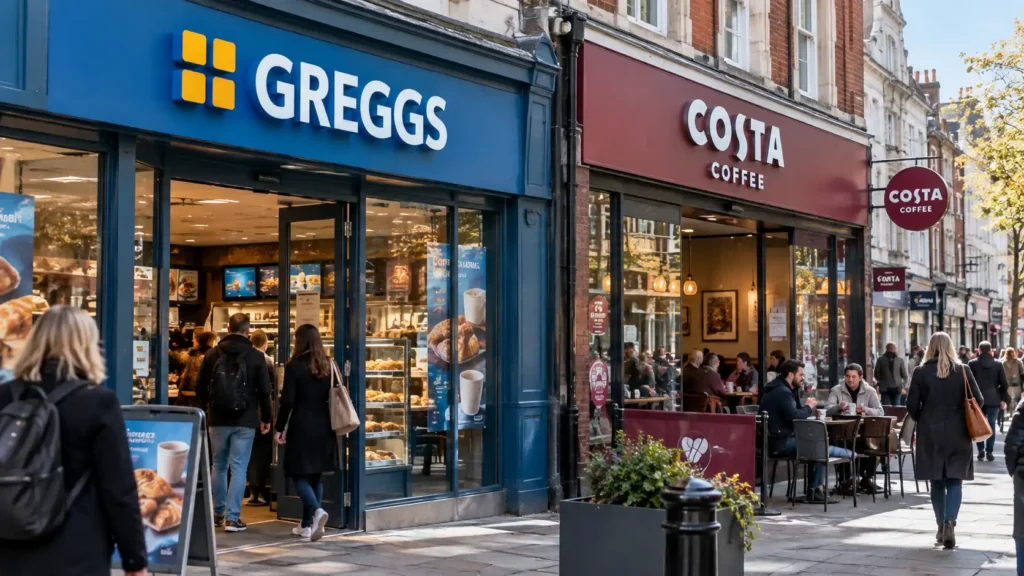
Greggs Overtakes Costa UK: How the Bakery Became Britain’s Biggest Branded Coffee Operator
Greggs has overtaken Costa Coffee to become the largest overall operator in the UK branded coffee shop market by outlet count, according to Allegra World Coffee Portal’s Project Café UK 2026 research. The market study counted 2,737 Greggs outlets versus 2,707 Costa Coffee locations, giving Greggs a narrow lead of 30 sites. Starbucks remained third […]

11 UK Side Hustle Scams to Avoid in 2026 (Real Examples)
Action Fraud received over 42,000 reports of job and investment scams targeting people looking for extra income in 2025, with total reported losses exceeding £190 million. The side hustle economy’s growth has been matched by a parallel growth in scams designed to exploit people who are motivated to earn and less practised at evaluating opportunities […]