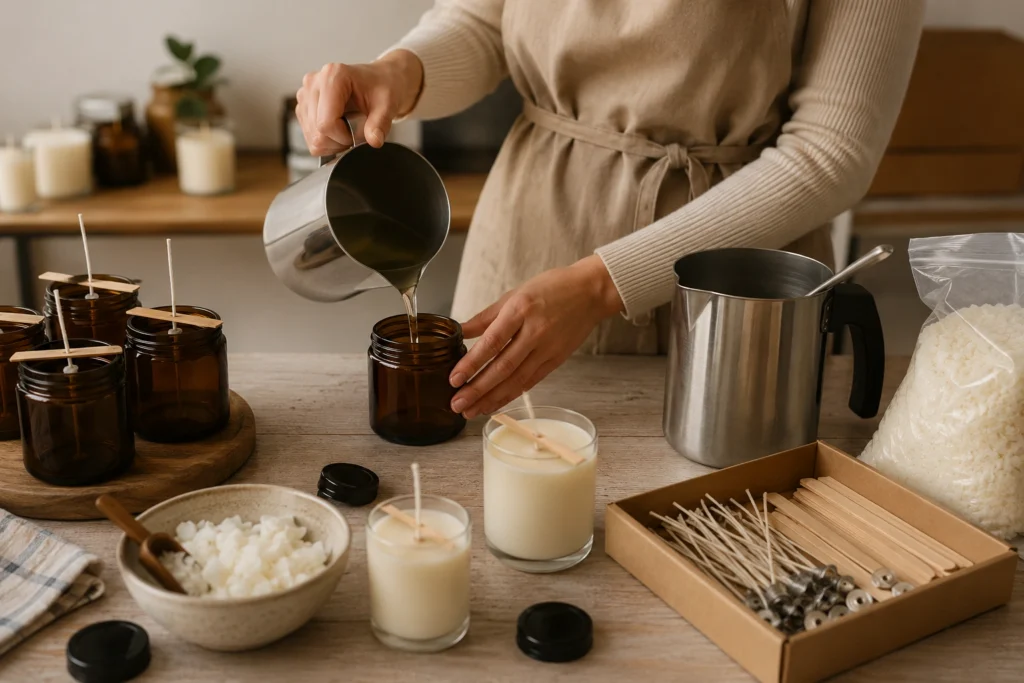
Most candle-making startup cost guides are either vague (“you can start for as little as £50”) or American. This one is specific, UK-sourced, and honest about where the numbers come from.
The short version: a genuine, sellable first batch of 20 candles using quality UK-sourced soy wax and fragrance oils, with proper vessels, wicks, and basic packaging, costs approximately £80–£130 in materials.
The equipment to make them — a basic pouring setup costs £30–£60. Total realistic startup before your first sale: £150–£250. That is the honest figure, not the aspirational minimum.
The income side is real too. At current UK market rates, a quality 20cl soy wax jar candle retails at £10–£18, and production cost per candle at that size is approximately £2.50–£4.50.
The gross margin on materials alone is 60–75%. But gross margin does not account for your time, Etsy fees, packaging, or insurance — all of which are covered in the profit calculation section below.
For the full guide to selling on Etsy once you have a product to sell, see our guide on how to sell your candles on Etsy once made. For a broader view of all UK side hustle options, see our complete guide to UK side hustles.
UK Material Costs in 2026 — the Actual Supplier Prices
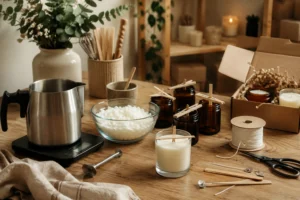
All prices are from current UK suppliers as of June 2026. VAT is included unless stated.
Soy Wax
The most popular wax type for UK cottage candle makers — clean burn, good scent throw, eco-friendly positioning. UK suppliers include Cosy Owl, NI Candle Supplies, Freshskin Beauty, and The Soap Kitchen.
Price per kg, UK suppliers:
- 1kg bag: approximately £5.50–£7.00
- 5kg bag: approximately £3.80–£5.00/kg
- 10kg bag: approximately £3.20–£4.50/kg
- 25kg box: approximately £2.80–£4.00/kg
For a first batch of 20 candles using 200ml vessels (approximately 170g wax each), you need approximately 3.4kg of wax. At 5kg pricing (approximately £4.50/kg): £15.30 for the batch.
Fragrance Oils
The most significant ongoing cost and the biggest variable in candle quality. Premium fragrance oils from UK suppliers (Candle Shack, NI Candle Supplies, The Soap Kitchen) cost approximately £4.50–£7.50 per 100ml.
A typical 8–10% fragrance load for a soy candle uses approximately 16g (roughly 15ml) of fragrance oil per candle. At £6.00 per 100ml: approximately £0.90 per candle. For 20 candles: £18.
Wicks
Pre-waxed cotton wicks on tabs, pre-cut to 15–20cm. UK suppliers charge approximately £0.10–£0.35 per wick depending on pack size. Pack of 100 wicks: approximately £8–£15. Per-candle cost: £0.10–£0.15.
Vessels (Glass Jars)
The choice of vessel significantly affects both cost and positioning.
Entry-level clear glass jar (190ml): approximately £0.60–£1.20 each when bought in packs of 12–24. Mid-range frosted or textured jar: £1.20–£2.50 each. Premium apothecary-style jar with lid: £2.00–£4.00 each.
For a first batch of 20 candles at the mid-range: approximately £1.50/vessel = £30 for the batch.
Labels
Custom labels from UK printers (Sticker Mule, Moo, or Vistaprint) typically cost:
- Sheet labels (DIY print): approximately £8–£15 for 100 labels on a home printer
- Custom-designed and professionally printed: approximately £0.15–£0.40/label in quantities of 100+
Budget £0.25 per candle for labels on a first batch: £5 for 20 candles.
Packaging (Boxes or Tissue + Bags)
Kraft boxes or tissue paper bags from UK packaging suppliers:
- Simple tissue paper and kraft bag: approximately £0.30–£0.60 per candle
- Branded box: approximately £0.80–£2.00 per candle
- Budget £0.50 per candle for basic packaging on a first batch: £10 for 20 candles.
Materials Total for 20 Candles (Mid-range):
- Wax (3.4kg @ £4.50): £15.30
- Fragrance oil (300ml @ £6/100ml): £18.00
- Wicks (20 @ £0.12): £2.40
- Vessels (20 @ £1.50): £30.00
- Labels (20 @ £0.25): £5.00
- Packaging (20 @ £0.50): £10.00
- Total materials: £80.70
Equipment Costs
You do not need specialist candle-making equipment to start. The following is everything required for a home workshop.
- Double boiler or melting pot: A dedicated stainless steel pouring pot (1–4 litre) costs £12–£25 from UK craft suppliers. Alternatively, a Pyrex measuring jug in a pan of water works at zero additional cost.
- Thermometer: Wax must be poured at the right temperature (typically 55–65°C for soy). A basic digital probe thermometer costs £8–£15.
- Wick centring tools: Wooden craft sticks or dedicated wick bars to keep wicks centred during cooling. Cost: £3–£8 for a pack.
- Stirring implements: Dedicated silicone spatulas and a stainless steel pouring jug. Cost: £10–£20.
- Scales: Kitchen scales accurate to 1g. If you do not own these: £15–£25.
- Heat gun (optional but useful): For smoothing tops and fixing sinkholes. Cost: £12–£20.
- Total equipment cost for a first setup: £30–£60 if purchasing from scratch. Most home cooks already own scales and suitable kitchen equipment, reducing this to £15–£30.
The Per-candle Cost Calculation
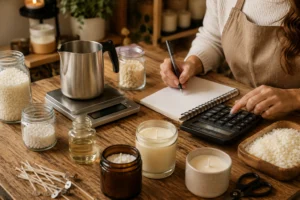
Using the mid-range figures above for a 200ml soy wax candle:
- Wax (170g @ £4.50/kg): £0.77
- Fragrance oil (15ml @ £6/100ml): £0.90
- Wick: £0.12
- Vessel: £1.50
- Label: £0.25
- Packaging: £0.50
- Total materials per candle: £4.04
At scale (buying wax in 10kg quantities, fragrance in 500ml bottles, vessels in 50+):
- Wax (170g @ £3.50/kg): £0.60
- Fragrance oil (15ml @ £5/100ml): £0.75
- Wick: £0.10
- Vessel (@ £1.20): £1.20
- Label: £0.20
- Packaging: £0.40
- Total materials at scale: £3.25
These figures match closely with UK candle supplier NI Candle Supplies own published cost analysis (£2.55–£5.50 per candle for an 8oz candle depending on material quality).
The Profit Margin Reality
A 200ml soy wax candle at mid-range quality and premium positioning retails on Etsy UK at £10–£16. Let us use £12 as a conservative price.
Gross Material Margin
- Revenue per candle: £12.00
- Material cost: £4.04
- Gross margin on materials: £7.96 (66%)
This is the “70% margin” figure cited in most candle business guides. It is the materials margin only — and it looks impressive. The honest picture requires two more deductions.
ETSY FEES (on a £12 candle)
- Listing fee (per 4 months): £0.16
- Transaction fee (6.5% of £12): £0.78
- Payment processing (4% + £0.20): £0.68
- Regulatory fee (0.25%): £0.03
- Subtotal Etsy fees: £1.65
Postage Cost
Royal Mail 2nd Class Small Parcel (under 500g, under 45mm depth): £3.35 minimum for a candle with packaging. If you offer “free postage” by building it into the price, the £12 must cover it. If charged separately (buyer pays), this is not in your deduction — but it reduces competitiveness.
Using click-and-collect or local market sales, postage drops to zero or near-zero.
Realistic Net Per Candle Sold (Etsy, With Postage Paid by Buyer)
- Revenue: £12.00
- Materials: −£4.04
- Etsy fees: −£1.65
- Net before tax and time: £6.31
Your net per candle before tax is approximately £6.31 on a £12 sale. At 20 candles per month, that is £126/month net of materials and fees before any deduction for time or tax.
The Time Reality
Making 20 candles (including melting, pouring, cooling, labelling, and packaging) realistically takes 3–5 hours. At £126 net, the hourly equivalent from making alone is approximately £25–£42. That is a reasonable rate — but it does not account for supplier ordering, listing management, customer communication, and dispatching. Total time per month for a 20-candle operation is closer to 8–12 hours, producing an effective hourly rate of £10–£16 net.
This matches the honest assessment in MoneyPantry’s February 2026 analysis: effective net hourly rate for most home candle sellers is approximately £7–£13, rising with scale, niche positioning, and higher pricing.
Legal Requirements for Selling Candles in the UK

Selling candles in the UK is subject to specific safety and labelling regulations that are distinct from other handmade product categories.
Reach Regulations and IFRA Standards
Fragrance oils used in candles must comply with REACH (Registration, Evaluation, Authorisation and Restriction of Chemicals) regulations. Reputable UK fragrance oil suppliers (Cosy Owl, Candle Shack, NI Candle Supplies) provide IFRA-compliant fragrance oils with REACH documentation. Always buy from suppliers who provide safety data sheets.
The General Product Safety Regulations 1994
All candles sold in the UK must be safe for their intended use. This includes appropriate wick sizing (no excessive soot or flame height), stable containers that do not crack or tip easily, and burn testing to confirm consistent, safe performance.
Mandatory Candle Labels
Every candle sold must carry the following on the label:
- A flame/fire hazard pictogram (the GHS02 flame symbol)
- A warning text appropriate to the hazard: “Flammable liquid and vapour” or equivalent for scented candles with fragrance above certain concentrations
- “Keep away from children” warning
- “Never leave a burning candle unattended” instruction
- Burn time and candle size information
The Cosmetic, Toiletry and Perfumery Association (CTPA) and the British Candlemakers Federation (BCF) provide guidance on compliant labelling. Non-compliant labelling is not just a reputational risk — it creates product liability exposure.
Product Liability Insurance
Essential for anyone selling candles. A candle is an open flame product. If a candle causes fire damage or injury and is traceable to your batch, you need insurance. Product liability insurance for home candle makers: approximately £60–£120/year from specialist craft business insurers (Craft Insure, Simply Business, PolicyBee).
Where to Sell Your Candles?

Etsy
The primary marketplace for UK handmade candle sellers. High-intent buyers already searching for artisan candles. Covered in detail in our full guide on how to sell your candles on Etsy once made.
Local Markets and Craft Fairs
Higher margin than Etsy (no platform fees) and stronger sensory experience — buyers can smell your candles, which is your strongest selling point. Stall fees at UK craft markets: £15–£60 per event. Market-based sellers consistently report that fragrance is the primary purchase driver.
Instagram and Direct Sales
Building a small Instagram following around a distinct candle aesthetic (sustainability, botanical, UK-made) allows direct click-and-collect or postage sales with no platform commission. Takes longer to build than Etsy but produces better long-term margins.
Gift Shops and Independent Retailers
Wholesale supply to local gift shops, garden centres, or independent retailers. Wholesale price is typically 50% of retail (£6 on a £12 candle). At scale, wholesale provides volume without the per-sale effort of individual Etsy orders.
The First Batch Strategy
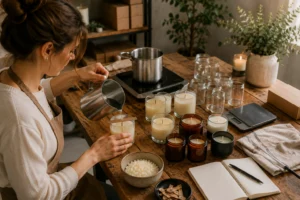
Step 1: One Wax, One Fragrance, Three Vessels
The single most common mistake of new candle makers is making 10 different scents in 10 different vessels before testing what sells.
Start with: one wax type (soy is the safest market choice), one fragrance (a proven seller: vanilla, amber, fresh linen), three vessel sizes (travel tin, 20cl jar, 30cl jar). Make 5–7 of each. This gives you a testable range without overcommitting stock.
Step 2: Burn Test Every Combination
A candle that burns with a full melt pool (melted wax reaching the vessel edges) within 3–4 hours of first burn is performing correctly. A wick that mushrooms, produces excess soot, or tunnels through the centre without reaching the edges indicates a wick sizing problem. Never sell a combination you have not burn-tested.
Step 3: Photograph Before Listing
Natural light, plain background, one or two lifestyle props maximum. Good photography is more important than the candle itself on Etsy — buyers cannot smell your product; they buy on the photograph first.
Tax Rules for Candle Makers
Candle-making income is self-employment trading income. The £1,000 trading allowance covers the first £1,000 of gross income (total sales, not profit) per tax year. Above this, register for Self Assessment.
Most candle makers starting small — 20–30 candles per month at £10–£16 each — will cross the £1,000 threshold within 5–8 weeks of consistent sales. Keep records of all income and material costs from your first sale.
For the full explanation of when candle-making income triggers UK tax registration, see our guide on when candle-making income triggers UK tax.
Frequently Asked Questions
Do I need a licence to sell candles in the UK?
No specific licence is required. However, you must comply with the General Product Safety Regulations, REACH fragrance compliance requirements, and appropriate candle labelling. You should also have product liability insurance.
Can I sell candles from my home?
Yes. Candle making is a home-based business. You do not need commercial premises. Your local council may want to know if you are manufacturing goods from a residential property — check your tenancy or mortgage terms, and confirm with your home insurer that your home use covers the business activity.
What is the best wax for beginners in the UK?
Soy wax is the most forgiving for beginners — it is relatively easy to pour, has good adhesion to glass vessels, and is well-supported by UK suppliers with consistent quality. Coconut wax produces a premium finish but costs more.
Paraffin has the strongest scent throw but is less eco-friendly, which affects market positioning on Etsy.
How long does it take to make 20 candles?
From setup through pouring to cooling and labelling: approximately 3–5 hours for 20 candles once you have a practiced production routine. First-time batches take longer — allow a full day for your first 20.
What to Read Next?
Once you have a product worth selling, see our complete guide on how to sell your candles on Etsy once made.
For a comparison with another handmade product side hustle, see our guide on how home baking startup costs compare.
Verified against current UK supplier pricing and HMRC guidance as of 19 June 2026.

More in Setup Guides

Bookkeeping Side Hustle UK: Should You Get AAT? (2026 ROI Analysis)
Bookkeeping is one of the most reliable professional side hustles in the UK — consistent demand, flexible hours, fully remote, and clients who often remain loyal for years once you are embedded in their accounts routine. The question almost everyone asks before starting is: do I need the AAT qualification first? The honest answer is: […]

Virtual Assistant Side Hustle UK: Start With No Experience (2026)
Virtual assistance is one of the most consistently underappreciated side hustles in the UK. It sits at the intersection of skills most employed adults already have — email management, calendar coordination, research, data entry, social media scheduling — and a market that reliably pays £15–£35/hour for those skills when packaged as a service. The barrier […]