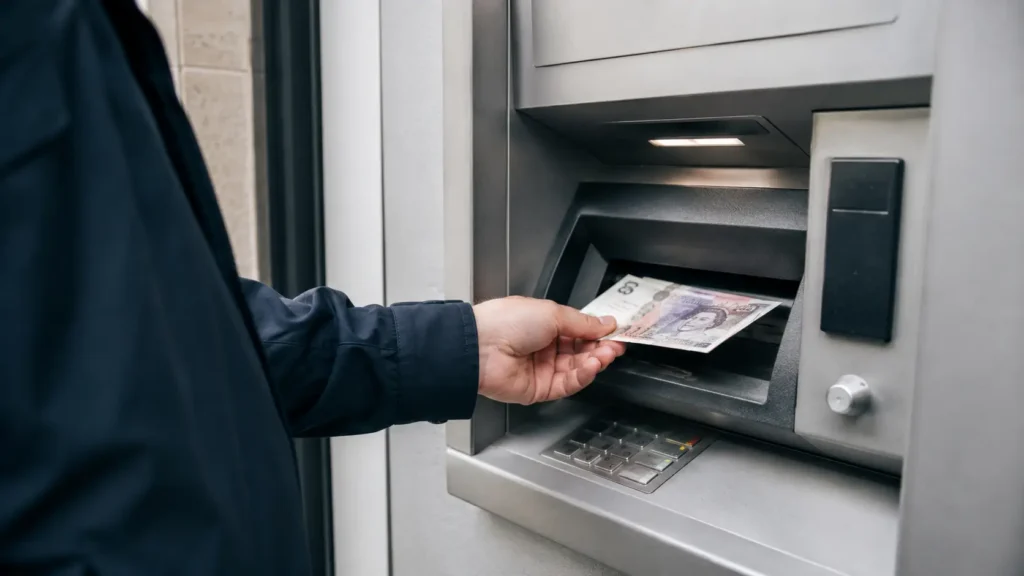
If you need a larger amount of cash, you may be wondering, how much cash can I withdraw from an ATM? In the UK, there is no single withdrawal limit that applies to every bank account.
Your maximum withdrawal will normally depend on your bank, account type, debit card settings and the cash machine you are using.
For many standard UK current accounts, daily ATM limits are somewhere between £250 and £800, while some premium accounts allow withdrawals of £1,000 or more.
This guide explains how UK ATM withdrawal limits work, what major banks currently allow and what you can do when you need more cash than an ATM will provide.
How Much Cash Can I Withdraw From an ATM?
For most UK debit-card customers, the maximum amount that can be withdrawn from ATMs is typically around £250 to £800 per day.
However, this is a daily card or account limit rather than a universal ATM rule.
For example, Lloyds currently states that holders of its debit cards can withdraw up to £800 per day from cash machines. Santander’s standard personal cash-machine withdrawal limit is £300 per day.
Premium accounts can have significantly higher limits. HSBC Premier customers, for example, have a standard daily cash withdrawal limit of £1,000.
Your actual limit can therefore depend on:
- Your bank or building society
- The account you hold
- Your debit-card settings
- How much money is available in your account
- Limits imposed by the ATM operator
- Whether you have already made withdrawals that day
Even when your bank allows £500 or £800 per day, an individual cash machine may restrict how much you can take out in a single transaction.
What Are the ATM Withdrawal Limits for Major UK Banks?
The following figures provide a useful indication of current cash withdrawal limits. Limits can change, so customers should always check their banking app or their bank’s latest terms before making a large withdrawal.
| Bank | Typical Daily ATM Withdrawal Limit |
| Barclays | Up to £500 for many personal customers |
| Barclays Premier | Up to £1,000 |
| Lloyds Bank | Up to £800 |
| NatWest | £250–£750 depending on account |
| HSBC Bank Account | £300 |
| HSBC Advance | £500 |
| HSBC Premier | £1,000 |
| Nationwide | Up to £500 |
| Santander | £300 |
Barclays states that customers can have a daily limit of up to £500, while Premier customers can have limits of up to £1,000, subject to their card settings.
NatWest’s default limits vary more significantly. Student, Graduate, Savings and Adapt accounts can have a £250 default limit, while several standard accounts have a £300 limit and Black accounts can have a £750 limit.
Nationwide states that the maximum amount a cardholder can withdraw each day from a cash machine is £500.
These figures should be treated as a guide because individual card settings and account conditions may alter the amount available.
Is the ATM Limit Per Transaction or Per Day?
The two limits are different.
Your daily ATM withdrawal limit is normally set by your bank. An ATM operator can then impose a separate per-transaction limit.
For example, imagine your bank allows you to withdraw £800 per day, but the cash machine only allows £250 in one transaction.
You may be able to make several withdrawals:
- First withdrawal: £250
- Second withdrawal: £250
- Third withdrawal: £250
- Fourth withdrawal: £50
That would give you £800 in total, assuming the ATM permits multiple transactions and you have enough available money.
However, repeatedly withdrawing money will not allow you to bypass your bank’s overall daily limit.
Can I Withdraw £1,000 From an ATM?
It depends on your account.
Many standard UK current accounts will not allow a £1,000 ATM withdrawal in one day, because their daily limits are lower.
Some premium accounts do.
HSBC Premier, for example, currently has a standard daily ATM withdrawal limit of £1,000. Barclays also states that Premier customers can have a cash withdrawal limit of up to £1,000 per day.
Even with a £1,000 daily allowance, you may need to make several transactions because an individual ATM may dispense less than £1,000 at once.
Can I Withdraw £2,000 From an ATM?
For most ordinary UK debit cards, withdrawing £2,000 directly from an ATM is unlikely to be possible because the amount exceeds common daily cash-machine limits.
If you need £2,000, visiting your bank or building society may be easier.
For example, Nationwide says withdrawals of up to £2,000 can normally be made at a branch without advance notice. Barclays also provides options for larger cash withdrawals through its branch services.
The rules vary between banks, particularly when the withdrawal becomes several thousand pounds.
How Can I Withdraw a Large Amount of Cash?
If the amount you need is higher than your normal ATM limit, there are several alternatives.
Visit Your Bank Branch
A bank branch can usually handle significantly larger withdrawals than a cash machine.
However, banks do not necessarily keep enough physical cash at every branch to meet very large requests without warning.
For particularly large withdrawals, contacting the bank beforehand is sensible.
NatWest, for example, says customers requesting between £5,000 and £19,999 should ideally provide at least 24 hours’ notice. Withdrawals above £20,000 require at least three business days’ notice.
Ask Whether Your ATM Limit Can Be Increased
Some banks allow customers to change their withdrawal limits.
Barclays, for example, provides cash withdrawal settings through its banking services, allowing eligible customers to adjust their limit within the maximum available for their account.
NatWest also states that customers may be able to request a higher withdrawal limit in certain circumstances.
Check your mobile banking app first, as some banks allow card limits to be managed digitally.
Use a Bank Transfer Instead
If you are withdrawing thousands of pounds to pay another person or business, a bank transfer may be safer and easier than carrying a large quantity of cash.
Before sending a large payment, however, verify the recipient independently, particularly if the payment relates to an unexpected invoice, investment or purchase.
Why Won’t the ATM Let Me Withdraw My Full Limit?

Having a £500 daily limit does not necessarily mean every ATM will immediately give you £500.
A withdrawal may be restricted because:
The ATM Has Its Own Limit
Cash-machine operators can set limits on individual withdrawals. Lloyds specifically notes that other lenders and cash-machine operators can have their own restrictions.
You Have Already Withdrawn Money
If your daily limit is £500 and you withdrew £200 earlier, you may only have £300 of your daily allowance remaining.
You Don’t Have Enough Available Funds
Your available balance can differ from your headline account balance because pending card transactions and other payments may already have reduced the amount available.
Your Card Has a Lower Limit
Some banks allow customers to intentionally reduce withdrawal limits as a security or money-management measure.
The ATM Does Not Have Enough Cash
The machine may also be running low on notes or may not have the correct denominations to complete your request.
Do All UK ATMs Charge for Cash Withdrawals?
No.
Most withdrawals made using UK debit cards through the LINK network are free, although some independently operated cash machines charge a fee. LINK says that the majority of withdrawals across its network are free for eligible debit-card customers.
If a fee applies, the machine should tell you before the withdrawal is completed. LINK says pay-to-use machines must clearly display the charge and customers must accept it before continuing.
You can simply cancel the transaction if you do not want to pay the fee.
Can I Withdraw Cash From Another Bank’s ATM?
Usually, yes.
UK debit cards generally work at other banks’ cash machines, particularly machines using the LINK network.
Your own bank’s daily withdrawal limit will normally continue to apply.
For example, if your bank has given you a £500 daily cash limit, using three different banks’ ATMs does not normally mean you can withdraw £500 from each one.
The limit applies to your card or account, not simply to one particular machine.
Can I Withdraw Cash From the Post Office?
Many UK banks allow customers to withdraw money through participating Post Office branches using their debit card and PIN.
The amount available varies by bank.
Lloyds customers, for example, can currently withdraw up to £300 per day at the Post Office, and that amount counts towards the bank’s wider £800 daily cash withdrawal allowance.
Post Office withdrawals can be useful where a local bank branch or free ATM is unavailable.
What Happens to My ATM Limit at Midnight?
Daily withdrawal limits generally reset according to your bank’s own processing rules.
Do not assume that repeatedly attempting withdrawals around midnight will automatically provide immediate access to another full daily allowance. Banks can have different processing systems and security controls.
If accessing a large sum is important, checking the exact limit through your bank’s app or customer service is safer.
Are Credit Card ATM Withdrawals Different?
Yes. Withdrawing money using a credit card is very different from withdrawing your own money with a debit card.
Credit-card cash withdrawals can involve:
- Cash withdrawal fees
- Interest being charged immediately
- A separate cash withdrawal limit
- Potentially higher overall borrowing costs
For example, Nationwide says eligible credit-card cash withdrawals may attract a fee of 2.5% of the amount or £3, whichever is greater.
For this reason, using a credit card to obtain cash should not automatically be treated in the same way as withdrawing money from a current account.
How Can I Check My Exact ATM Withdrawal Limit?
The quickest way is usually to check:
- Your banking app
- Online banking
- Your debit-card settings
- Your bank’s official website
- Customer service
- Your account terms and conditions
This is particularly important before travelling or making a large purchase because withdrawal limits can differ between account types.
Conclusion
So, how much cash can I withdraw from an ATM? For most UK customers, the answer is somewhere between £250 and £800 per day, although the exact limit depends on the bank, account and card settings.
Premium accounts may offer limits of £1,000 or more.
Individual cash machines can also impose smaller transaction limits. If a larger amount is required, checking whether your bank can increase the limit or arranging a branch withdrawal is usually the most practical option.
FAQs
How much money can you withdraw from an ATM in one day?
Many UK accounts have daily ATM limits between roughly £250 and £800, although premium accounts can allow £1,000 or more. The exact amount depends on your bank and account.
Can I withdraw £500 from an ATM at once?
Possibly. Your bank may permit £500 per day, but an individual ATM can impose a smaller transaction limit, meaning you may need more than one withdrawal.
Can I make multiple ATM withdrawals in one day?
Yes, provided you remain within your card’s total daily withdrawal limit and the ATM allows additional transactions.
Does using another ATM reset my withdrawal limit?
No. Using a different cash machine will not normally reset your bank’s daily card withdrawal limit.
Can my bank increase my cash withdrawal limit?
Some banks allow temporary or permanent adjustments, subject to account type, security checks and maximum limits.
What should I do if I need more cash than my ATM limit?
Contact or visit your bank. Larger branch withdrawals may be possible, although advance notice can be required for substantial sums.
Do cash machines charge withdrawal fees?
Most LINK cash withdrawals using eligible UK debit cards are free, but some independent machines charge. The fee should be displayed before you confirm the withdrawal.

More in Finance & Tax

Are Betting Winnings Taxable in the UK and Why Not?
Anyone who’s ever landed a decent win on a horse or cashed out a football accumulator will know the feeling. The celebration fades, and then the question creeps in: does HMRC want a slice? It’s a fair thing to wonder, given that most income in the UK gets taxed one way or another. But betting […]

Best 1 Year Fixed Rate ISA UK 2026: Top Cash ISA Rates Compared
The best 1 year fixed rate ISA in the UK currently pays up to 4.98% AER tax-free, with UBL UK offering the highest verified rate in our October 2026 comparison. Shawbrook Bank follows at 4.97%, while Vanquis Bank offers a competitive 4.96% alongside a lower minimum opening deposit. However, choosing the best one-year fixed Cash […]