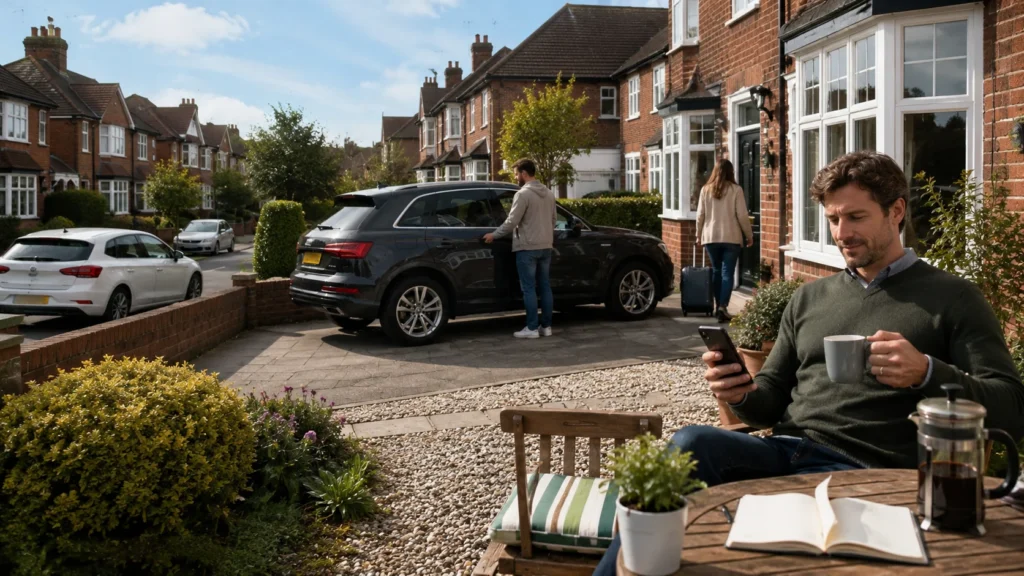
“Passive income” is one of the most misused phrases in personal finance. Every side hustle influencer has a course, a newsletter, or a YouTube channel promising it. Most of what they call passive income is, on inspection, a part-time job with a fancier name.
This article takes a different approach. We have ranked eight UK income streams by a genuine passivity score measuring how much ongoing time they actually require once established, not how they are marketed. Some of the results will surprise you.
A few things genuinely called active hustles turn out to have real passive characteristics. A few things prominently sold as passive turn out to require significant ongoing effort.
The goal is to help you decide whether passive income is the right target for your situation and, if it is, which options are actually worth your time in the UK in 2026.
For a full overview of all UK side hustle options regardless of passivity level, see our complete guide to UK side hustles.
What Passive Income Actually Means?

Passive income is money earned from work you have already done, assets you already own, or systems you have already built without significant ongoing time input per pound earned.
The key phrase is “significant ongoing time input.” No income stream is fully passive. A savings account earning 4.5% interest requires you to open the account, fund it, and occasionally compare rates.
A driveway rented via JustPark requires initial setup, occasional correspondence with renters, and annual review. That is not zero effort, but it is genuinely close to it.
The marketing version of passive income promises the opposite. Drop-shipping (“put products online and earn while you sleep”), Etsy shops (“make it once, sell forever”), and affiliate marketing (“recommend products and collect commissions”) all of these are all presented as set-and-forget income. None of them works that way, especially in the early stages.
A more useful definition: passive income is income with a high ratio of earnings to ongoing time input. Not zero time, just disproportionately low time relative to what you earn, compared to active work.
The Three Categories We Use in This Article
- Genuinely passive: income that, once set up, requires under 1 hour per week to maintain.
- Semi-passive: income that requires a consistent but manageable time input, 2–5 hours per week once established.
- Marketed as passive, actually active: income streams that require significant ongoing effort but are presented as passive because the effort can theoretically be reduced in future.
The Passivity Scoring Framework
We have scored each income stream on three dimensions, each out of 10:
- Setup effort (inverted lower is better): how much work is required before the first pound arrives. A score of 10 means very little setup; a score of 1 means months of work before income starts.
- Ongoing time per £100 earned: how many hours per week are typically required once the income stream is running, relative to what it pays.
- Income stability: how predictably the income continues without active intervention.
The composite score is the average of the three. Higher is better (more genuinely passive).
Eight UK Income Streams Ranked by Passivity Score
1. Interest on Savings (Cash ISA / Easy-access Account)

Passivity score: 9.2/10
- Setup effort: Minimal. Open an account, fund it, and confirm the interest rate. Under 1 hour.
- Ongoing time: Near zero. Occasional rate comparisons (10 minutes/month, if that).
- Income stability: Very high. Guaranteed return at the agreed rate.
Current UK rates in 2026: easy-access savings accounts and Cash ISAs are paying 4–5% per year. On £10,000, that is £400–£500/year with genuinely zero ongoing effort. On £50,000, £2,000–£2,500/year.
The catch: you need the capital first. For those without significant savings, this is not yet available to them, but it is the benchmark against which all other passive income should be measured. No other option in this list combines the reliability and zero-effort ratio of a well-placed Cash ISA.
Best accounts in 2026: check current rates on MoneySavingExpert’s best savings accounts page, as rates shift regularly. Chase, Chip, and Plum are currently competitive for easy-access, fixed-rate bonds from Atom and Aldermore lead for locked-in returns.
2. Rent-a-room (Renting a Spare Room via Airbnb or Long-term Let)

Passivity score: 5.8/10
- Setup effort: Moderate. Photography, listing creation, and pricing strategy. 3–5 hours upfront.
- Ongoing time: 2–3 hours per week (check-ins, cleaning coordination, guest communication) for short-term lets; much lower for long-term tenants.
- Income stability: High once established.
The Rent-a-Room scheme gives every UK homeowner or tenant (with landlord permission) a £7,500/year tax-free allowance for renting a furnished room in their main home. Income above £7,500 is taxed normally.
Realistic monthly income: £400–£900/month in most UK cities; £800–£1,500 in London.
Why this is semi-passive rather than passive: a genuine Airbnb operation requires ongoing guest communication, check-in coordination, and cleaning between guests. Long-term tenants reduce the time burden significantly with one set of check-in messages, then largely hands-off. Long-term letting is genuinely closer to passive; Airbnb short-term letting is a hospitality micro-business.
3. Renting Your Driveway (Justpark / Yourparkingspace)
Passivity score: 8.4/10
- Setup effort: Very low. List the space, verify the address, set availability. Under 1 hour.
- Ongoing time: Near zero. Occasional booking confirmations; most platforms automate this fully.
- Income stability: Depends heavily on location.
Realistic monthly income: £30–£200/month depending on proximity to transport, offices, hospitals, airports, or sports venues. A driveway 10 minutes from an airport can earn £150–£250/month consistently. A driveway on a residential street without nearby demand may earn very little.
JustPark and YourParkingSpace both handle payment and cancellations automatically. Once listed, the income is genuinely passive; some sellers report not touching the listing for 12+ months while income continues.
4. Renting Your Car (Hiyacar / Turo)

Passivity score: 5.1/10
- Setup effort: Moderate. Insurance add-on required, listing creation, photography. 2–3 hours.
- Ongoing time: 1–3 hours per rental (key handover, collection, inspection).
- Income stability: Variable. Depends on car model and local demand.
Realistic monthly income: £150–£500/month for popular models in high-demand areas.
The catch: standard personal motor insurance does not cover commercial rental. You need a specific policy or add-on both Hiyacar and Turo offer integrated insurance products for hosts, but these reduce your margin. Car rental is also less passive than it sounds: each rental requires a handover meeting, vehicle inspection, and collection.
5. Digital Products (Notion Templates, Study Guides, Printables, Etsy / Gumroad)

Passivity score: 4.3/10
- Setup effort: High. Creating a product that sells requires design, copywriting, market research, and listing optimisation. 10–40 hours before first sale.
- Ongoing time: Low once established (2–3 hours/month for reviews, updates, customer queries), but marketing is an ongoing requirement if you want consistent sales.
- Income stability: Decays without updates or marketing.
Realistic monthly income once established: £50–£400/month for well-optimised products in a clear niche. The top percentile of digital product sellers earn much more, but the median established Etsy shop earns less than most people expect.
Why this scores lower than expected: the “make it once, sell forever” promise is only partly true. A Notion template or revision guide that earns £200/month in its first year will typically earn less in year two as the market grows more crowded and newer products outrank it. Without periodic updates, reviews, and occasional marketing, income tapers.
6. Selling Teaching Resources (TES / Resourcerack)

Passivity score: 4.8/10
- Setup effort: High for teachers creating original resources. 3–8 hours per resource.
- Ongoing time: Low once established. No customer interaction required for standard resources.
- Income stability: Reasonably stable for evergreen resources; volatile for trendy topics.
Realistic monthly income: £30–£400/month for established TES sellers with 30–50 resources. A well-tagged GCSE Maths resource can sell hundreds of times without a single hour of ongoing work.
Why this is more passive than digital products generally: teachers creating TES resources are working in their area of expertise with no need for external research. The listing process is simple. Copyright guidelines are clear. The audience, other teachers search by subject and keyword rather than by brand. Once a good resource is ranked, it keeps selling.
7. YouTube (Monetised Channel)

Passivity score: 2.6/10
- Setup effort: Extremely high. Building to YouTube Partner Programme eligibility (1,000 subscribers, 4,000 watch hours) typically takes 6–18 months of weekly uploads.
- Ongoing time: 5–15 hours per week ongoing to maintain growth, respond to comments, and adapt to algorithm changes.
- Income stability: Highly variable. Algorithm updates, creator burnout, and topic saturation all create income volatility.
This is the most prominent example of “marketed as passive, actually active.” A built-out YouTube channel with 50,000+ subscribers earning AdSense, sponsorship, and affiliate income does generate money while you sleep, technically. But reaching that point requires years of consistent, active, creative work. The “passive” phase only begins after years of the opposite.
Realistic monthly income at modest scale (10,000–50,000 subscribers): £150–£800/month AdSense. The channel is only semi-passive at this stage; not maintaining it causes audience and revenue decline.
8. Dividend Investing (Stocks & Shares ISA)

Passivity score: 7.8/10
- Setup effort: Low to moderate. Open an ISA (Vanguard, Hargreaves Lansdown, or InvestEngine are the most popular UK platforms), select a dividend ETF (Vanguard FTSE All-World High Dividend Yield, for example), fund it. 2–4 hours setup.
- Ongoing time: Very low. Quarterly dividend payments arrive automatically. Annual ISA top-up if you choose.
- Income stability: Moderate. Dividend payments can be cut by companies during downturns.
Realistic income on £10,000: a dividend ETF yielding 3.5–4.5% generates £350–£450/year passively. Income scales directly with capital invested.
The ISA wrapper makes UK dividend income tax-free up to the annual ISA allowance (£20,000/year). This is the cleanest, most scalable genuinely passive income stream for UK adults with investable capital, but it requires capital, not just time.
Passivity Score Summary Table
| Income Stream | Passivity Score | Realistic Monthly Income | Capital Required? |
|---|---|---|---|
| Interest on Savings | 9.2/10 | £33–£200+ | Yes – savings balance |
| Renting Your Driveway | 8.4/10 | £30–£200 | No |
| Dividend Investing | 7.8/10 | Variable (based on portfolio value and dividend yield) | Yes – investable funds |
| Rent-a-Room Scheme | 5.8/10 | £400–£900 | No (if homeowner or permitted tenant) |
| Renting Your Car | 5.1/10 | £150–£500 | No (if car owner) |
| TES Resources (for Teachers) | 4.8/10 | £30–£400 | No |
| Digital Products | 4.3/10 | £50–£400 | No |
| YouTube Channel | 2.6/10 | £150–£800+ (once established) | No (time investment required) |
The Build Phase: Why Passive Income Always Starts Active?
Every passive income stream has a build phase, a period of active investment before the passive payoff begins. The length and intensity of the build phase vary enormously.
For a savings account, the build phase is the years of earning and saving money before the balance is large enough to generate meaningful interest. The account itself is instant to open. The capital takes years to accumulate.
For a driveway rental, the build phase is 20 minutes of listing setup. Genuinely short.
For a YouTube channel or digital product business, the build phase is 6–24 months of consistent creative work. Many people abandon the build phase and conclude that passive income is a myth. The passive payoff is real, they just underestimated the runway.
The most common mistake is choosing a passive income stream based on the passive phase (sounds easy, minimal ongoing work) without honestly accounting for the build phase (what it actually takes to reach that passive phase).
The driveway rental scores so highly partly because its build phase is genuinely short. Everything else on the list requires a longer, honest assessment of what you are willing to do before the passive income actually starts.
Stacking Passive Income: The Strategy That Actually Works

The concept of passive income working as a primary income stream is a marketing fiction for most UK adults in their 20s and 30s.
What genuinely works is stacking small passive streams that together create a meaningful supplement:
£40/month from a savings account on £10,000 in a Cash ISA
+ £80/month from a driveway rental on a conveniently located property
+ £150/month from a Stocks and Shares ISA dividend ETF on £40,000 invested
+ £100/month from a TES resource shop built over 18 months
= £370/month that arrives without meaningful ongoing work, after the build phases are complete.
That is not a replacement salary. But for someone whose primary income already covers living costs, it is a genuine and achievable passive supplement, not a fantasy.
The realistic goal for most people approaching passive income is £100–£500/month as a supplement, not £3,000/month as a primary income.
Tax on Passive Side Hustle Income
Passive income is taxed differently depending on its type, and the rules are specific.
Savings Interest
The Personal Savings Allowance gives basic-rate taxpayers £1,000/year of interest tax-free, and higher-rate taxpayers £500/year.
Cash ISA interest is fully tax-free regardless of the amount. Interest above the allowance is declared on a Self Assessment return and taxed at your marginal income tax rate.
Rental Income (Rent-a-room)
The Rent-a-Room scheme provides £7,500/year tax-free for renting a furnished room in your main home. No registration or self-assessment required if income stays below this threshold. Above £7,500, normal income tax rules apply.
Dividend Income
Dividends within a Stocks and Shares ISA are fully tax-free. Outside an ISA, the Dividend Allowance is £500/year for 2025/26 and 2026/27. Dividends above this allowance are taxed at 8.75% (basic rate), 33.75% (higher rate), or 39.35% (additional rate).
Trading Income (Digital Products, Tes Resources)
Selling products, physical or digital, is trading income. The £1,000 trading allowance applies: if gross income from all trading activities stays below £1,000/year, no tax or reporting is needed. Above £1,000, register for Self Assessment.
For a full explanation of how passive income is taxed under UK rules, see our detailed guide on the £1,000 threshold and the trading allowance.
Frequently Asked Questions
Is passive income taxed differently from employment income in the UK?
Partially. Savings interest and dividends have their own allowances and rates that differ from income tax. Trading income (digital products, resource selling) uses the same income tax rates as employment but goes through Self Assessment. Rental income has its own Rent-a-Room allowance.
The short answer is: it depends on the type.
Can I have passive income while claiming Universal Credit?
Yes, but it affects your award. Any income, passive or active, is assessed monthly and reduces your UC through the taper rate. Savings above £6,000 also reduce your award through tariff income rules (£4.35 reduction per £250 above £6,000). If you have savings above £16,000, you do not qualify for UC at all.
Is Airbnb passive income?
Short-term Airbnb is not meaningfully passive; guest management, cleaning coordination, and check-ins require regular active time. Long-term room rental under the Rent-a-Room scheme is much closer to genuinely passive once a reliable long-term tenant is in place.
How much capital do I need to generate £500/month in truly passive income?
At current UK savings rates of 4–5%, you would need approximately £120,000–£150,000 in savings to generate £500/month from interest alone. Via a dividend ETF at 4% yield, approximately £150,000. Passive income from capital at this scale is genuinely possible, but the asset-building phase is the harder task for most people.
Is blogging passive income?
No, a blog is a content business that requires active creation, SEO maintenance, link building, and regular updates to maintain traffic and affiliate income. A mature blog (3+ years old) with strong domain authority can run at reduced maintenance, but it never becomes truly passive.
What to Read Next?
If you want to compare passive income options against active side hustles on a pure hourly rate basis, see our guide on the genuinely highest-paying UK side hustles.
If your goal is low-effort income that needs zero upfront investment rather than purely passive, see our guide on side hustles that actually need zero investment.
For a full explanation of how your passive income is taxed in the UK, see our guide on how passive income is taxed under UK rules.

More in By Profession

Highest Paid Jobs UK: Top 20 Careers by Salary in 2026
The highest paid jobs in the UK are concentrated around senior business leadership, medicine, technology, aviation, finance, transport and specialist management. But there is an important difference between the highest typical salary and the highest salary someone could potentially earn. For the clearest comparison, this guide ranks occupations using median full-time gross annual earnings from […]

SOC Code With Salary: UK Skilled Worker Rates List 2026
A UK SOC code identifies the type of work a person will perform. For most new Skilled Worker visa applications, the salary must be at least £41,700 per year or the full going rate for the relevant SOC 2020 occupation code, whichever is higher. Lower thresholds may apply to qualifying new entrants, people with relevant […]