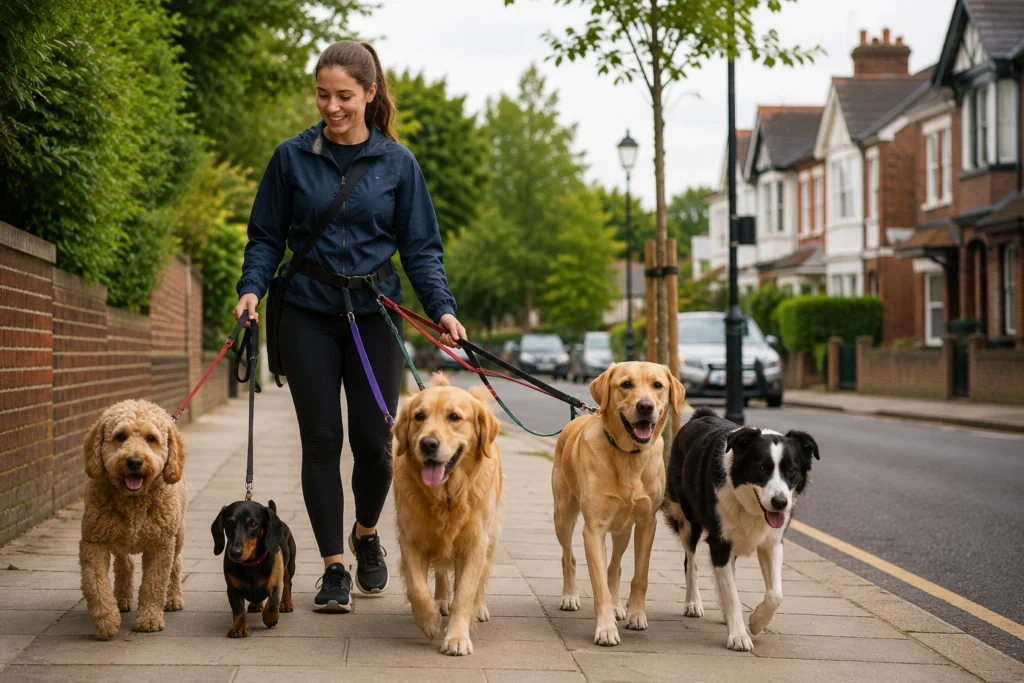
Dog walking is one of the most accessible service-based side hustles in the UK — low startup cost, no qualifications legally required, no fixed hours, and a market that continues to grow as pet ownership rises and more people return to office-based work. The UK had an estimated 13 million pet dogs in 2025 and the professional dog walking market has grown significantly since the pandemic.
The income potential is real. A sole dog walker in a typical UK city charging current market rates can earn £200–£500 per month on a part-time schedule of a few hours per day. At full-time scale with a regular client base, £1,500–£2,500 per month is achievable. The ceiling is set by the number of clients you can reliably serve, not by the rate of pay.
This guide covers exactly what it takes to start legally, what to charge, how to find your first clients, and what the realistic income looks like once you are established.
For a broader overview of all UK side hustle options, see our complete guide to UK side hustles.
What Dog Walking Actually Pays in 2026?

The rate card for UK dog walkers in 2026 is well-established. According to NimbleFins’ 2026 research and Protectivity’s March 2026 pricing guide, rates vary significantly by city and service type.
Standard 60-minute Solo Walk
The UK national average for a 60-minute professional dog walk is approximately £13.48 per walk (NimbleFins, 2026 data) — but this average is pulled down by budget and group walkers. Professional sole traders operating in most UK cities typically charge £16–£25 per hour for a solo walk, with London and the South East at the upper end.
By city, typical 2026 rates for a 60-minute solo walk:
London: £18–£30. Manchester/Birmingham/Bristol: £16–£22. Edinburgh/Glasgow: £15–£22. Sheffield/Belfast: £12–£16. Smaller towns and rural areas: £12–£18.
Group Walks
Group walks (up to four dogs from different households, walked simultaneously) typically charge £10–£15 per dog per hour. Walking four dogs at £12 each generates £48 per hour — significantly more than a single-dog solo walk. Group walks require more skill in dog management and more rigorous insurance, but they are the primary income-scaling mechanism for established dog walkers.
Additional Services
Many dog walkers expand their offering: puppy visits (shorter 30-minute home visits for puppies) at £12–£18 per visit; pet sitting and overnight stays at £25–£50 per night; doggy day care at £25–£40 per day.
Realistic Monthly Income
- Part-time (2 hours/day, 5 days/week): 10 solo walks per week at £18 average = £180/week = £720/month.
- Active part-time with some group walks: £300–£500/month.
- Full-time with established client base: £1,200–£2,500/month.
What You Legally Need Before You Take a Single Dog?

The good news: dog walking in the UK does not require a licence or mandatory qualification. The legal requirements are minimal.
Animal Welfare Act 2006
You have a duty of care to any animal in your care. This means ensuring the dog is safe, well, and not suffering while in your custody. Breaching this duty can result in prosecution regardless of whether you hold any formal qualification.
Local Authority Rules
Some local councils have specific bylaws about dog walking in public parks, maximum number of dogs per walker (commonly four in London parks), lead requirements in certain areas, and access restrictions. Check your local council’s website and the specific parks you intend to use before starting.
HMRC Registration
If your gross dog walking income exceeds £1,000 in a tax year, you must register for Self Assessment with HMRC. Dog walking is self-employment — you are a sole trader providing a service to multiple clients. For the step-by-step registration process, see our guide on how to register as self-employed once you start earning.
Optional but Strongly Recommended
DBS Basic Certificate (£21.50 via gov.uk): not legally required for dog walking, but clients with children or in private residential settings often request it. The basic certificate shows unspent convictions only.
Canine first aid training: short courses (half-day to full-day) cost £50–£150 and teach you to manage dog health emergencies. Not legally required but genuinely useful and a strong client trust signal.
Dog walking qualifications (City & Guilds Level 2 or 3 in Animal Care): not legally required but add credibility and may justify higher rates in competitive markets.
Insurance — the One Non-negotiable

Insurance is the single item on this list that is genuinely non-negotiable. Walking someone else’s dog creates real liability — for injury to the dog, injury caused by the dog, or damage caused by the dog. Without insurance, one incident can wipe out months of earnings.
Public Liability Insurance
Covers you if the dog you are walking causes injury to another person or damages property. Essential for all dog walkers. Cost: from approximately £30/year for basic cover.
Care, Custody and Control (CCC) Cover
This is the insurance type specifically for dog walkers — it covers vet bills if a dog in your care is injured, falls ill, or goes missing. Standard public liability alone does not cover this. Combined policies including CCC start from approximately £65/year for sole traders (Finistry, 2026).
Average Insurance Cost
The average cost of dog walking insurance for a sole trader in the UK is £54 per year for basic public liability cover. Adding CCC and other pet business extensions brings this to £65–£120/year depending on coverage level. Annual payment is approximately 10–12% cheaper than monthly direct debit.
Where to get quotes: PetPlan Business, Cliverton, Protectivity, NimbleFins comparison tool.
How to Find Your First Clients?
The hardest part of a dog walking side hustle is finding the first three or four regular clients. Once you have a track record and a few genuine reviews, referrals take over.
Your Existing Network
Start with people you already know. Tell every dog-owning friend, neighbour, family member, and colleague that you are starting dog walking. Post on your personal social media. The first client is almost always a personal connection or one degree of separation from one.
Nextdoor and Local Facebook Groups
Post in your local Nextdoor community and Facebook neighbourhood groups. A short, specific post works better than a long one: your name, that you are starting a local dog walking service, your rates, and your availability. Include a photo if possible.
Dog Walking Apps and Platforms
Rover and Wag allow dog walkers to create profiles and be found by local dog owners. Both platforms charge a commission (Rover: 20%; Wag: 40%) but bring you clients without any outreach. The commission is steep but the volume of enquiries on established platforms can offset it, particularly in the early months.
TREATED (formerly Bark.com) and TaskRabbit also list dog walkers and may generate local enquiries.
Physical Cards in Local Businesses
A small run of business cards (£10–£20 from Vistaprint or Canva) left at veterinary practices, pet shops, and grooming salons reaches exactly the right audience. Ask permission before leaving cards — most independent pet businesses are happy to support local dog walkers.
Introduce Yourself to Vet Practices
A brief, professional visit to two or three local vet practices to introduce yourself and leave a card is one of the highest-ROI client acquisition activities for new dog walkers. Vets are frequently asked by clients for trusted local walker recommendations.
Group Walks vs Solo Walks — the Income Model Comparison
Understanding the income model is important before you start, because the two approaches have very different economics.
Solo Walks Only
Income per hour of walking: £16–£25. Clean and simple but income-limited — you can only walk one dog at a time. To reach £500/month, you need approximately 22–31 solo walks per month at £16–£22 each.
Group Walks (Up to 4 Dogs)
Income per hour of walking: £40–£80 (4 dogs at £10–£20 each). Same hours, 2–4× the income. The operational requirements are higher: you need four compatible, safe-to-group dogs; transport if any dog is not within walking distance; and insurance that explicitly covers group walks.
The Hybrid Model
Most successful dog walking side hustles start solo — you build trust with individual clients and their dogs — then transition some clients to group walks once relationships are established. This is how part-time dog walkers grow to meaningful monthly income without working more hours.
How to Build a Repeat Client Base?
One-off walks generate income but not a business. The goal is regular, repeat clients who book weekly or monthly.
Offer Regular Booking Slots
Rather than taking ad-hoc requests, structure your availability into fixed slots (Monday–Friday, 10am–12pm, for example) and offer clients a recurring weekly booking at a slight discount over individual bookings. Clients who pre-book weekly are your business foundation.
Communication and Updates
Sending a brief WhatsApp message or photo update after each walk takes under a minute and dramatically improves client retention. Pet owners who feel informed and reassured rebook consistently.
Accept Card Payments
Sumup and Square both provide card readers for £19–£29 with no monthly fee and low per-transaction rates (1.69% for Square). Accepting card payments signals professionalism and removes the friction of cash handling.
Cancellation Policy
Implement a 24-hour cancellation policy from the start. Clients who cancel with less than 24 hours notice pay a 50% cancellation fee (or the full amount). This protects your income from last-minute cancellations and is standard practice among professional dog walkers.
Equipment and Startup Costs
The startup cost for dog walking is genuinely low — most essential equipment is under £100.
Essential:
- Public liability + CCC insurance: £65–£120/year
- Lead(s) — bring a spare slip lead: £10–£25
- Poo bag dispenser and bags: £5–£10
- High-visibility vest (for early morning or evening walks): £8–£15
- First aid kit (basic): £10–£20
- Business cards: £10–£20
Optional:
- DBS Basic Certificate: £21.50
- Canine first aid course: £50–£150
- Dog walking waist bag/treat pouch: £15–£25
- Card payment reader (SumUp or Square): £19–£29
Total essential startup cost: approximately £100–£190. One client paying for five walks covers your first year of insurance.
Tax and HMRC Registration

Dog walking income is self-employment income. HMRC treats it identically to any other sole-trader service business.
The £1,000 Trading Allowance
If your total gross dog walking income stays below £1,000 in the tax year, no tax is owed and no registration is required. At £18/walk, that is approximately 55 walks in the year — just over one per week. Most active dog walkers cross this quickly.
Registering for Self Assessment
Once gross income exceeds £1,000 in the tax year, register for Self Assessment by 5 October following that year. For the step-by-step process, see our guide on how to register as self-employed once you start earning.
Allowable Expenses
Dog walkers can claim: mileage at 45p/mile for travel between client homes; insurance costs; equipment (leads, bags, first aid kit); DBS certificate fee; canine first aid course costs; business cards and marketing; a proportion of phone costs for client communication. Mileage is typically the largest deduction — keep a mileage log from day one.
Frequently Asked Questions
How many dogs can I legally walk at once in the UK?
There is no national legal limit on the number of dogs a private dog walker can walk simultaneously. However, many local councils, particularly in London, impose limits in specific parks (commonly four dogs per walker). Check your local authority’s bylaws and your insurance policy’s limit — most CCC policies specify a maximum number of dogs in your care at one time.
Do I need a licence to walk dogs in the UK?
No licence is required for dog walking as a private sole trader. A licence is required to run a commercial boarding establishment or a dog day care business from premises — but not for walking dogs as a self-employed individual.
Can I walk dogs while on Universal Credit?
Yes — UC does not prevent you from working. Dog walking income must be declared monthly in your UC journal. The 55p taper rate applies above your work allowance. See our guide on Universal Credit and side hustle rules for full details.
What happens if a dog I’m walking injures another dog or person?
This is precisely what public liability and CCC insurance covers. Without it, you could be personally liable for vet bills, medical costs, and compensation. Never walk a client’s dog without having confirmed your insurance covers the specific situation (solo or group, CCC included).
How do I handle a dog that behaves badly on the lead?
This is the practical question most startup guides skip. Before accepting a new client, always conduct a meet-and-greet with the dog and owner ideally including a short trial walk.
Assess whether the dog is manageable on a lead before committing. Turn down dogs you are not confident handling — one difficult dog in a group walk creates safety risk for all dogs and any third parties.
What to Read Next?
For a different service-based setup guide with a similar startup cost profile, see our guide on how to start a home baking business for comparison.
For the tax rules covering what counts as gross income and when to register, see our guide on how dog walking income is taxed in the UK.
Verified against current UK market data and HMRC guidance as of 16 June 2026.

More in Setup Guides

Candle Making Side Hustle UK: True Startup Costs (2026)
Most candle-making startup cost guides are either vague (“you can start for as little as £50”) or American. This one is specific, UK-sourced, and honest about where the numbers come from. The short version: a genuine, sellable first batch of 20 candles using quality UK-sourced soy wax and fragrance oils, with proper vessels, wicks, and […]

Bookkeeping Side Hustle UK: Should You Get AAT? (2026 ROI Analysis)
Bookkeeping is one of the most reliable professional side hustles in the UK — consistent demand, flexible hours, fully remote, and clients who often remain loyal for years once you are embedded in their accounts routine. The question almost everyone asks before starting is: do I need the AAT qualification first? The honest answer is: […]