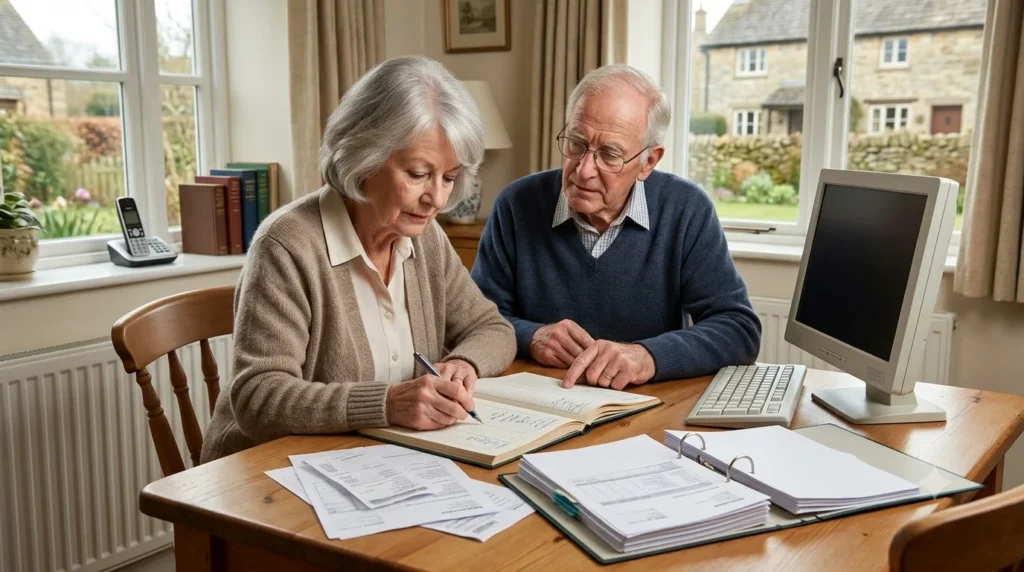
HMRC Making Tax Digital exemptions allow certain sole traders, landlords and other taxpayers to remain outside Making Tax Digital for Income Tax, either permanently or temporarily.
Making Tax Digital (MTD) for Income Tax became mandatory for the first group of taxpayers on 6 April 2026. However, being above the income threshold does not necessarily mean someone must use the system.
HMRC provides automatic exemptions for certain circumstances and allows taxpayers who are digitally excluded to apply for an exemption.
The most common digitally excluded cases involve people who cannot reasonably use digital records or compatible software because of their age, health condition, disability, religious beliefs or lack of suitable internet access.
An exemption does not remove the person’s tax obligations. Someone who is exempt from Making Tax Digital must normally continue reporting their income and gains through Self Assessment.
What Is Making Tax Digital for Income Tax?
Making Tax Digital for Income Tax changes how certain sole traders and landlords maintain records and report information to HM Revenue and Customs.
Those within the scheme generally need compatible software to maintain digital records and submit information to HMRC during the tax year.
The mandatory rollout currently follows these income thresholds:
| Qualifying income | Relevant income year | MTD starts |
| More than £50,000 | 2024/25 | 6 April 2026 |
| More than £30,000 | 2025/26 | 6 April 2027 |
| More than £20,000 | 2026/27 | 6 April 2028 |
| £20,000 or less | Relevant year | Automatically exempt under current rules |
Qualifying income broadly relates to gross income from self-employment and property combined, rather than the profit left after expenses.
Anyone unsure about the basic requirements can first review how Making Tax Digital works for self-employed people and landlords.
HMRC confirms that a sole trader or landlord needs to use MTD when they are registered for Self Assessment, receive qualifying self-employment or property income and exceed the relevant threshold.
Who Is Exempt From Making Tax Digital?
There is not one single MTD exemption.
HMRC divides the available exemptions broadly into:
- Automatic exemptions, where the taxpayer does not normally need to make an application.
- Exemptions that must be applied for, including digital exclusion.
- Temporary exemptions, which may delay MTD for a particular tax year.
- Longer-term exemptions, which may continue until HMRC changes the applicable timetable or the taxpayer’s circumstances change.
The reason for exemption therefore matters considerably.
What Is the Making Tax Digital Digital Exclusion Exemption?
Digital exclusion is one of the most important HMRC Making Tax Digital exemptions.
A taxpayer may qualify where it would not be reasonable or practical for them to use compatible software to maintain digital records and communicate information to HMRC.
HMRC gives several examples.
Age, Health Conditions or Disability
An exemption may be considered where a person’s age, health condition or disability prevents them from reasonably using a computer, tablet or smartphone to keep digital records or submit information.
Importantly, age by itself does not automatically create an exemption.
HMRC considers how the person’s circumstances actually affect their ability to comply with MTD.
For example, an older landlord who regularly uses online banking, email and accounting applications may find it harder to demonstrate digital exclusion purely because of age.
In contrast, someone whose age is combined with serious difficulty using digital devices may have a substantially stronger case.
HMRC assesses digital exclusion according to the taxpayer’s individual circumstances.
Can Disability Qualify Someone for an MTD Exemption?
Potentially, yes.
A physical or mental health condition may support an exemption where it makes using the required digital systems unreasonable or impractical.
The relevant question is not simply whether the taxpayer has a recognised disability.
HMRC will generally consider how that condition affects their practical ability to maintain digital records and submit information.
Someone making an application should therefore explain the practical difficulty rather than simply naming a medical condition.
Can Religious Beliefs Create an MTD Exemption?
Yes, in particular circumstances.
HMRC recognises that practising members of a religious society or order may be digitally excluded where their beliefs are incompatible with:
- Using electronic communications.
- Keeping electronic records.
- Using computers, tablets or smartphones.
HMRC’s guidance also specifies that the individual should not use a computer, tablet or smartphone for either business or personal purposes where relying on this exemption.
This means a general dislike of technology or personal preference for paper records would not normally satisfy the religious exemption criteria.
Can Poor Internet Access Qualify for an MTD Exemption?
It can.
Someone may qualify as digitally excluded if they cannot obtain internet access at their home or business because of their location and cannot reasonably access the internet from a suitable alternative location.
This exemption can be particularly relevant to people operating businesses or rental properties in remote areas.
However, occasional slow broadband or a personal preference not to purchase internet access does not automatically mean HMRC will grant an exemption.
The taxpayer needs to demonstrate that complying with MTD is not reasonably practical in their circumstances.
Is Being Bad With Computers Enough for an MTD Exemption?
Normally, no.
HMRC specifically says that an exemption will not be granted where the only reason is that the taxpayer is unfamiliar with accounting software.
The same applies to several other commonly cited reasons.
| Reason | Normally enough by itself? |
| Age that genuinely prevents digital use | Potentially |
| Health condition affecting digital use | Potentially |
| Disability affecting digital use | Potentially |
| Incompatible religious beliefs | Potentially |
| No reasonable internet access because of location | Potentially |
| Previously submitted paper tax returns | No |
| Unfamiliar with accounting software | No |
| Only having a few records each year | No |
| Software costs money | No |
| MTD takes additional time | No |
HMRC will nevertheless consider digital-exclusion applications individually rather than applying a simple checklist.
Are People Earning £20,000 or Less Exempt From Making Tax Digital?
Yes, under the current rules.
HMRC states that someone whose qualifying income is £20,000 or less is automatically exempt from Making Tax Digital for Income Tax.
They do not need to apply for this exemption.
This should not be confused with the current £50,000 mandatory threshold.
The staged MTD rollout means the thresholds progressively fall:
- More than £50,000 – from April 2026.
- More than £30,000 – from April 2027.
- More than £20,000 – from April 2028.
Someone earning £28,000 of qualifying income is therefore not required to use MTD in 2026/27 because they are below the current £50,000 threshold. If the applicable income test remains above £20,000 when the £20,000 threshold applies, they could eventually enter MTD.
Someone with qualifying income of £20,000 or less, however, falls within HMRC’s current automatic exemption.
Small traders should also distinguish MTD thresholds from the separate rules governing whether they must declare self-employed income.
Are Partnerships Exempt From Making Tax Digital?
Partnerships do not currently need to use Making Tax Digital for Income Tax.
HMRC says a future timetable will be announced for partnerships.
This is different from a sole trader.
A sole trader operates a business personally and may already fall within MTD if qualifying income exceeds the applicable threshold.
People uncertain about their business status may therefore want to establish whether they need to register as a sole trader before assessing their MTD obligations.
Are People Without a National Insurance Number Exempt?
HMRC provides an automatic exemption where someone does not have a National Insurance number before the start of the relevant tax year.
For example, HMRC states that someone who receives a National Insurance number on 30 April 2026 would remain exempt for 2026/27 even if their 2024/25 qualifying income exceeded £50,000.
This exemption should not be interpreted as a permanent way of avoiding MTD. Once the person’s circumstances change, their position for subsequent tax years may need to be reassessed.
Which Other People Are Automatically Exempt?
There are several more specialised HMRC Making Tax Digital exemptions.
Certain entities and representatives are automatically outside MTD for Income Tax, including:
- Non-resident companies submitting SA700.
- Trusts submitting SA900, including charitable trusts and trusts of non-registered pension schemes.
- Personal representatives dealing with the tax affairs of someone who has died.
A person acting in one of these capacities could nevertheless need MTD for their own separate self-employment or property income.
There are also particular exemptions linked to information appearing on Self Assessment supplementary pages.
What Temporary MTD Exemptions Apply Until April 2027?
Some taxpayers are automatically exempt from MTD for the 2026/27 tax year because of information included in their 2024/25 tax return.
HMRC lists circumstances including someone who:
- Claimed qualifying care relief, such as certain foster or kinship carers.
- Claimed relevant averaging relief as a farmer, market gardener, writer or artist.
- Submitted the SA107 page relating to income from trusts or estates.
- Submitted the SA109 residence/remittance-related supplementary page.
These taxpayers do not normally need to contact HMRC for the 2026/27 exemption where the relevant information was already included in their 2024/25 return.
However, if their qualifying income exceeded £30,000 during 2025/26, they may need to begin using MTD from 2027/28.
Which Automatic Exemptions Last Beyond April 2027?
Some specialist exemptions extend beyond April 2027.
HMRC currently lists circumstances including taxpayers whose 2024/25 return showed that they:
- Were a minister of religion and used the relevant SA102M supplementary page.
- Were a Lloyd’s member using SA103L.
- Received or transferred Married Couple’s Allowance.
- Received or transferred Blind Person’s Allowance.
HMRC has said these taxpayers will need to use MTD in the future, but the applicable timetable has not yet been set out.
Is Someone Exempt If They Cannot Provide Information to HMRC?
There is also an automatic exemption in certain situations where the taxpayer has stated that they are not physically or mentally capable of providing information to HMRC and has either:
- Given a valid power of attorney to somebody in the UK; or
- Had a legally appointed deputy, controller or guardian put in place.
This is a specific exemption and should not be confused with the broader digital-exclusion application.
How Do You Apply for a Making Tax Digital Exemption?
Taxpayers who are not automatically exempt must contact HMRC to apply.
Applications can be made by:
- The taxpayer.
- An authorised tax agent.
- A friend or family member with the taxpayer’s authorisation.
As of August 2026, HMRC says people who need to use MTD from 6 April 2026 or 6 April 2027 can apply now for relevant exemptions. People due to enter from April 2028 should apply from summer 2027 onwards.
An application can be made by calling or writing to HMRC using its Self Assessment contact details.
What Information Does HMRC Need for an Exemption Application?
Someone applying on their own behalf will normally need:
- Their National Insurance number.
- Their name and address.
- An explanation of why they believe they qualify.
- Supporting information relating to their circumstances.
For a digital-exclusion application, HMRC may also ask how the person currently completes their tax return, whether somebody helps them, whether they have an accountant or other agent, and what assistance that agent provides.
The explanation should be specific.
For example, simply writing “I am elderly and do not like computers” may not demonstrate why digital compliance is unreasonable.
A stronger explanation would set out the person’s actual difficulties using digital devices, their current tax-record process, whether assistance is available and any relevant accessibility limitations.
HMRC may request further evidence before reaching a decision.
Can an Accountant Prevent the Need for an Exemption?
Potentially.
HMRC says that where an accountant or another tax agent uses compatible software to maintain the taxpayer’s digital records and submit the required information, the agent may be able to meet MTD obligations on the taxpayer’s behalf.
In those circumstances, a digital-exclusion exemption may not be necessary.
However, having an accountant does not automatically prevent someone from receiving an exemption. HMRC says the exemption application remains based on the individual taxpayer’s personal circumstances.
Businesses preparing for MTD should also make sure they understand which self-employed expenses are allowable, because maintaining accurate digital expense records is an important part of compliant bookkeeping.
How Long Does HMRC Take to Decide?
HMRC states that it aims to respond to an exemption application within 28 calendar days.
It may take longer where HMRC needs additional information.
The taxpayer should receive a letter confirming:
- Whether the application has been accepted.
- What type of exemption applies.
- How long the exemption lasts.
- What they need to do next.
Someone who has already joined MTD and subsequently applies because their circumstances have changed should continue complying with MTD while waiting for HMRC’s decision.
What Happens If HMRC Refuses the Exemption?
A taxpayer does not necessarily have to accept the initial decision.
If HMRC rejects the application, the decision letter should explain the reason and the appeals process.
The taxpayer normally has 30 days from the date of the decision letter to appeal.
The appeal should explain why the taxpayer disagrees and include any new or additional supporting information.
For a digital-exclusion appeal, HMRC says written correspondence should use the heading:
“Making Tax Digital for Income Tax — digitally excluded appeal.”
Other exemption appeals should use:
“Making Tax Digital for Income Tax — exemption appeal.”
Does an MTD Exemption Mean You Do Not Have to File a Tax Return?
No.
This is one of the most important points about HMRC Making Tax Digital exemptions.
An exemption is an exemption from the MTD reporting requirements, not normally from Income Tax or Self Assessment itself.
An exempt taxpayer may still have to:
- Maintain appropriate financial records.
- Calculate taxable profits.
- Report additional income.
- Claim relevant expenses and allowances.
- Submit a Self Assessment tax return.
- Pay Income Tax and National Insurance by the normal deadlines.
Someone with additional freelance or online income should therefore still understand how to declare income to HMRC even where MTD itself does not apply.
HMRC explicitly states that exempt taxpayers must continue reporting their income and gains through Self Assessment as normal.
Is MTD for VAT Exemption Automatically Valid for Income Tax?
Not automatically.
A taxpayer who already has an exemption from using MTD-compatible software for VAT because they are digitally excluded should contact HMRC regarding MTD for Income Tax.
HMRC asks for information including the person’s National Insurance number, VAT registration number and the reason for their existing digital exclusion.
Where the circumstances have not changed, HMRC says it can confirm that the person is also exempt from MTD for Income Tax.
However, an MTD for VAT exemption arising because of insolvency does not automatically provide an equivalent MTD Income Tax exemption.
Businesses dealing with VAT obligations separately can review the current VAT rules for side businesses.
Common Reasons HMRC May Reject an MTD Exemption
Taxpayers should not assume that inconvenience is enough to avoid Making Tax Digital.
HMRC specifically states that these reasons are not sufficient on their own:
“I Have Always Used Paper Tax Returns”
Previously filing on paper does not establish that someone cannot reasonably comply digitally.
“I Don’t Know How to Use Accounting Software”
Lack of familiarity with software alone is not enough.
“I Only Have a Few Transactions”
Having a small number of digital records does not itself create an exemption.
“Software Is Too Expensive”
Additional cost or time involved in adopting MTD is not, by itself, grounds for exemption.
There may nevertheless be additional individual circumstances behind these issues that HMRC can consider.
The central question remains whether requiring the taxpayer to comply digitally would be reasonable and practical given their individual circumstances.
Example of Someone Who May Qualify for Digital Exclusion
Consider a 79-year-old landlord living in a rural area.
They have historically maintained handwritten property records and had a family member help submit their Self Assessment return. They do not use a computer or smartphone and have significant difficulties using digital devices.
If their property income exceeds the applicable MTD threshold, the income level alone would normally bring them into the system.
However, their personal circumstances could support a digitally excluded exemption.
HMRC would examine the full situation, including their ability to use technology, the assistance available and how they currently manage tax reporting.
The exemption is therefore based on practical digital exclusion, not simply their age.
Example of Someone Unlikely to Qualify
Consider a 45-year-old self-employed consultant earning £70,000 annually.
They use a laptop every day, send invoices electronically, use online banking and submit their Self Assessment return online.
They apply for an exemption because they do not want to purchase compatible accounting software and believe quarterly updates will take too much time.
Those reasons alone are unlikely to meet HMRC’s criteria because additional cost, inconvenience and unfamiliarity with accounting software are specifically identified as insufficient reasons by themselves.
What Should Someone Do Before Applying for an Exemption?
Before applying, a taxpayer should establish whether they actually need MTD.
A sensible process is:
- Check qualifying income from self-employment and property.
- Identify the relevant MTD start year based on the applicable threshold.
- Check for an automatic exemption before applying.
- Consider whether an agent can comply with MTD on their behalf.
- Identify the specific exemption reason if an application is required.
- Prepare supporting information showing why MTD would not reasonably be practical.
- Contact HMRC before the applicable MTD start date.
Someone only beginning to trade should first understand how to register for self-employment because MTD generally sits within the wider Self Assessment system.
HMRC Making Tax Digital Exemptions at a Glance
| Circumstance | Exemption position |
| Qualifying income £20,000 or less | Automatically exempt under current rules |
| Partnership | Currently outside MTD |
| No NI number before relevant tax year starts | Automatic exemption for relevant circumstances |
| Age makes digital compliance impractical | May qualify after application |
| Disability or health condition prevents digital use | May qualify after application |
| Religious beliefs incompatible with digital records | May qualify after application |
| No reasonable internet access because of location | May qualify after application |
| Does not understand accounting software | Not enough by itself |
| Prefers paper records | Not enough by itself |
| MTD software costs money | Not enough by itself |
| Accountant handles compatible software | Exemption may not be necessary |
| Certain specialist Self Assessment cases | Automatic or temporary exemption may apply |
Final Thoughts
HMRC Making Tax Digital exemptions are available, but simply preferring the old Self Assessment system is not enough to qualify.
The main exemption for many individuals is digital exclusion, which can apply where age, disability, health, religious beliefs, lack of internet access or another genuine circumstance makes using digital records and compatible software unreasonable.
There are also automatic exemptions for specific taxpayers, including people with qualifying income of £20,000 or less under the current rules, partnerships and several specialist Self Assessment circumstances.
Anyone who is not automatically exempt should apply to HMRC before they are required to use MTD. As of August 2026, people due to enter MTD in April 2026 or April 2027 can apply now. HMRC aims to respond within 28 calendar days, and a rejected applicant normally has 30 days to appeal.
Most importantly, exemption from Making Tax Digital does not normally mean exemption from tax or Self Assessment. The taxpayer must still maintain appropriate records, report taxable income and meet the relevant filing and payment obligations.
Frequently Asked Questions
Who is exempt from Making Tax Digital in 2026?
Automatic and approved exemptions can apply to certain taxpayers, including people with qualifying income of £20,000 or less, partnerships, digitally excluded taxpayers and several specialist Self Assessment cases.
Can pensioners get an exemption from Making Tax Digital?
Being a pensioner does not automatically provide an exemption. However, age may contribute to digital exclusion where it genuinely prevents someone from reasonably using digital records or MTD-compatible software.
Can I refuse to use Making Tax Digital?
A taxpayer who is legally required to use MTD cannot simply opt out. They need to fall within an automatic exemption or obtain HMRC approval for an applicable exemption.
Is being unable to use a computer enough for an MTD exemption?
It may be, particularly where age, disability, health or another genuine circumstance makes digital compliance unreasonable. HMRC assesses applications individually.
Do I need to apply if my income is below £20,000?
HMRC currently states that people with qualifying income of £20,000 or less are automatically exempt, so they do not need to submit an exemption application for that reason.
Can my accountant apply for an MTD exemption for me?
Yes. An authorised agent can apply on a client’s behalf, although HMRC will still assess the exemption according to the taxpayer’s personal circumstances.
How long does an MTD exemption application take?
HMRC says it aims to respond within 28 calendar days, although it can take longer if further information is required.
Can I appeal if HMRC refuses my exemption?
Yes. HMRC says an appeal can normally be made within 30 days of the date on the decision letter.
Do I still submit Self Assessment if I am exempt from MTD?
Yes, where a Self Assessment return is otherwise required. The MTD exemption removes the relevant digital-reporting obligation rather than the underlying requirement to declare taxable income.
Does having poor broadband automatically exempt me from MTD?
No. Poor broadband alone is not necessarily enough. HMRC considers whether internet access is genuinely unavailable at the person’s home or business because of location and whether suitable alternative access is reasonably available.

More in Finance & Tax

Are Betting Winnings Taxable in the UK and Why Not?
Anyone who’s ever landed a decent win on a horse or cashed out a football accumulator will know the feeling. The celebration fades, and then the question creeps in: does HMRC want a slice? It’s a fair thing to wonder, given that most income in the UK gets taxed one way or another. But betting […]

Best 1 Year Fixed Rate ISA UK 2026: Top Cash ISA Rates Compared
The best 1 year fixed rate ISA in the UK currently pays up to 4.98% AER tax-free, with UBL UK offering the highest verified rate in our October 2026 comparison. Shawbrook Bank follows at 4.97%, while Vanquis Bank offers a competitive 4.96% alongside a lower minimum opening deposit. However, choosing the best one-year fixed Cash […]