
The typical self-employed carer hourly rate in the UK is approximately £18 to £30 per hour in 2026.
An experienced independent carer providing regular personal care will commonly charge around £22 to £28 per hour, while specialist dementia care, palliative support, complex care or short-notice work can cost £28 to £40 per hour or more.
Live-in carers usually charge a daily rate rather than an hourly fee.
A typical independent live-in carer may charge approximately £150 to £200 per day, with higher prices for couples, waking-night responsibilities or complex medical and behavioural needs.
There is no official national hourly rate for independent carers. Prices are negotiated between the carer and the client and are influenced by location, experience, responsibilities, travel time, working hours and business expenses.
Current private-carer pricing research places visiting-care charges at approximately £18 to £28 per hour, while wider market evidence reports rates of roughly £15 to £30 per hour.
What Is the Average Self-Employed Carer Hourly Rate in the UK?

For most routine private-care arrangements, £22 to £28 per hour is a realistic working range for an experienced self-employed carer in 2026.
The following figures represent amounts charged to clients rather than guaranteed take-home pay.
| Type of care | Typical self-employed rate |
| Companionship and light domestic support | £18–£23 per hour |
| Routine personal care | £20–£27 per hour |
| Experienced independent carer | £23–£30 per hour |
| Dementia or palliative-care support | £25–£35 per hour |
| Complex or specialist care | £28–£40+ per hour |
| Live-in care | £150–£200+ per day |
| Support for two people | Standard rate plus an agreed supplement |
| Weekend, night or bank-holiday work | Standard rate plus a premium |
These are indicative market ranges rather than statutory prices. A carer may charge less for a regular block of predictable hours and more for short visits, difficult journeys, irregular shifts or assignments requiring specialist knowledge.
Families comparing these figures with an agency quotation should consider the wider explanation of how much home care costs per hour in the UK.
Agency prices are normally higher because they also fund recruitment, scheduling, supervision, office staff, compliance, training, insurance and emergency cover.
Is £20 an Hour a Good Rate for a Self-Employed Carer?
A charge of £20 per hour may be reasonable for straightforward companionship or routine support in a low-cost area, particularly where the carer receives long, predictable shifts with little unpaid travel.
However, £20 per hour can become unsustainable when the assignment involves:
- several short visits in different locations;
- substantial driving or public-transport costs;
- unpaid gaps between clients;
- personal-care responsibilities;
- medication support;
- weekend or evening work;
- regular cancellations;
- specialist training;
- insurance and DBS costs; or
- significant unpaid administration.
A self-employed carer charging £20 does not receive the same benefits as an employee earning £20 per hour. The independent carer must normally fund annual leave, sickness absence, pension saving, insurance, training, travel and administration from the fee.
Market evidence on self-employed carer earnings and business costs also identifies travel, insurance, training, equipment, unpaid administration and periods without work as important pricing considerations.
Is £25 an Hour a Reasonable Private Carer Rate?

For an experienced carer providing reliable one-to-one support, £25 per hour is a defensible mid-market rate in much of the UK.
It may be appropriate where the carer:
- has several years of relevant experience;
- holds current first-aid, moving-and-handling and safeguarding training;
- has an appropriate enhanced DBS certificate;
- carries suitable business insurance;
- provides personal care;
- maintains professional records;
- manages medication within the agreed scope;
- supplies continuity of care; and
- travels to the client’s home.
The rate may need to be higher in London and parts of the South East, where travel, parking and living costs are generally greater.
It may also be higher where the client requires dementia support, end-of-life care, behavioural support, hoisting, waking-night work or assistance with complex conditions.
Why Is a Self-Employed Carer’s Fee Higher Than an Employee’s Wage?
A self-employed hourly charge is business revenue. It is not directly comparable with an employee’s gross wage.
An employee may receive paid holiday, pension contributions, statutory sick pay, training, equipment, insurance and compensation for some travel time. A genuinely self-employed carer normally provides or funds these independently.
The charge must cover both visible and hidden working time.
For example, a carer might complete six paid hours of client visits but also spend:
- 90 minutes travelling between homes;
- 30 minutes updating notes;
- 20 minutes arranging future appointments;
- 20 minutes invoicing and bookkeeping; and
- additional time completing training or maintaining compliance records.
Six billable hours could therefore require eight or more hours of the carer’s day. Pricing only the time spent inside the client’s home can result in an effective hourly income far below the advertised rate.
How Should a Self-Employed Carer Calculate an Hourly Rate?
A sustainable rate should be based on required annual revenue and realistic billable hours.
The calculation is:
Hourly rate = Required annual business revenue ÷ Realistic annual billable hours
Required annual business revenue should include:
Target personal income + business costs + unpaid-leave provision + sickness reserve + pension provision
Worked rate-setting example
Suppose a carer wants:
| Requirement | Annual amount |
| Target income before personal tax | £28,000 |
| Travel, insurance, training and equipment | £5,000 |
| Holiday and sickness provision | £3,000 |
| Required annual revenue | £36,000 |
The carer expects to invoice for 30 hours per week over 46 weeks:
30 hours × 46 weeks = 1,380 billable hours
The required rate would be:
£36,000 ÷ 1,380 = £26.09 per hour
The carer would therefore need to charge approximately £26 to £27 per hour, assuming the planned number of billable hours is achieved.
Using 40 hours multiplied by 52 weeks would produce an unrealistically low figure because it assumes every working hour is paid and that the carer takes no annual leave, sickness absence or unpaid administrative time.
A salaried employee making a comparison can use the UK salary-to-hourly-rate calculation, but self-employed turnover should not be treated as equivalent to employment pay.
Self-Employed Carer Hourly Rate Calculator
Enter the annual income you want to earn, your expected business costs and your realistic billable hours to estimate the minimum hourly rate your care business may need to charge.
Important: This calculator provides an indicative business rate rather than a guaranteed market price or take-home-pay estimate. It does not calculate Income Tax, National Insurance, VAT, benefits, pension tax relief or employment status. Actual rates should reflect the services provided, location, experience, travel requirements and regulatory responsibilities.
How Much Could a Self-Employed Carer Take Home at £25 an Hour?
Consider a carer who charges £25 per hour, invoices for 30 hours per week and works for 46 weeks during the year.
Annual turnover
£25 × 30 hours × 46 weeks = £34,500
Assume business expenses equal 15% of turnover:
£34,500 × 15% = £5,175
Estimated taxable business profit:
£34,500 − £5,175 = £29,325
Using the standard 2026/27 Personal Allowance and the main rates applying in England, Wales and Northern Ireland, the simplified calculation would be:
| Calculation | Approximate amount |
| Annual turnover | £34,500 |
| Business expenses | £5,175 |
| Taxable business profit | £29,325 |
| Estimated Income Tax | £3,351 |
| Estimated Class 4 National Insurance | £1,005 |
| Approximate income after these deductions | £24,969 |
| Approximate monthly amount | £2,081 |
For 2026/27, the standard Personal Allowance is £12,570. Class 4 National Insurance is charged at 6% on qualifying profits between £12,570 and £50,270, with a 2% rate above the upper threshold.
This is an illustrative calculation rather than a personalised tax estimate. The final amount could change because of:
- employment or pension income;
- Scottish Income Tax rates;
- student-loan repayments;
- pension contributions;
- benefits;
- losses from another business;
- Marriage Allowance;
- payments on account; or
- different allowable expenses.
The effective income in this example is approximately £18.09 for each billable hour after the assumed expenses, Income Tax and Class 4 National Insurance. It does not account for unpaid travel and administration outside those billable hours.
Does the National Minimum Wage Apply to Self-Employed Carers?
A genuinely self-employed carer is not normally entitled to the National Minimum Wage because the carer is operating an independent business rather than working as an employee or worker.
From 1 April 2026, the National Living Wage for eligible workers aged 21 and over is £12.71 per hour. However, the government specifically excludes genuinely self-employed people running their own businesses from minimum-wage entitlement.
The £12.71 rate can be used as a warning benchmark, but it should not be used as the basis for setting an independent care fee. A self-employed rate needs to be substantially higher because it must fund unpaid leave, business expenses and non-billable time.
Is the Carer Genuinely Self-Employed?
Calling someone self-employed in a contract does not automatically make the arrangement genuine.
A carer is more likely to be self-employed where the carer:
- negotiates or sets the fee;
- works for several clients;
- decides how services will be organised;
- submits invoices;
- carries business risk;
- provides appropriate insurance;
- can decline assignments;
- supplies some equipment;
- arranges suitable cover or substitution where legally and practically possible; and
- corrects problems at personal cost.
A carer may instead be an employee or worker where one family controls the working hours, duties, methods and holidays, requires continuous personal service and provides an ongoing guaranteed schedule.
The government’s employment-status guidance for self-employed contractors confirms that actual working arrangements matter and that an incorrect status can result in unpaid tax, employment-rights claims and penalties.
Families using direct payments should not assume that describing a personal assistant as self-employed removes employer responsibilities. Employment status must be assessed using the reality of the arrangement.
Anyone uncertain about the terminology can also review whether a sole trader is the same as being self-employed.
What Business Costs Should Be Included in the Hourly Rate?
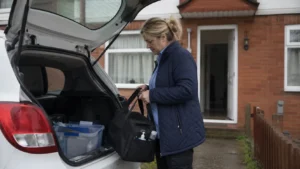
A self-employed carer’s regular costs can include:
| Cost | Why it matters |
| Travel | Fuel, fares, parking, servicing and time between clients |
| Car insurance | The policy may need appropriate business use |
| Public liability insurance | Protection against certain injury or property claims |
| Professional indemnity cover | Protection relating to professional services or advice |
| DBS checks | Clients often expect a current eligible check |
| Training | Safeguarding, first aid, medication and moving and handling |
| PPE | Gloves, aprons, masks and sanitising products |
| Mobile phone | Client communication, scheduling and emergencies |
| Bookkeeping | Invoices, expense records and Self Assessment |
| Equipment | Uniforms, protective clothing and care-related supplies |
| Holiday provision | No automatic paid annual leave |
| Sickness reserve | No automatic employer-funded sick pay |
| Pension saving | No automatic employer contribution |
| Cancellation risk | Clients may cancel visits or enter hospital |
| Professional support | Accountancy, legal or compliance advice |
HMRC permits qualifying business costs such as professional fees, professional indemnity insurance and public liability insurance to be deducted when calculating taxable profit.
A detailed breakdown of allowable expenses for self-employed people explains the treatment of insurance, training, travel, mobile-phone use, protective clothing and mixed personal and business costs.
Where a car is used to travel between clients, the motor insurer should be told about the work. Ordinary social, domestic and commuting cover may not be sufficient. The potential cost of adding business use to car insurance should be included when setting the rate.
Does a Self-Employed Carer Need a DBS Check?
A DBS check is not a professional qualification, but clients, local authorities, agencies and insurers may expect an appropriate criminal-record check before care begins.
A significant change took effect on 21 January 2026. Eligible self-employed people and personal employees can now apply for an Enhanced DBS check, or an Enhanced check with the relevant barred-list information, through an authorised DBS umbrella body.
The level available depends on the work being performed.
Government guidance specifically gives the example of a personal carer providing personal care and shopping support to adult clients as a role potentially eligible for an Enhanced DBS check in the adult workforce.
A private client cannot apply for the self-employed carer’s enhanced check. The carer must apply through an eligible umbrella body, although an organisation contracting the carer may sometimes apply under its own procedures.
The carer should retain the original certificate and consider joining the DBS Update Service where appropriate.
Does a Self-Employed Carer Need to Register With a Care Regulator?
Regulation depends on the country, the services provided and how the arrangement is structured.
In England, personal care can be a regulated activity. A sole trader carrying on regulated personal care may need to register as an individual provider with the Care Quality Commission.
However, the outcome depends on the precise arrangement, including who directs or controls the care and whether the carer is personally employed by the person receiving support.
The CQC’s scope rules for personal care and independent care arrangements should be checked before services are advertised or supplied. CQC guidance confirms that the structure and degree of ongoing direction or control affect whether registration is required.
Different regulators apply elsewhere in the UK:
| Country | Care regulator |
| England | Care Quality Commission |
| Scotland | Care Inspectorate |
| Wales | Care Inspectorate Wales |
| Northern Ireland | Regulation and Quality Improvement Authority |
Care services in Scotland may need to be registered with the Care Inspectorate, while domiciliary support services in Wales and domiciliary care services in Northern Ireland are also subject to their own registration frameworks.
Registration rules are legally significant. A carer should obtain confirmation from the relevant regulator or a suitably qualified adviser rather than assuming that sole-trader status creates an exemption.
Does a Self-Employed Carer Need to Register With HMRC?
A carer operating independently will commonly trade as a sole trader.
Where gross trading income exceeds the applicable reporting threshold, the carer will normally need to register for Self Assessment, retain business records and report income and allowable expenses.
The current process for registering as a sole trader with HMRC explains the £1,000 gross-income test, registration deadlines, record-keeping and National Insurance responsibilities.
The £1,000 test is based on gross trading income before expenses, not the amount remaining as profit. A carer receiving £1,500 and spending £700 on travel and insurance may still have to register because gross income exceeds £1,000.
Should Weekends and Bank Holidays Cost More?
A self-employed carer can negotiate different rates for different working patterns, provided the charges are clearly stated in the service agreement.
Higher fees may be appropriate for:
- Saturdays and Sundays;
- public holidays;
- Christmas and New Year;
- early-morning visits;
- late evenings;
- waking nights;
- emergency cover;
- short-notice bookings;
- short visits involving significant travel; and
- work outside the usual service area.
There is no compulsory national premium for self-employed care work. The agreement might use a percentage increase, a higher fixed hourly rate or a minimum booking charge.
For example, a carer charging £25 during normal weekday hours could agree £28 for weekends and £35 or £40 for specified public holidays. The exact amount should be disclosed before the work is accepted.
Should Travel Time Be Charged Separately?
There are three common approaches:
- Include normal local travel within the hourly rate.
- Charge mileage or travel expenses separately.
- Use a minimum booking charge that accounts for travel.
A 30-minute visit may not be financially viable at half the standard hourly fee. If the carer spends 20 minutes travelling each way, the assignment could occupy 70 minutes while generating only half an hour of revenue.
A fair pricing structure could therefore require a one-hour minimum booking or a higher rate for short visits.
Clients should be told whether the price includes mileage, parking, congestion charges and travel beyond an agreed radius.
What Should Be Included in a Private-Care Agreement?

A written agreement protects both the carer and the person receiving care.
It should normally explain:
| Term | Details to record |
| Services | The specific duties the carer will and will not perform |
| Rate | Standard, weekend, night and bank-holiday charges |
| Minimum booking | The shortest visit that can be booked |
| Travel | Mileage, parking and travel-time arrangements |
| Invoicing | Frequency, payment method and payment deadline |
| Cancellation | Notice required and any cancellation charge |
| Holidays | How much notice the carer will provide |
| Sickness | Who should be contacted and how cover is handled |
| Medication | The agreed scope and record-keeping procedure |
| Emergencies | Family, GP and emergency-service contact arrangements |
| Confidentiality | How personal and health information is protected |
| Complaints | How concerns will be raised and resolved |
| Ending the arrangement | Required notice from either party |
The agreement should reflect the actual relationship. It should not use self-employed wording merely to avoid PAYE or employment responsibilities.
When Can a Self-Employed Carer Increase the Hourly Rate?
A rate review may be reasonable where:
- fuel and travel costs have increased;
- insurance or training expenses have risen;
- the client’s care needs have become more complex;
- additional duties have been requested;
- the carer has gained relevant qualifications;
- the original fee no longer covers non-billable time; or
- the rate has not been reviewed for a considerable period.
The agreement should explain when prices are reviewed and how much notice will be given.
A clear message might state the current rate, the new rate, the effective date and the reason for the change. Retrospective price increases should be avoided unless the contract expressly permits them.
What Should Families Compare Before Hiring an Independent Carer?

The cheapest hourly rate is not necessarily the lowest-risk or best-value option.
A family should consider:
- relevant experience;
- references;
- DBS status;
- training records;
- insurance;
- right-to-work evidence;
- reliability and continuity;
- communication skills;
- medication competence;
- moving-and-handling knowledge;
- emergency procedures;
- holiday and sickness cover;
- written terms;
- safeguarding awareness; and
- whether regulatory registration is required.
A higher hourly rate may still produce a lower total cost than an agency where the family is comfortable managing the arrangement. However, direct engagement may involve more responsibility for checking employment status, arranging replacement cover and monitoring the quality of care.
What Is a Sensible Starting Rate for a New Self-Employed Carer?
A newly independent carer with relevant employment experience might consider a starting rate of approximately £20 to £24 per hour for routine weekday care outside the most expensive areas.
A rate closer to £24 to £28 per hour may be more appropriate where the carer already has strong experience, current training, insurance, an enhanced DBS check and responsibility for personal care.
Starting too low can create several problems:
- the fee may not cover travel and administration;
- raising it substantially later can be difficult;
- the carer may need to accept excessive hours;
- annual leave may become unaffordable; and
- the business may be unable to fund training or insurance.
A rate should be calculated from costs and realistic working hours rather than copied from an employed-care vacancy.
Final Summary
The typical self-employed carer hourly rate in the UK is £18 to £30 in 2026, with £22 to £28 per hour representing a realistic range for experienced routine personal care.
Specialist care can command £28 to £40 per hour or more, while live-in care commonly costs £150 to £200 per day.
The advertised fee is not take-home pay. It must cover travel, insurance, DBS checks, training, PPE, unpaid administration, cancellations, holidays, sickness, pensions, Income Tax and National Insurance.
A sustainable rate should be calculated by adding the carer’s target income, annual business expenses and unpaid-leave provision, then dividing the total by realistic billable hours.
Employment status and care regulation must also be checked carefully. A contract cannot turn an employee into a self-employed contractor, and providing regulated personal care may require registration with the appropriate care regulator.
Frequently Asked Questions
How much does a self-employed carer earn per hour in the UK?
A self-employed carer commonly charges approximately £18 to £30 per hour in 2026. Experienced carers often charge £22 to £28, while specialist or complex care may cost £28 to £40 per hour or more.
What is a fair hourly rate for a private carer?
Approximately £22 to £28 per hour can be fair for an experienced independent carer providing routine personal care. Location, travel, duties, qualifications and working hours can justify a different amount.
Is £15 per hour enough for a self-employed carer?
It is unlikely to be sustainable for most genuinely self-employed carers once travel, insurance, training, unpaid leave and administration are considered. It is only slightly above the 2026 National Living Wage for employees aged 21 and over.
Can a self-employed carer charge £30 per hour?
Yes. A £30 rate may be reasonable for experienced care, specialist support, irregular work, short visits, nights, weekends or high-cost locations. The rate should be agreed with the client in advance.
How much should a self-employed dementia carer charge?
Dementia-care rates may range from approximately £25 to £35 per hour, with higher charges where the person has complex behavioural, mobility or medical needs.
How much does a live-in self-employed carer charge?
A typical independent live-in rate is approximately £150 to £200 per day. More may be charged for couples, waking-night duties, complex care or assignments without regular breaks.
Does a self-employed carer pay tax?
Yes. Tax is generally calculated on business profit after allowable expenses. The carer may need to pay Income Tax and Class 4 National Insurance through Self Assessment.
Can a self-employed carer claim mileage?
Qualifying business journeys may be deductible using the applicable mileage method or actual vehicle-cost rules, depending on the accounting method and previous claims. Ordinary personal travel is not deductible.
Does a self-employed carer receive holiday pay?
Not normally. A genuinely self-employed carer must include the cost of annual leave in the hourly or daily rate. An arrangement that functions like employment may create different rights.
Does a self-employed carer need insurance?
There is no single policy that is automatically compulsory in every arrangement, but public liability and professional indemnity insurance are commonly expected. Motor insurance must also cover the actual business use of the vehicle.
Can a self-employed carer work for only one client?
It is possible, but working continuously for one client under their control may indicate employee or worker status. The complete relationship must be assessed rather than relying on the contract label.
Can a private family employ a carer directly?
Yes. The carer may be an employee, worker or genuinely self-employed contractor depending on the arrangement. Where the family is the employer, it may need to operate PAYE and provide applicable employment rights.

More in Earnings & Data

Armed Forces Pay Rise 2026: UK Military Pay Increase Explained
The latest Armed Forces pay rise gives UK military personnel a 3.6% increase in base pay for 2026/27, effective from 1 April 2026. The Government accepted the recommendations of the independent Armed Forces’ Pay Review Body in full, covering personnel across the Royal Navy, British Army and Royal Air Force. The award means the average […]

Self-Employed Painter and Decorator Hourly Rate UK: 2026 Pricing
The typical self-employed painter and decorator hourly rate in the UK is approximately £25 to £40 per hour for standard residential work in 2026. An established decorator may charge £35 to £50 per hour, while specialist services or work in London can cost £40 to £60 per hour or more. Day rates commonly range from […]