
The typical self-employed gardener hourly rate in the UK is approximately £25 to £40 per hour for routine residential garden maintenance in 2026. An experienced, qualified gardener may charge between £35 and £50 per hour, while specialist horticultural work, difficult hedge cutting or short-notice jobs can cost more.
Rates are normally higher in London and the South East. The Professional Gardeners’ Guild currently recommends self-employed rates of £30 to £51 per hour in London, £29 to £41 in the South East and East Anglia, and £26.50 to £41 across Scotland, Wales and other UK regions. These are professional recommendations rather than government-set prices.
The amount charged to a customer is not the gardener’s take-home wage. It must also cover travelling, fuel, tools, insurance, vehicle expenses, equipment repairs, administration, unpaid quotations, bad weather, holidays and tax.
Quick answer: A self-employed gardener will commonly charge £25–£40 per hour for general maintenance in 2026. New gardeners may start nearer £20–£30, while established professionals frequently charge £35–£50 or more.
What Is the Average Self-Employed Gardener Hourly Rate in the UK?

There is no statutory or government-approved hourly rate for self-employed gardeners. Each gardener sets prices according to experience, qualifications, operating costs, location, demand and the type of work being completed.
Current consumer pricing guides place general UK gardener rates across a broad range of approximately £15 to £45 per hour. However, professional gardening organisations recommend higher minimum rates for experienced, properly equipped and insured gardeners. Checkatrade’s March 2026 estimates place regular garden maintenance at £15–£45 per hour, with an average figure of approximately £35.
A realistic 2026 pricing guide is:
| Type of gardener or service | Typical hourly rate |
| New gardener carrying out basic maintenance | £20–£30 |
| General self-employed gardener | £25–£40 |
| Established or qualified gardener | £35–£50 |
| Experienced gardener in London | £40–£55 |
| Specialist horticultural work | £45–£65+ |
| Two-person gardening team | £55–£90+ |
| Landscape gardener | £30–£50 |
| Emergency or short-notice work | Standard rate plus a premium |
These figures are planning estimates rather than fixed tariffs. A gardener should calculate an individual rate based on actual business costs rather than copying the lowest price advertised locally.
How Much Do Qualified Self-Employed Gardeners Charge?
Qualified and highly experienced gardeners often charge substantially more than someone offering basic lawn mowing or weeding.
The Gardeners Guild’s 2026 analysis estimates the following average rates based on trading experience:
| Gardening experience | Estimated day rate | Equivalent hourly rate |
| Up to four years | £210 | £28 |
| Four to ten years | £272 | £36 |
| Ten years or more | £343 | £46.70 |
The figures are based on 7.5 chargeable hours per day. The organisation stresses that the fee charged is not equivalent to the gardener’s wage because it includes the costs and risks of operating the business.
A gardener may reasonably charge more when the service involves:
- Formal horticultural qualifications
- Advanced plant identification
- Specialist pruning knowledge
- Garden restoration
- Pest or disease identification
- Machinery requiring additional training
- High-value or historic gardens
- Garden management and planting plans
- Supervising staff or subcontractors
- Working at height or around difficult terrain
Customers are paying for judgement, reliability, equipment and horticultural knowledge as well as physical labour.
What Is the Self-Employed Gardener Hourly Rate by UK Region?
Location has a significant effect on gardening prices. Higher living costs, congestion, parking restrictions and stronger customer demand can raise prices in London and the South East.
The Professional Gardeners’ Guild’s March 2026 recommended ranges are:
| UK area | Recommended self-employed rate |
| London | £30–£51 per hour |
| South East and East Anglia | £29–£41 per hour |
| Scotland, Wales and other UK regions | £26.50–£41 per hour |
The organisation describes these as recommended minimum rates and acknowledges that each gardener must negotiate fees according to individual circumstances.
In practical terms, a general gardener in a lower-cost rural area might charge £25–£32 per hour, while an established gardener working in central or Greater London may need to charge £40–£55.
Regional pricing can also vary within the same county. Rates may be higher where:
- Customers have larger or more complex gardens
- Parking is expensive or difficult
- Local competition is limited
- Travel between customers takes longer
- There is strong demand for reliable gardeners
- Properties require specialist insurance or security checks
- Green waste disposal is expensive
A local competitor analysis is useful, but a gardener should not automatically undercut every other provider. A low rate that does not cover operating costs is not commercially sustainable.
How Much Should a Self-Employed Gardener Charge for Different Services?
Not every gardening service should be charged at the same hourly rate.
Routine lawn care requires different equipment, knowledge and risk from tree work, landscaping or specialist pruning. A gardener may therefore use several hourly rates or provide fixed quotations for more complicated work.
| Gardening service | Typical 2026 charging approach |
| Lawn mowing and edging | £25–£40 per hour or fixed visit price |
| Weeding and border maintenance | £25–£40 per hour |
| General garden maintenance | £25–£40 per hour |
| Planting and border development | £30–£45 per hour plus materials |
| Skilled shrub and rose pruning | £30–£50 per hour |
| Hedge cutting | £30–£50+ per hour or fixed quote |
| Leaf clearance | Hourly rate or fixed seasonal price |
| Garden clearance | Fixed quote, day rate or team rate |
| Garden consultation | £40–£75+ per hour |
| Planting plan or garden design | Fixed professional fee |
| Landscaping | £30–£50 per hour or project quotation |
| Waste removal | Separate charge based on volume and disposal cost |
Market estimates for lawn cutting commonly fall between £20 and £45 per hour, although the final charge depends on garden size, access, grass condition and whether clippings are removed.
Small jobs may appear expensive when measured only by the time spent in the garden. A 30-minute lawn cut can still involve loading equipment, travelling to the property, unloading, cleaning machinery, processing payment and travelling to the next customer.
Should a Gardener Charge by the Hour, Day or Job?
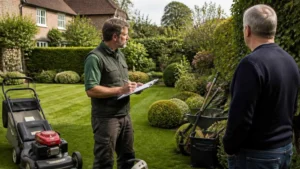
The best pricing method depends on how predictable the work is.
When Is an Hourly Rate Suitable?
Hourly pricing is normally suitable for:
- Regular garden maintenance
- Weeding
- Pruning
- General tidying
- Seasonal border work
- Jobs where the scope may change
- New gardens whose condition has not been fully assessed
Hourly pricing protects the gardener when a job takes longer than the customer originally expected.
However, customers may be uncertain about the final bill. The gardener should therefore explain the likely number of hours and obtain permission before significantly exceeding an estimate.
When Is a Day Rate Better?
A day rate can be appropriate for:
- Large garden tidy-ups
- Seasonal pruning
- Planting projects
- Clearing an overgrown garden
- Several maintenance tasks at one property
- Commercial grounds maintenance
- Jobs involving extensive equipment
General consumer estimates commonly place standard gardener day rates around £150–£200, although experienced professionals may charge £250–£350 or more. The Gardeners Guild’s experienced-member estimate reaches £343 per day for gardeners with at least ten years’ experience.
The gardener should define what a “day” means. For example, the quotation could state that the day rate includes up to seven hours on site, excluding a lunch break and chargeable materials.
When Should a Fixed Price Be Used?
A fixed quotation is often better for:
- Hedge cutting
- Garden clearance
- Turf installation
- Fence installation
- Planting schemes
- Pressure washing
- Landscaping projects
- One-off lawn restoration
- Waste removal
A fixed price rewards an efficient gardener while giving the customer certainty.
The quotation should clearly state what is included, such as labour, equipment, materials, green waste, travel and VAT. It should also explain what happens if the customer requests additional work.
Is a Gardener’s Hourly Rate the Same as Their Wage?
No. The hourly charge is business turnover, not personal earnings.
A gardener charging £35 per hour does not necessarily earn £35 for every hour worked. Some working time cannot be invoiced to customers.
Non-billable work may include:
- Travelling between properties
- Preparing quotations
- Answering customer messages
- Scheduling appointments
- Buying materials
- Cleaning and maintaining tools
- Bookkeeping
- Advertising
- Following up unpaid invoices
- Visiting recycling or disposal facilities
- Rearranging work because of bad weather
The Gardeners Guild estimates that business costs can consume approximately 23% of annual turnover for a professional gardener. It also reports that winter income can fall because of shorter days, weather disruption and reduced seasonal demand. These figures will not reflect every individual business, but they demonstrate why customer fees cannot be treated as wages.
A self-employed gardener is also not automatically entitled to holiday pay, sick pay, employer pension contributions or the National Minimum Wage. GOV.UK confirms that genuinely self-employed people running their own businesses are not covered by minimum-wage entitlement in the same way as employees and workers.
How Can a Self-Employed Gardener Calculate an Hourly Rate?
A sustainable hourly rate should be calculated from the required business turnover rather than chosen arbitrarily.
A useful formula is:
Desired annual profit + annual business expenses + contingency ÷ annual billable hours = minimum hourly rate
Worked Pricing Example
Suppose a gardener wants:
- £30,000 annual profit before personal tax
- £8,000 to cover annual business costs
- £2,000 as a contingency for repairs and quiet periods
The business must generate:
£30,000 + £8,000 + £2,000 = £40,000 annual turnover
The gardener expects to invoice five hours per working day for 220 days:
5 hours × 220 days = 1,100 billable hours
The minimum calculated rate is:
£40,000 ÷ 1,100 = £36.36 per hour
Charging £36.36 leaves little margin for unexpected costs, cancellations or underestimating jobs. The gardener might therefore set a standard rate of £38–£40 per hour.
The remaining hours in the working day are not necessarily leisure time. They may be spent travelling, loading equipment, preparing quotes and administering the business.
What Business Expenses Must a Gardener Include?
Before setting an hourly rate, a gardener should prepare an annual cost forecast.
Typical expenses include:
- Van or vehicle costs
- Business fuel
- Vehicle servicing and repairs
- Lawn mower maintenance
- Hand tools and power tools
- Replacement blades and cutting lines
- Batteries and charging equipment
- Protective clothing and safety equipment
- Public liability insurance
- Employers’ liability insurance where required
- Advertising and website costs
- Phone and accounting software
- Professional memberships
- Bookkeeping or accountant fees
- Relevant training
- Waste disposal charges
- Storage or workshop costs
- Bank and card-processing fees
Many genuine business costs can reduce taxable profit when actual expenses are claimed. This guide to allowable expenses for self-employed workers explains how equipment, insurance, advertising, qualifying travel and other costs are generally treated.
HMRC allows sole traders to claim qualifying business travel and vehicle costs, although personal use must be excluded. A gardener may use actual eligible costs or simplified mileage expenses where the relevant conditions are met.
The lowest-cost gardener is not necessarily making the highest profit. Someone charging £25 per hour but travelling long distances and using expensive petrol machinery may retain less than a gardener charging £35 with a compact local route.
Should Travel Time Be Included in a Gardening Rate?
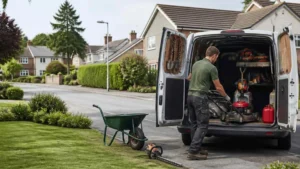
Travel should be included somewhere in the pricing model.
Common approaches include:
- Building normal local travel into the standard hourly rate
- Setting a minimum appointment charge
- Charging mileage outside a defined service area
- Applying a travel fee to remote jobs
- Charging from arrival at the property
- Using higher fixed prices for isolated customers
A gardener should avoid charging customers unexpectedly. The pricing policy should explain when travel or mileage is added.
Route density is particularly important for regular maintenance businesses. Four customers located on neighbouring streets can be more profitable than four customers spread across a 30-mile area, even when the same hourly rate is charged.
Should a Self-Employed Gardener Have a Minimum Charge?
A minimum charge is normally sensible for short appointments.
A customer may only require 30 minutes of mowing, but the gardener still has to:
- Schedule the appointment.
- Load the required equipment.
- Travel to the property.
- Unload and complete the work.
- Clean and reload the machinery.
- Issue an invoice or collect payment.
- Travel to the next customer.
Common minimum arrangements include:
- A one-hour minimum
- A £30–£50 minimum visit fee
- A two-hour minimum for irregular customers
- A fixed lawn-maintenance price
- A half-day minimum for distant properties
Some consumer estimates place minimum garden call-out fees around £25–£35, although a professional business with higher travel and equipment costs may need to charge more.
Regular customers may receive a lower per-visit price because their work is predictable and can be scheduled efficiently.
Should Materials Be Included in the Hourly Rate?
Plants, compost, fertiliser, stakes, lawn treatments and other materials should not normally be absorbed into the basic labour rate.
A gardener can either:
- Ask the customer to buy the materials
- Charge the exact purchase price
- Add a handling or sourcing fee
- Apply a disclosed percentage mark-up
- Include materials in a fixed quotation
A mark-up can compensate for selecting, collecting, transporting and temporarily financing materials.
The quotation should make clear whether plant replacements are offered if a plant fails. A gardener cannot normally guarantee every plant indefinitely because survival can be affected by watering, weather, soil, pests and customer care.
Should Green Waste Removal Cost Extra?
Green waste removal should normally be priced separately unless the service agreement clearly includes it.
The charge may need to cover:
- Loading time
- Waste bags or containers
- Additional vehicle space
- Transport to a permitted site
- Commercial disposal fees
- Waste documentation
- Registration costs
- Time spent unloading
Gardeners should not assume that every council recycling centre accepts commercial gardening waste free of charge. Household facilities may restrict waste generated through commercial work.
A gardener transporting waste as part of a business may also need the appropriate environmental registration. In England, businesses can check the official waste-carrier registration requirements. Wales normally requires businesses transporting waste to register with Natural Resources Wales, while gardeners in Scotland should check the current SEPA transporter requirements.
The applicable regulator and terminology can differ across the UK, so a gardener should check the rules for the nation in which the business is based.
Does a Self-Employed Gardener Need to Pay Tax?

A self-employed gardener may need to report income and pay Income Tax and National Insurance through Self Assessment.
The first £1,000 of gross trading income may be covered by the trading allowance, subject to eligibility. This figure relates to income before business expenses are deducted.
HMRC specifically lists casual gardening among the activities that can qualify for the trading allowance. When gross trading income exceeds £1,000, the individual will normally need to register for Self Assessment by the applicable deadline.
A gardener deciding between the allowance and actual costs can read the detailed explanation of the £1,000 trading allowance. The trading allowance and actual expenses cannot normally both be deducted against the same trading income.
Gardeners whose gross income exceeds the threshold can follow the steps for registering as a sole trader. Registration is generally made with HMRC rather than Companies House.
For 2026/27, Class 4 National Insurance is charged at 6% on self-employed profits above £12,570 up to £50,270 and at 2% above £50,270. Most people pay it through Self Assessment.
The full interaction between profit and contributions is covered in this guide to National Insurance for self-employed people.
Tax is generally calculated on taxable profit, not simply on the hourly rate or total customer payments. The final liability also depends on other income, available allowances, residence and individual circumstances.
Can a Gardener Use the £1,000 Trading Allowance?
A gardener can potentially use the trading allowance where the eligibility conditions are met.
If total gross trading income is £1,000 or less during the tax year, it may not need to be reported to HMRC, although records should still be retained and exceptions apply.
Where gross income is above £1,000, the gardener may generally choose between:
- Deducting the trading allowance from income; or
- Deducting actual allowable business expenses.
A professional gardening business often has substantial vehicle, fuel, insurance and equipment costs. Actual expenses may therefore produce a lower taxable profit than the flat £1,000 allowance.
For example:
| Calculation | Trading allowance | Actual expenses |
| Gross gardening income | £12,000 | £12,000 |
| Deduction | £1,000 | £3,800 |
| Indicative taxable profit | £11,000 | £8,200 |
In this illustration, deducting £3,800 of eligible actual costs produces a lower profit than using the allowance. The expenses would need to be genuine, allowable and supported by adequate records.
Does a Gardener Need to Register for VAT?
A gardener must normally register for VAT when taxable turnover exceeds the applicable registration threshold.
As of July 2026, the compulsory UK VAT-registration threshold is more than £90,000 of taxable turnover in a rolling 12-month period. Businesses below the threshold may register voluntarily.
A VAT-registered gardener will usually need to charge VAT on taxable services. This can affect residential pricing because many household customers cannot reclaim VAT.
Quotations should state clearly whether prices:
- Include VAT
- Exclude VAT
- Are not subject to VAT because the business is not registered
A gardener approaching the threshold should not deliberately stop checking turnover at the end of the tax year. The standard test considers a rolling 12-month period, not only a fixed accounting year.
How Much Can a Self-Employed Gardener Earn Annually?
Annual turnover depends on the hourly rate, billable hours, seasonality and business expenses.
Example 1: Part-Time Gardening Business
- Hourly rate: £30
- Billable hours per week: 18
- Working weeks: 44
Annual turnover: £23,760
If annual business costs are £5,500, the initial profit before personal tax would be approximately £18,260.
Example 2: Established Full-Time Gardener
- Hourly rate: £38
- Billable hours per week: 28
- Working weeks: 46
Annual turnover: £48,944
If business costs are £10,000, the initial profit before personal tax would be approximately £38,944.
Example 3: Experienced Gardener Charging a Premium Rate
- Hourly rate: £48
- Billable hours per week: 30
- Working weeks: 45
Annual turnover: £64,800
If business expenses total £14,000, the initial profit before personal tax would be approximately £50,800.
These examples are illustrations rather than income guarantees. Cancellations, weather, illness, unpaid work, customer demand and equipment failure can materially change actual results.
What Factors Should Increase a Gardener’s Hourly Rate?
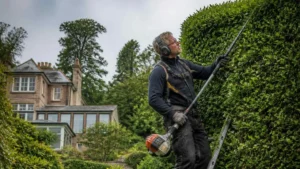
A gardener may reasonably increase prices where a job involves:
- Extensive travelling
- Difficult parking
- Restricted access
- Steep or unstable ground
- Heavy or specialist machinery
- High hedges
- Large volumes of waste
- Severely overgrown areas
- Specialist pruning
- Plant-disease expertise
- Weekend or urgent attendance
- Commercial insurance requirements
- Additional staff
- Expensive consumables
- Dangerous or contaminated materials
The gardener should avoid using a standard maintenance rate for work involving substantially greater risk or expense.
Tree surgery, pesticide application, electrical installation, structural landscaping and some machinery operations may also require specialist competence, insurance or certification. A gardener should decline work that falls outside their training and cover.
How Often Should a Self-Employed Gardener Increase Prices?
Gardening rates should normally be reviewed at least once a year.
Costs that may change include:
- Fuel
- Insurance
- Tool prices
- Disposal fees
- Vehicle repairs
- Advertising
- Accountancy
- Storage
- Training
- General living costs
A gardener does not have to increase every customer’s rate by the same amount. Long-standing regular clients may remain less expensive to serve than irregular customers requiring separate travel and scheduling.
However, maintaining an unprofitable legacy rate can damage the entire business. Customers should receive reasonable written notice explaining:
- The new rate
- The date it starts
- Whether the visit length will change
- Whether materials and waste remain separate
- Any updated cancellation terms
A professional rate review should be based on costs and value rather than an apology for charging sustainable prices.
Should New Gardeners Charge Less?
A new gardener may initially charge below the local rate while building experience, reviews and route density. However, starting too cheaply can make later increases difficult.
A more sustainable approach is to:
- Calculate the genuine minimum rate
- Offer a temporary introductory price
- Restrict discounts to selected services
- Set an expiry date for introductory rates
- Request reviews from satisfied customers
- Increase prices as experience and demand grow
New gardeners still have fuel, equipment, insurance and tax obligations. Inexperience does not make those costs disappear.
Someone beginning with gardening as an additional income stream can use the complete UK side-hustle guide to understand the basic difference between turnover, expenses and taxable profit.
What Should Customers Check Before Hiring a Gardener?
Price should not be the only consideration.
Customers should also check:
- Experience with the required type of work
- Public liability insurance
- Reviews and references
- Whether waste removal is lawful and included
- Who supplies materials
- Whether VAT is included
- The minimum visit length
- Cancellation terms
- How accidental damage is handled
- Whether the gardener uses employees or subcontractors
- What happens during unsuitable weather
- Whether the quote is an estimate or fixed price
Customers should be cautious where a gardener offers unusually low waste-removal prices or cannot explain where the waste will be taken.
A clear written quotation protects both sides. It does not need to be a lengthy contract, but it should identify the work, price, payment terms and important exclusions.
Self-Employed Gardener Pricing Checklist
Before publishing or changing an hourly rate, a gardener should ask:
- What annual profit does the business need to generate?
- How many hours can realistically be invoiced?
- What are the annual vehicle and fuel costs?
- How much is spent on tools and maintenance?
- Is insurance included in the calculation?
- How much unpaid administration is required?
- Is winter seasonality accounted for?
- Does the rate cover holidays and sickness?
- Is travel included?
- Is there a minimum visit charge?
- Are materials charged separately?
- Is green waste included?
- Does VAT apply?
- Are competitors providing comparable services?
- Is the rate sustainable without excessive working hours?
If the answer to several of these questions is no, the advertised hourly rate may be too low.
Final Summary
The typical self-employed gardener hourly rate in the UK is £25–£40 in 2026, but no single rate is suitable for every business.
New gardeners providing basic maintenance may charge £20–£30, while established professionals commonly charge £35–£50. Specialist horticultural work and London-based services can cost more.
A sustainable price must cover more than time spent physically gardening. It should account for:
- Travel
- Tools and machinery
- Fuel
- Insurance
- Vehicle costs
- Administration
- Waste handling
- Seasonal disruption
- Holidays
- Tax
- A reasonable business profit
The most accurate rate is therefore not the lowest local competitor price. It is the amount that allows the gardener to provide a reliable, properly insured and commercially sustainable service.
Frequently Asked Questions
What is a fair hourly rate for a gardener in the UK?
A fair rate for general garden maintenance is commonly between £25 and £40 per hour in 2026. Experienced, qualified or London-based gardeners may reasonably charge £35–£50 or more.
Is £30 per hour expensive for a gardener?
No. £30 per hour is within the normal range for a self-employed UK gardener. It may be relatively inexpensive where the price includes professional tools, insurance, travel and experienced plant care.
Is £20 per hour enough for a self-employed gardener?
It may be sufficient for a new gardener with very low expenses and tightly grouped customers, but it can become unsustainable once fuel, travel, tools, insurance, administration and tax are considered.
How much does a gardener charge per day?
General consumer estimates commonly fall around £150–£200 per day, while established professional gardeners may charge £250–£350 or more. The precise rate depends on the hours included, experience, location and service.
Do gardeners charge more in London?
Usually, yes. Professional guidance currently places London self-employed gardening rates at approximately £30–£51 per hour, compared with £26.50–£41 across Scotland, Wales and other UK regions.
Do gardeners charge for travelling time?
Some include local travel within their hourly rate, while others apply a mileage charge or minimum visit fee. The arrangement should be disclosed before work begins.
Do gardeners charge extra for tools?
Ordinary tool use is normally built into the labour rate. Specialist machinery, hired equipment, fuel-intensive tools or equipment needed only for one project may be quoted separately.
Do gardeners take garden waste away?
Some do, but waste removal is not automatically included. The gardener may charge according to volume, loading time, transport and commercial disposal fees. The business should also comply with the relevant waste-transport rules.
Do self-employed gardeners pay tax on the full hourly rate?
Not usually. Income Tax and self-employed National Insurance are generally calculated using taxable profit after the appropriate trading allowance or allowable business expenses, subject to the relevant tax rules.
Does a gardener need to issue an invoice?
A sole trader should maintain reliable records of customer income. Providing an invoice or receipt is a practical way to document the service, amount, date and payment terms, even for domestic customers.
Can a gardener charge different customers different rates?
Yes, provided the pricing does not involve unlawful discrimination or breach an agreed contract. Different rates may reflect travel, garden size, risk, frequency, access, required equipment or the scope of work.
Is gardening a profitable self-employed business?
It can be profitable where the gardener sets sustainable prices, controls travel, builds recurring work and manages equipment costs. Profitability depends more on net margin and billable utilisation than on the advertised hourly rate alone.

More in Finance & Tax

Can I Put £20,000 in an ISA Every Year? UK ISA Rules for 2026/27
Yes. An eligible UK saver can put up to £20,000 into ISAs in every tax year. For the current 2026/27 tax year, which runs from 6 April 2026 to 5 April 2027, the overall adult ISA allowance is £20,000. The allowance resets on 6 April each year. It does not matter how much has already […]

Best Cash ISA Rates UK 2026: Highest Easy-Access and Fixed ISA Rates Compared
The best cash ISA rates currently reach around 4.61% AER for easy-access accounts and 4.93% AER for longer fixed terms, although rates can change quickly and the highest-paying account is not automatically the best choice for every saver. For 2026/27, adults can still put up to £20,000 into ISAs across the tax year. However, a […]