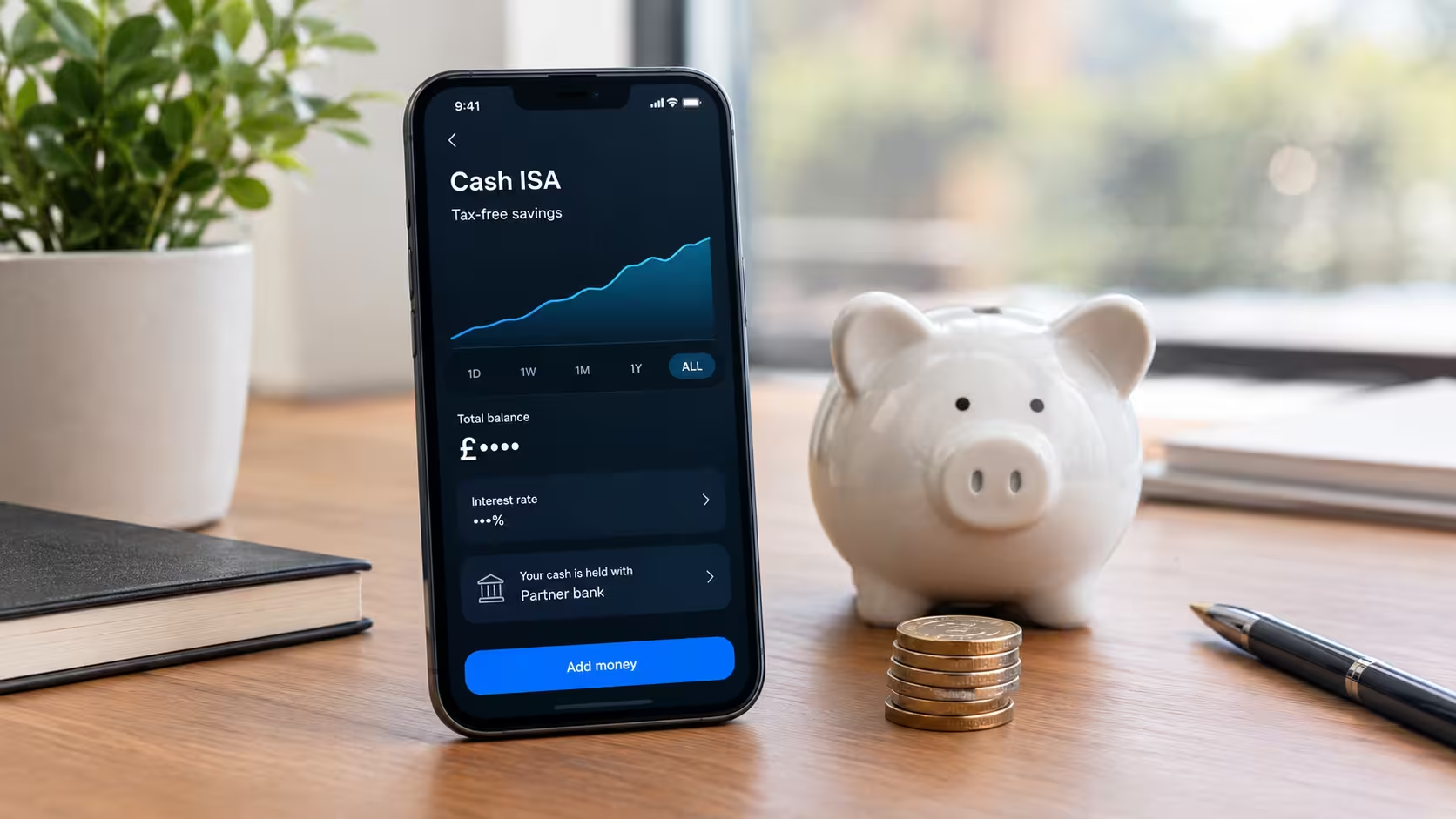
Is Trading 212 Cash ISA safe? Yes, Trading 212’s UK Cash ISA is generally considered a well-protected savings option because it is offered by an FCA-regulated firm, with eligible deposits held at partner banks covered by the Financial Services Compensation Scheme (FSCS).
However, understanding how that protection works is essential before depositing substantial savings.
As of October 2026, eligible bank deposits receive FSCS protection of up to £120,000 per person, per authorised banking institution.
Trading 212 also operates under separate investment-firm protection rules, which can provide up to £85,000 for eligible claims if the platform fails and cannot return customers’ money.
We analysed Trading 212’s savings structure, regulatory arrangements, interest rates, withdrawal conditions and potential risks from a UK financial planning perspective.
Our assessment also considers the practical savings requirements of employees, self-employed professionals and entrepreneurs managing their personal cash reserves.
The findings suggest that Trading 212 offers a competitive combination of protection, accessibility and interest, although it is important to distinguish its Cash ISA from the platform’s investment accounts.
Is Trading 212 Cash ISA Safe for Your Money?
Trading 212 Cash ISA provides several important safeguards that make it a credible option for UK savers.
The platform is operated in the UK by Trading 212 UK Ltd, a company authorised and regulated by the Financial Conduct Authority (FCA), under firm reference number 609146.
Unlike traditional banks, Trading 212 is an investment services provider. It does not operate its Cash ISA by simply holding customers’ savings as deposits on its own banking balance sheet.
Instead, customers’ Cash ISA money is held in segregated client accounts at authorised partner banks.
This means the funds are legally separated from Trading 212’s business money.
If Trading 212 experiences financial difficulties, these arrangements are designed to prevent client funds from being treated as ordinary company assets available to repay its creditors.
Nevertheless, segregation does not guarantee immediate repayment following insolvency. Administrators may need time to identify balances, reconcile records and arrange the return of funds.
Trading 212 Cash ISA Safety Overview
| Safety and Account Feature | Details |
| UK regulator | Financial Conduct Authority |
| FCA firm reference | 609146 |
| Cash ISA savings protection | Up to £120,000 per eligible person, per banking licence |
| Investment-firm failure protection | Up to £85,000 per eligible person, per firm, where applicable |
| How Cash ISA funds are held | Segregated accounts at partner banks |
| Minimum deposit | £1 |
| Account type | Flexible, easy-access Cash ISA |
| Standard interest rate, October 2026 | 3.60% AER variable |
| Promotional interest | Up to 4.83% AER for qualifying new customers under a specified offer |
| Interest payments | Monthly |
| Bank transfer deposit fee | Free |
| Bank transfer withdrawal fee | Free |
| Our overall editorial rating | 91% – Very Good |
Rates and promotional eligibility were checked against information available in October 2026. Account conditions may change.
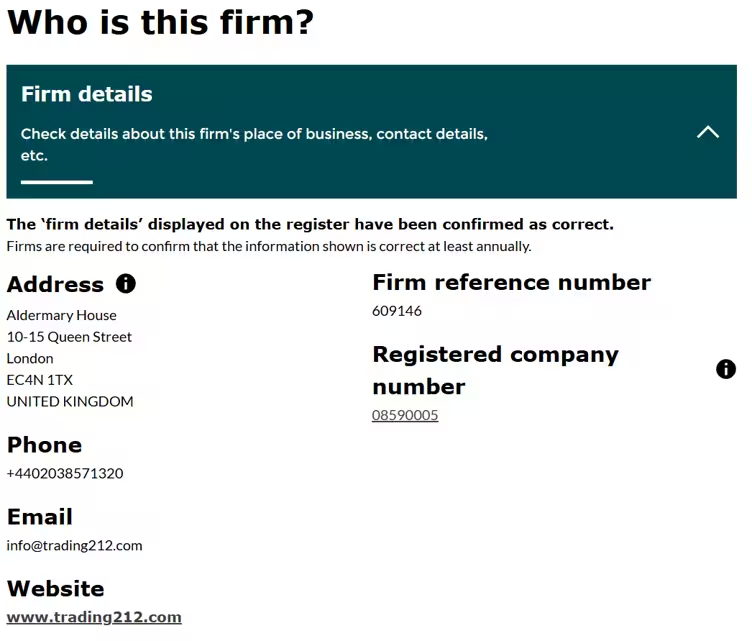
Trading 212’s official UK regulatory information showing that Trading 212 UK Ltd is authorised and regulated by the FCA under firm reference number 609146.
How Does Trading 212 Protect Your Cash ISA Savings?
The biggest concern for many first-time users is whether their money remains protected when deposited through an investment platform rather than a conventional bank.
Trading 212’s safeguards can be understood through three main protections.
1. FCA Regulation
Trading 212 UK Ltd operates under UK financial services regulation.
The FCA requires regulated firms holding client money to comply with relevant safeguarding and client asset rules.
These include requirements relating to maintaining appropriate records, reconciling client money and separating client assets from a firm’s own funds.
FCA authorisation is important because it establishes regulatory responsibilities and supervision.
However, FCA regulation does not mean the regulator guarantees every transaction, every interest rate or every customer’s savings.
2. Segregated Client Funds
Trading 212 states that Cash ISA deposits are held separately from its corporate funds.
This reduces the risk that customers’ money could be used to meet ordinary business liabilities if the company encounters financial problems.
Segregation is therefore a critical part of the overall protection structure.
For a saver who wants to preserve capital, the location and legal ownership of deposited money matter more than the appearance or popularity of a savings app.
3. FSCS Protection
Trading 212’s partner banks participate in the UK’s statutory deposit protection arrangements.
If an eligible partner bank fails, the FSCS can compensate affected depositors up to the applicable limit.
Since 1 December 2025, that limit has been £120,000 per eligible person, per authorised banking institution.
The protection is subject to eligibility and aggregation rules, meaning deposits held under the same banking licence are considered together.
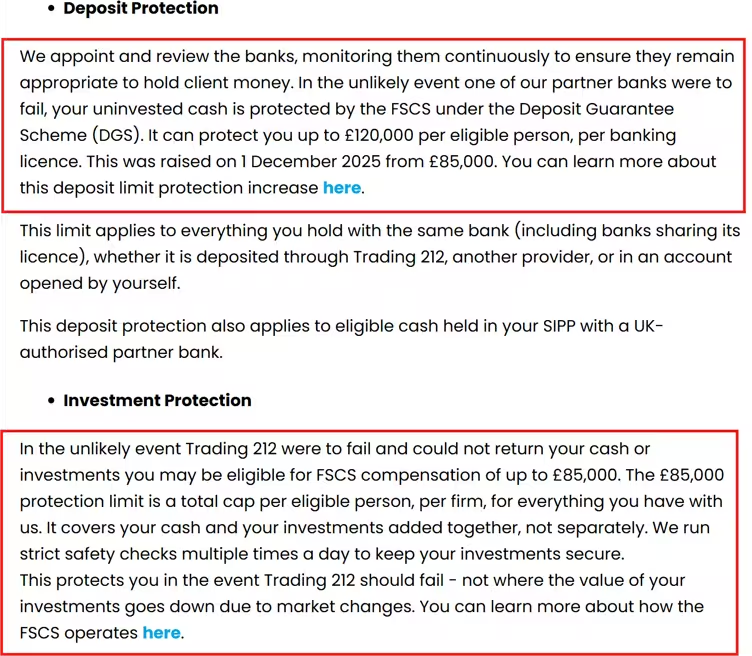
Trading 212’s official protection information explaining how Cash ISA balances are held with partner banks and the distinction between deposit protection and investment-firm protection.
Is Trading 212 Cash ISA FSCS Protected?
Yes. Eligible savings held in Trading 212’s UK Cash ISA benefit from FSCS deposit protection through the partner banks holding those funds.
However, two different compensation limits can apply depending on which financial institution fails.
| Situation | Potential Protection | What It Means |
| A partner bank becomes insolvent | £120,000 | Eligible deposits protected per person, per banking licence |
| Trading 212 becomes insolvent and cannot return client assets | £85,000 | Eligible investment-firm claims, subject to the applicable scheme rules |
| Another bank sharing the same licence fails | Shared £120,000 limit | Eligible deposits are aggregated under the same authorised institution |
| A Stocks and Shares ISA investment falls in value | No compensation for normal market losses | Ordinary investment risk remains with the investor |
These are separate protection arrangements, not additional allowances automatically available for every loss.
For example, someone cannot assume that £120,000 of deposit protection and £85,000 of investment protection combine to guarantee £205,000 in compensation.
The nature of the failure and the legal status of the customer’s assets determine which scheme applies.
Why the £120,000 Limit Matters?
Earlier online reviews may still mention the former £85,000 deposit protection limit.
That figure became outdated for ordinary eligible bank deposits when the FSCS limit increased on 1 December 2025.
The £85,000 limit remains relevant to qualifying investment-firm failure claims.
For someone researching Trading 212’s safety in 2026, confusing these two figures could lead to an incorrect assessment of the protection available.
Which Banks Hold Trading 212 Cash ISA Money?
Trading 212 uses authorised partner banks to safeguard eligible client deposits.
Its published information identifies major financial institutions, including Barclays, NatWest and JPMorgan Chase, among its banking partners.
These are established banking groups with UK regulatory obligations.
However, savers should not assume that every account has an equal allocation across each bank.
The actual distribution may differ depending on the account and Trading 212’s operational arrangements.
It is therefore important to verify the current banking arrangements and any available allocation information through Trading 212’s official account disclosures.
Can You Lose FSCS Protection If You Already Save With a Partner Bank?
This is one of the most important details that savers frequently overlook.
Imagine an individual who already holds £110,000 with Barclays.
They subsequently deposit £20,000 into a Trading 212 Cash ISA, and that full £20,000 is allocated to Barclays under the same banking licence.
Their combined deposits with that banking institution would be:
| Savings Location | Amount |
| Existing Barclays savings | £110,000 |
| Trading 212 Cash ISA money allocated to Barclays | £20,000 |
| Combined eligible deposits | £130,000 |
| Standard FSCS deposit protection limit | £120,000 |
| Amount potentially outside ordinary protection | £10,000 |
In this hypothetical example, £10,000 could fall outside normal deposit protection if that banking institution failed.
The situation would be different if the Trading 212 balance were allocated to an independently authorised bank.
This is why reviewing banking licence exposure is particularly valuable for individuals with substantial savings accumulated over several years.
For business owners and high-income professionals, the issue is not simply choosing two different brands. It is ensuring that deposits are spread across separate authorised banking institutions where appropriate.
What Happens If Trading 212 Goes Bust?
If Trading 212 were to become insolvent, the protection process would differ from the failure of a partner bank.
Because the firm is required to keep client assets separate, those assets should ordinarily remain identifiable as belonging to customers.
An insolvency practitioner would work to reconcile accounts and return eligible client funds.
However, this process could involve administrative delays.
If a qualifying shortfall arose and Trading 212 could not return customer money or assets, eligible customers could potentially claim through the FSCS investment protection scheme, subject to the £85,000 limit and other relevant conditions.
This provides an additional safeguard, but it does not eliminate insolvency risk or guarantee uninterrupted access.
In June 2025, Which? money expert Mike Croxford addressed this issue in a response concerning Trading 212 Cash ISA protection:
Money in a Trading 212 cash Isa wouldn’t be at risk if Trading 212 were to go out of business.
The underlying point concerns the segregation and protection of customer money. It should not be interpreted as a guarantee against every possible shortfall or repayment delay.
Our assessment is that the platform’s legal safeguarding arrangements are more important than whether Trading 212 operates physical bank branches.
Is Trading 212 Cash ISA Safer Than Its Stocks and Shares ISA?
Although both products are available through Trading 212, they carry different types of risk.
A Cash ISA is designed to preserve cash savings while earning interest.
A Stocks and Shares ISA holds investments whose prices can fluctuate according to financial market conditions.
| Feature | Trading 212 Cash ISA | Trading 212 Stocks and Shares ISA |
| Main purpose | Tax-free cash savings | Tax-efficient investing |
| Capital exposed to stock market movements | No, not through the Cash ISA itself | Yes |
| Interest or returns | Variable savings interest | Investment returns are not guaranteed |
| FSCS protection | Eligible cash deposits covered through partner banks | Eligible firm-failure claims may be protected |
| Normal market losses | Not applicable to cash deposits | Not covered by FSCS |
| Suitable time horizon | Short and medium term | Generally longer term |
| Main financial risk | Provider, banking, interest-rate and access risks | Market, investment and provider risks |
A decline in share prices is not equivalent to a bank or investment firm becoming insolvent.
For example, buying shares in a business that subsequently loses 40% of its market value would not ordinarily create an FSCS compensation entitlement.
By contrast, a qualifying failure of a partner bank holding protected deposits is the type of event the deposit protection scheme is designed to address.
What About Money Market Funds?
Trading 212 also offers interest on uninvested cash within other account types, where qualifying money market funds may be used.
Money market funds are investment products, not ordinary bank deposits. Their values can fluctuate, and they do not receive the same deposit protection simply because they are relatively low risk.
This distinction is important when reading general Trading 212 articles about earning interest on cash.
Trading 212 states that its UK Cash ISA funds are held at partner banks. Savers should assess the specific Cash ISA arrangements rather than assume that every interest-bearing balance across the platform is protected in exactly the same way.
What Is the Trading 212 Cash ISA Interest Rate in October 2026?
Trading 212’s standard Cash ISA rate stood at 3.60% AER variable in October 2026.
The rate follows the Bank of England’s Bank Rate, with Trading 212’s published standard tracking margin set at 0.15 percentage points below it.
With Bank Rate at 3.75%, this produces a standard Cash ISA rate of 3.60% AER.
Trading 212 also offers promotional interest arrangements for eligible customers.
A promotion highlighted in October 2026 provided up to 4.83% AER, combining:
- A standard variable rate of 3.60%.
- An additional promotional rate of 1.23 percentage points.
- A promotional period of 12 months for qualifying balances.
These rates should not be confused with a permanent guarantee.
The underlying savings rate may move when Bank Rate changes, while the promotional supplement is subject to its own terms and expiry date.
Who Qualifies for the Promotional Interest Rate?
Eligibility depends on the specific offer.
Under the October 2026 MoneySavingExpert-linked promotion, new customers needed to use the qualifying promotional application route or code, meet the account-opening requirements and fund the account with at least £1 within the required ten-day period.
Importantly, the promotional rate did not apply equally to every transferred ISA balance.
Qualifying new subscriptions and transferred contributions from the current tax year could receive the promotional rate.
Transfers representing savings contributed in previous tax years generally received the standard rate under this particular offer.
A saver moving £50,000 accumulated over several years should therefore not assume that the entire balance will earn 4.83%.
This is a significant factor when comparing Trading 212 against alternative Cash ISA providers.
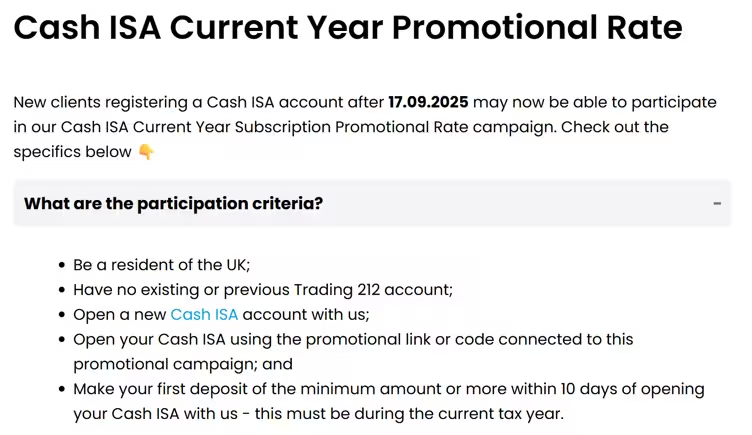
Official Trading 212 Cash ISA information showing how its variable tracking rate works and how promotional interest is added to eligible balances.
How Much Interest Can You Earn With Trading 212 Cash ISA?
The potential interest depends on the balance, applicable rate and period for which the savings remain deposited.
The following calculations assume a full year at an unchanged rate and that the entire balance qualifies for the stated interest rate.
| Savings Balance | 3.60% AER | 4.83% AER |
| £1,000 | £36.00 | £48.30 |
| £5,000 | £180.00 | £241.50 |
| £10,000 | £360.00 | £483.00 |
| £15,000 | £540.00 | £724.50 |
| £20,000 | £720.00 | £966.00 |
| £50,000 | £1,800.00 | £2,415.00 |
Illustrative annual earnings only. Actual returns depend on rate changes, promotional eligibility, deposit timing and the amount held throughout the year.
For someone depositing £20,000, the difference between 3.60% and 4.83% is approximately £246 over a year.
However, a higher first-year promotional rate does not necessarily make an account the strongest long-term option.
A saver should also consider the rate that applies when the promotion expires.
For individuals who prefer a guaranteed return, the available best one-year fixed-rate ISAs may offer a more predictable alternative, although they generally restrict early access.
Can Trading 212 Cash ISA Interest Rates Fall?
Yes. Trading 212’s standard Cash ISA interest rate is variable.
Its published tracking arrangement means changes in the Bank of England’s base rate normally feed through to the Cash ISA rate.
For example, if Bank Rate fell to 3.25% and the tracking margin remained 0.15 percentage points, the standard rate would become 3.10% AER.
Similarly, if Bank Rate increased to 4%, the standard rate would become 3.85% AER.
These are hypothetical scenarios rather than predictions.
The platform can also change its tracking margin in accordance with the account terms, subject to the relevant notice requirements.
Is a Fixed ISA Better Than Trading 212?
A fixed-rate Cash ISA can be suitable when the saver values certainty and does not expect to access the money during the agreed term.
Trading 212’s flexible, variable-rate structure is more appropriate when money may be required unexpectedly.
For example, an entrepreneur expecting irregular personal income may value access to savings more than the certainty of a fixed return.
Someone building a house deposit for a purchase in two years may prefer a guaranteed interest rate if the withdrawal restrictions are acceptable.
Comparing two-year fixed-rate ISA options can help establish whether the extra certainty is worth the reduced flexibility.
Can You Withdraw Money Safely From Trading 212 Cash ISA?
Trading 212 describes its Cash ISA as an easy-access, flexible savings account.
Customers can request withdrawals without a fixed-term early withdrawal penalty.
Trading 212 also states that it does not charge fees for standard bank transfer withdrawals, although external payment providers may apply their own charges.
However, easy access does not mean that every withdrawal arrives immediately.
According to Trading 212’s published withdrawal guidance, processing can take up to three business days.
Additional verification and banking procedures may affect individual transactions.
For someone holding emergency savings, this practical difference matters.
A household facing an immediate expense may need money on the same day.
If those funds are held entirely within Trading 212, a withdrawal processing delay could become inconvenient even where the balance remains properly safeguarded.
Is Trading 212 Suitable for Emergency Savings?
Our financial assessment is that Trading 212 can form part of a personal emergency savings strategy, but instant-access banking facilities should also be considered.
A practical arrangement could involve:
- Keeping an immediately accessible cash buffer in a normal bank account.
- Holding additional savings within a competitive Cash ISA.
- Reviewing the amount held with each banking institution.
- Avoiding unnecessary withdrawals that could disrupt savings plans.
This provides a balance between interest earnings and access to money.
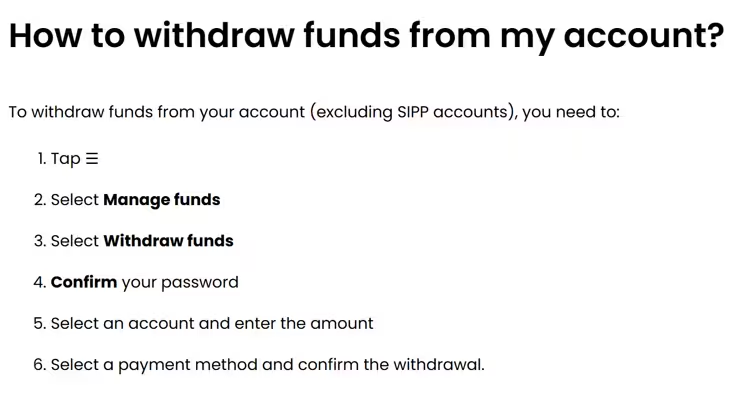
Trading 212’s official withdrawal instructions confirming the steps required to request a withdrawal and the possible processing period of up to three business days.
Is Trading 212 Cash ISA Flexible?
Yes. Trading 212 offers a flexible Cash ISA.
A flexible ISA allows qualifying withdrawals to be replaced within the same tax year without the replacement counting again towards the annual ISA subscription limit, provided the account’s conditions are followed.
For example, consider someone who deposits £15,000 into Trading 212 during the 2026/27 tax year.
They subsequently withdraw £5,000 for an unexpected expense.
Under the flexible ISA rules, they may replace the withdrawn £5,000 during the same tax year without that replacement being treated as an additional £5,000 subscription.
The timing and allocation of withdrawals are important.
Replacing withdrawn money after the tax year has ended will generally not receive the same flexible ISA treatment.
Money contributed in previous tax years may also be subject to particular replacement rules.
For people who regularly move money between personal savings and everyday banking, understanding flexible ISA rules can prevent unnecessary loss of tax-efficient savings capacity.
Can You Transfer Another Cash ISA Into Trading 212?
Trading 212 supports eligible ISA transfers.
This can be useful for individuals who already hold substantial Cash ISA balances with another bank or building society.
For example, someone might have accumulated £45,000 across Cash ISAs opened during previous tax years.
They may wish to consolidate those savings with a single provider offering more competitive interest.
A properly completed ISA-to-ISA transfer can ordinarily move existing tax-sheltered money without treating the transferred balance as an entirely new subscription against the current year’s allowance.
However, the saver should use the receiving provider’s official transfer procedure rather than simply withdrawing the money and depositing it again.
What Should You Check Before Transferring?
The most important checks include the receiving provider’s acceptance conditions, the interest rate applicable to transferred money, and whether the existing account charges an early exit penalty.
A particularly important consideration with Trading 212 is that promotional interest may be restricted to qualifying current-year contributions.
Therefore, an account offering an attractive headline rate for new deposits may be less competitive for older ISA balances.
A careful comparison should examine the effective rate earned on the entire amount being transferred, rather than relying on the highest advertised percentage.
Is Trading 212 Cash ISA Tax-Free?
Yes. Interest earned within a qualifying Cash ISA is exempt from UK income tax.
This can be attractive for individuals whose savings interest outside ISAs might otherwise exceed their Personal Savings Allowance.
For the 2026/27 tax year, the overall adult ISA subscription allowance is £20,000.
This allowance can generally be divided between eligible ISA products, subject to their individual rules.
It does not mean that a person can contribute £20,000 to every ISA they own.
For example, someone could place £12,000 into a Cash ISA and £8,000 into a Stocks and Shares ISA during 2026/27.
The combined new subscriptions would equal £20,000.
People wondering whether savings can be split between several providers should understand the rules on having more than one ISA before opening additional accounts.
Will the Cash ISA Allowance Change in April 2027?
Yes. Under the ISA reforms taking effect from 6 April 2027, the annual Cash ISA subscription limit will fall to £12,000 for individuals under 65.
People aged 65 or over will retain a £20,000 Cash ISA subscription limit.
The overall annual adult ISA allowance will remain £20,000.
| Tax Year and Age | Cash ISA Subscription Limit | Overall ISA Allowance |
| 2026/27 – eligible adults | £20,000 | £20,000 |
| 2027/28 – under 65 | £12,000 | £20,000 |
| 2027/28 – aged 65 or over | £20,000 | £20,000 |
The reforms also introduce restrictions on certain transfers from non-cash ISAs into Cash ISAs, alongside other anti-avoidance measures.
Existing Cash ISA balances do not need to be withdrawn merely because the annual allowance changes.
The reduction primarily concerns how much new money can be subscribed to Cash ISAs in future tax years.
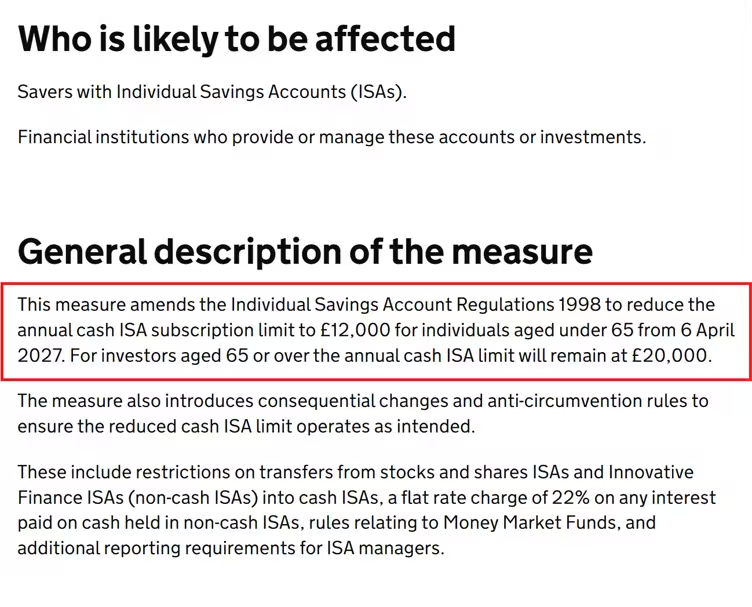
HMRC’s official September 2026 policy information confirming the reduction of the annual Cash ISA limit to £12,000 for under-65s from 6 April 2027.
Is Trading 212 Cash ISA Good for Business Owners and Entrepreneurs?
Trading 212’s Cash ISA can be useful for business owners managing their personal finances, particularly where their income fluctuates.
However, a personal Cash ISA should not be confused with a business savings account.
A limited company’s money legally belongs to the company, not automatically to its directors.
Business owners should therefore keep company funds in appropriate business accounts rather than transferring them directly into personal ISAs without a properly documented legal and tax basis.
For sole traders, business and personal finances are legally less distinct, but good accounting practices still require clear records of business receipts, expenses and personal withdrawals.
Example: A Self-Employed Consultant With £18,000 in Personal Savings
Consider a consultant who has accumulated £18,000 of personal savings after meeting business obligations and accounting for tax liabilities.
They might choose to allocate:
| Savings Purpose | Amount |
| Immediately accessible emergency reserve | £5,000 |
| Trading 212 Cash ISA | £10,000 |
| Separate short-term personal savings | £3,000 |
| Total personal savings | £18,000 |
At a hypothetical unchanged 3.60% AER, £10,000 held for one year within Trading 212 would generate approximately £360 tax-free.
The arrangement would also leave £8,000 outside the platform for expenses requiring faster access.
The precise allocation should depend on income stability, dependants, debt obligations and short-term expenditure.
For an entrepreneur, the most important measure of financial resilience is not simply maximising the advertised interest rate.
It is ensuring that personal cash remains accessible when required without creating avoidable financial pressure.
What Are the Main Risks of Trading 212 Cash ISA?
Although Trading 212 offers meaningful regulatory and deposit safeguards, several risks and limitations remain.
| Potential Risk | Our Assessment | What Savers Should Consider |
| Partner bank insolvency | Mitigated by FSCS protection | Check shared banking licences and deposit limits |
| Trading 212 insolvency | Mitigated by segregation and eligible FSCS cover | Recovery could involve delays or shortfalls |
| Falling interest rates | Moderate | Variable interest can reduce future earnings |
| Promotional bonus expiry | Important | Review the standard rate after the promotional period |
| Withdrawal processing delays | Moderate | Keep some emergency money immediately accessible |
| Account access or security issues | Manageable, but consequential | Use strong account security and follow verification procedures |
| Confusing Cash ISA with investment products | Avoidable | Select the correct account and understand product differences |
The most significant risks for an ordinary Cash ISA saver are generally different from those faced by a stock market investor.
The principal concerns are deposit coverage, access to cash, interest-rate movements and operational reliability rather than share price volatility.
Savers should also protect themselves from financial fraud.
Trading 212 warns customers against unexpected requests to transfer money or approve transactions through telephone calls, social media messages or other unofficial communication channels.
Using the official app and confirming any unusual instructions directly with the provider can reduce exposure to impersonation scams.
Trading 212 Cash ISA vs Traditional Bank Cash ISA: Which Is Better?
Trading 212 is not automatically safer or less safe simply because it is an investment platform.
The relevant comparison concerns the safeguarding structure, FSCS coverage, interest rate, fees and account functionality.
| Feature | Trading 212 Cash ISA | Traditional Bank Cash ISA |
| Provider structure | Investment firm using partner banks | Bank or building society |
| UK regulatory oversight | FCA and applicable safeguarding rules | FCA/PRA framework as applicable |
| Deposit protection | Through eligible partner bank deposits | Direct eligible bank deposits |
| Interest | Variable, with possible promotions | Fixed or variable depending on product |
| Account access | Primarily online and app-based | Online, app, telephone or branch depending on provider |
| Withdrawal processing | Depends on platform and payment processing | Depends on provider and account |
| In-person assistance | Not generally available | Available with some banks |
| Suitable for | Digital-first savers | Savers seeking particular banking services or product terms |
For someone who prioritises branch access, a conventional building society may be preferable.
For someone comfortable with digital savings accounts, Trading 212’s competitive interest arrangements and low entry requirement are appealing.
However, traditional providers can also offer excellent rates, and some may provide more favourable terms for transferring older ISA balances.
Comparing Nationwide ISA rates with alternative providers can help illustrate the trade-off between account access, fixed-rate certainty and headline interest.
Our Trading 212 Cash ISA Expert Review: Percentage Ratings
We assessed Trading 212’s Cash ISA against five weighted criteria relevant to UK savers.
These are editorial product assessment scores, not results from a customer survey, a regulatory safety certification or a statistical probability that money will be protected.
| Assessment Category | Weighted Score | Our Evaluation |
| Regulation and financial safeguards | 29/30 | Strong UK regulatory arrangements and eligible FSCS protection |
| Interest rate competitiveness | 18/20 | Competitive promotional offers, although standard rates and eligibility matter |
| Fees and overall value | 19/20 | Low entry requirement and no standard bank transfer fees |
| Accessibility and account flexibility | 17/20 | Flexible ISA with convenient access, but withdrawals may take time |
| Transparency and account information | 8/10 | Useful disclosures, although protection and promotion details require careful reading |
| Overall Rating | 91/100 | Very Good |
Why Does Trading 212 Score 91%?
Our assessment gives substantial weight to regulatory protection and the legal arrangements for safeguarding deposits.
Trading 212 performs strongly because its Cash ISA money is held through authorised partner banks and benefits from the relevant protection structure.
Its low minimum opening balance and flexible withdrawal arrangements are also attractive.
Nevertheless, we have not awarded a perfect score because no provider can eliminate insolvency risks, banking licence overlap, access delays or changes in variable interest rates.
The promotional rate restrictions also reduce the account’s suitability for some savers transferring substantial older ISA balances.
For everyday savings, Trading 212 compares favourably with many digital Cash ISA alternatives.
For larger deposits, the final decision should depend on individual banking exposure and the rate applicable to the actual balance.
Who Should Consider Trading 212 Cash ISA?
Trading 212 may be particularly suitable for UK savers who want a competitive variable interest rate, a low opening deposit and the flexibility to access their money.
It may also suit employees and self-employed professionals who regularly add to savings and prefer to manage finances digitally.
However, it may be less suitable for customers requiring branch assistance, those who need guaranteed same-day withdrawals or savers who want a fixed interest rate for several years.
People transferring older Cash ISA balances should pay particular attention to whether they qualify for the headline promotional rate.
Ultimately, the account is most attractive when its access arrangements, savings rate and deposit protection structure align with the saver’s financial priorities.
How Can You Check Trading 212 Cash ISA Is Safe Before Opening?
Before depositing personal savings, we recommend checking the relevant information directly.
- Verify FCA registration. Search for Trading 212 UK Ltd and confirm the authorised entity and firm reference number.
- Review FSCS eligibility. Understand the difference between bank deposit protection and investment-firm failure protection.
- Check partner banking arrangements. Consider whether you already hold substantial savings with institutions sharing a banking licence.
- Verify the current interest rate. Confirm whether your balance will receive the standard rate or a promotional rate.
- Read the withdrawal and transfer conditions. Ensure the available processing times meet your needs.
- Review your ISA allowance. Account for any contributions already made to other ISAs during the tax year.
- Secure your account. Enable two-factor authentication and use official Trading 212 communication channels.
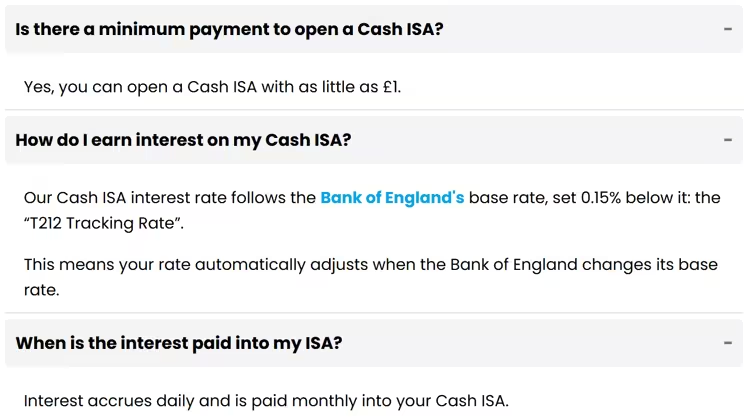
Trading 212’s official Cash ISA account information showing the interest-rate tracking policy, monthly interest payments and £1 minimum opening deposit.
Our Final Verdict: Is Trading 212 Cash ISA Safe and Worth It in 2026?
Our overall rating: 91% – Very Good
Trading 212 Cash ISA is a credible and generally well-protected option for UK savers seeking tax-free interest and flexible access to their money.
The platform benefits from FCA regulation, segregated client funds and deposit protection through authorised partner banks.
These arrangements provide substantial safeguards compared with holding money in an unregulated financial service.
However, account holders must understand that the £120,000 bank deposit protection limit applies per eligible person and banking licence, not independently to every savings account.
They should also recognise that the separate £85,000 investment-firm compensation limit serves a different purpose.
The October 2026 standard savings rate of 3.60% AER and available promotional offers strengthen the account’s appeal, although bonus eligibility and future rate changes require attention.
For people comfortable with digital financial services, Trading 212 represents a competitive option.
For those holding large savings balances, prioritising guaranteed returns or requiring immediate access, comparing alternative savings providers remains important.
Our conclusion is that Trading 212 Cash ISA is generally safe within the UK’s established financial protection framework, but understanding the limits of that protection is essential before depositing money.
Frequently Asked Questions
Is Trading 212 Cash ISA Safe for £20,000?
Yes, £20,000 in eligible Cash ISA deposits is within the standard £120,000 FSCS protection limit, provided the saver does not exceed that limit through other eligible deposits held under the same banking licence.
Is Trading 212 Cash ISA Protected by the UK Government?
The FSCS is the UK’s statutory financial compensation scheme. Eligible deposits held with authorised partner banks receive protection under its rules, subject to the applicable limits and conditions.
Can I Lose Money in Trading 212 Cash ISA?
The Cash ISA is not exposed to ordinary share market fluctuations. However, risks such as uncovered deposits above FSCS limits, qualifying shortfalls, fraud and operational issues cannot be completely eliminated.
Is Trading 212 Cash ISA Better Than a Bank?
It depends on the interest rate, accessibility, service requirements and savings balance. Trading 212 offers competitive digital savings features, while traditional banks may offer branches, different support arrangements or fixed-rate alternatives.
What Happens to My Cash ISA If Trading 212 Goes Bankrupt?
Client money should remain separated from Trading 212’s business assets and ordinarily be returned through the insolvency process. Eligible compensation may be available for qualifying shortfalls, although administrative delays are possible.
Is Trading 212 Cash ISA Interest Tax-Free?
Yes. Interest earned within a qualifying Cash ISA is exempt from UK income tax, provided relevant ISA rules are followed.
Can I Withdraw All My Money From Trading 212 Cash ISA?
You can request withdrawals under the account’s flexible, easy-access terms. Trading 212 does not normally charge a bank transfer withdrawal fee, but processing can take up to three business days.
Is Trading 212 Cash ISA Safe for More Than £85,000?
Eligible deposits can benefit from the £120,000 deposit protection limit per person, per banking licence. The separate £85,000 investment-firm protection limit applies to different circumstances. Larger balances require particular attention to partner bank allocation.
Does Trading 212 Use My Cash ISA Money to Buy Shares?
No. Trading 212’s UK Cash ISA is a cash savings product, distinct from its Stocks and Shares ISA. Its published Cash ISA protection information states that funds are held at partner banks.
Will Trading 212 Cash ISA Remain Safe After April 2027?
The April 2027 Cash ISA changes concern subscription limits and related ISA rules, not the removal of ordinary FSCS deposit protection. Eligible existing savings continue to be subject to the relevant protection arrangements.

More in Finance & Tax

UK Budget Starter Investment ISA: How Will the New ISA Incentive Work in 2026 and Beyond?
The UK Budget Starter Investment ISA is one of the latest proposals intended to encourage more British savers to enter the investment market. Announced by Chancellor John Healey during the Autumn Budget on 28 October 2026, the proposed initiative could introduce financial incentives for people investing through a Stocks and Shares ISA for the first […]

Best 2 Year Fixed Rate ISA UK 2026: Top 10 Interest Rates Compared
Finding the best 2 year fixed rate ISA in the UK involves more than choosing the bank offering the highest interest rate. Savers must also consider minimum deposits, early withdrawal penalties, ISA transfer rules and how interest is calculated over the two-year period. Our analysis of the UK savings market in October 2026 found several […]