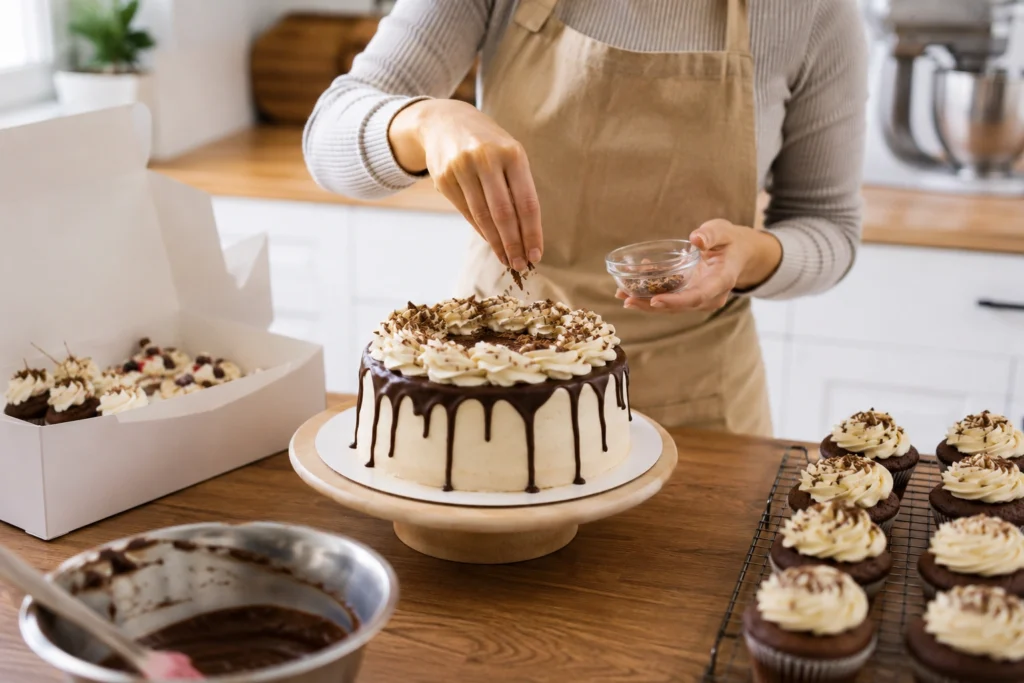
Home baking is one of the few side hustles where the skills come before the business idea. Most people who start a home baking hustle have been baking for years — they already know they are good at it. What they are less clear on is the legal framework, because baking to sell is treated very differently from baking for friends.
In the UK, selling food from your home kitchen — even one cake at a school fair — legally makes you a food business. That triggers a set of requirements: council registration, food hygiene obligations, allergen labelling, and insurance. None of these are onerous, but skipping them creates genuine risk, both legal and reputational.
This guide covers every legal requirement for starting a home baking side hustle in 2026, the realistic startup costs, what you can charge, where to sell, and the income potential at different scales.
For a full overview of all UK side hustle options, see our complete guide to UK side hustles.
The Legal Reality: Selling Food Makes You a Food Business
The most common misconception about home baking as a side hustle is that small-scale or occasional selling sits in a legal grey area. It does not. Under UK food law, the moment you sell food — even once, even informally, even at a school fair or through a Facebook post — you are operating a food business.
This applies regardless of scale. A home baker selling one box of brownies per week is subject to exactly the same legal framework as one selling fifty. The framework is not burdensome for small operations, but it is real and must be followed before your first sale.
The requirements fall into five categories: council registration, food hygiene training, allergen labelling, a food safety management system, and insurance. This guide covers each in sequence.
Step 1 – Register With Your Local Council
Registration is free, takes approximately 20 minutes online, and must be completed at least 28 days before you begin trading. This is a hard rule: you cannot start selling and register retrospectively.
Register via your local council’s website. Search “[your council name] food business registration” — every council has its own registration page. You will need your name, address, a description of the food you intend to produce and sell, and an estimate of weekly production volume.
After registration, an environmental health officer from the council may inspect your kitchen. The inspection is not guaranteed — many small home bakers are never inspected but you should be prepared for one at any time. The inspection assesses your kitchen’s cleanliness, food storage, temperature controls, pest management, and your knowledge of food hygiene rules.
Registration does not cost anything and there is no pass or fail — the council records you as a registered food business and may follow up with a visit. You are not required to have completed a hygiene certificate before registering, but having one makes an inspection straightforward.
Step 2 – Food Hygiene Certificate (Level 2, £10-£25)
The Level 2 Food Hygiene Certificate is not always a strict legal requirement for every individual, but it is the recognised standard for home food businesses and is expected by most councils’ environmental health teams. Anyone who helps you produce food for sale — a partner, a family member — should also understand food hygiene, and you are responsible for supervising them.
The certificate can be completed entirely online in 2–4 hours. Current cost: £10–£20 from providers including Highfield Qualifications, Virtual College, and RSPH (Royal Society for Public Health). Some councils offer free or subsidised courses for new food businesses — check your local authority’s business support pages.
The Level 2 certificate covers the four Cs of food safety: Cleaning, Cooking, Chilling, and Cross-contamination. It is the same qualification used by catering staff across the UK hospitality industry.
Higher-level qualifications (Level 3 Supervising Food Safety) are worth pursuing if you plan to scale your baking business significantly, but Level 2 is the appropriate starting point for a home-based side hustle.
Step 3 – Natasha’s Law and Allergen Labelling
Natasha’s Law came into force in October 2021 and applies to all pre-packed for direct sale (PPDS) food — food that is packed at the place it will be sold before a customer orders it.
This applies to most home bakers. If you package your brownies, cookies, or cakes before selling them — whether at a market, via click-and-collect, or by posting them — each item must carry a label showing:
- The full name of the product
- A complete list of ingredients in descending order of weight
- All 14 major allergens emphasised within the ingredients list (in bold, a different colour, or underlined)
The 14 major allergens are: celery, cereals containing gluten (including wheat, rye, barley), crustaceans, eggs, fish, lupin, milk, molluscs, mustard, peanuts, sesame, soybeans, sulphur dioxide/sulphites (at levels above 10mg/kg), and tree nuts.
Failing to label allergens correctly is not a technicality — it is a public health issue. Anaphylaxis UK reported that allergen labelling failures remain one of the most common causes of severe allergic reactions to food. This is non-negotiable.
For food sold loose (served directly to the customer, unpackaged) at a market stall or pop-up, allergen information must be available verbally or via a written notice on request. The requirement to provide allergen information applies to all food sales regardless of format.
Step 4 – Food Safety Management System (HACCP)
You are legally required to have a food safety management system based on HACCP principles (Hazard Analysis and Critical Control Points). For a small home baking business, this does not mean complex documentation — it means a simple written record of:
- What food safety hazards exist in your kitchen (contamination, temperature issues, allergens)
- What steps you take to control each hazard
- How you check that controls are working
The Food Standards Agency provides free HACCP templates specifically for small and home food businesses at food.gov.uk. Completing one takes around an hour and covers everything an environmental health inspector will want to see. Most home bakers complete this at the same time as their Level 2 certificate.
Step 5 – Insurance
Home bakers selling food to the public carry genuine liability risk. If a customer has an allergic reaction, suffers food poisoning, or claims your product caused harm, you need insurance to cover any legal or compensation costs.
Product Liability Insurance
Covers claims arising from products you have sold causing injury, illness, or property damage. This is the essential cover for any food business. Cost from approximately £50–£100/year for basic product liability cover for a home baker.
Public Liability Insurance
If you sell at markets, pop-ups, or events, public liability cover protects you against claims arising from accidental injury or damage to third parties at your trading location. Often combined with product liability in home baker-specific policies.
Specialist home baker or food business policies are available from Cakes & Bakes Insurance, Morton Michel, and Protectivity. A combined product and public liability policy typically costs £60–£120/year.
Note: Check whether your home insurance covers business use of your kitchen. Most standard home insurance policies exclude commercial food production — your insurer should be informed that you are operating a food business from the property.
What You Can Actually Earn From Home Baking?

Income from home baking varies enormously depending on your product, your pricing, and your sales channel. The figures below reflect realistic 2026 UK market rates.
Pricing
Homemade cakes and baked goods command premium prices over supermarket equivalents when they are artisan, personalised, or distinctive. Common 2026 pricing benchmarks:
Celebration cakes (personalised, tiered): £60–£200+ per cake depending on complexity. Custom-decorated cupcakes: £2.50–£4 per cupcake, typically sold in boxes of 6 or 12. Brownies/traybakes: £18–£35 per tray or £2–£4 per individual portion. Sourdough loaves: £5–£9 per loaf. Cookie boxes (12 decorated): £18–£30.
Realistic Monthly Income by Scale
- Casual hobby level (1–2 orders per week): £100–£300/month.
- Consistent part-time (4–6 orders per week): £400–£800/month.
- Dedicated part-time (daily orders, market presence): £600–£1,500/month.
These figures represent gross income before ingredient costs, packaging, and time. Ingredient and packaging costs typically represent 20–35% of revenue for well-priced home baking businesses. Net margin after direct costs is generally 65–80%.
The Cake Shed Model
A growing trend in UK home baking is the “cake shed” — a small self-serve setup outside the home, stocked with cakes and traybakes, with contactless payment via a QR code or card reader. Customers select items, pay, and go. The cake shed requires the same legal compliance as any home food business but reduces the need for order management and custom work. Startup cost for a basic shed setup using existing kitchen equipment is reported at £150–£400 (MoneyMagpie, April 2026).
Where to Sell Your Baked Goods?
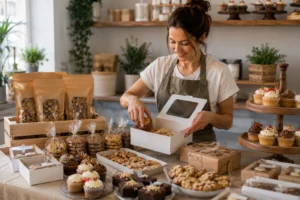
Local Markets and Craft Fairs
The most direct route to customers. Many councils and event organisers run weekly or monthly food markets. Stall fees typically range from £15–£80 depending on the event. Markets provide immediate cash flow, direct customer feedback, and word-of-mouth referrals.
Social Media (Instagram, Facebook)
Instagram and Facebook remain the most effective channels for UK home bakers. A consistent visual aesthetic, regular posting, and engagement with local community groups (especially local Facebook groups) drive enquiries. Many successful home bakers take all orders via Instagram DM or Facebook message.
Click and Collect
Offering local collection from your home address (or a nearby convenient point) removes the need for a market stall. Post your weekly menu to your social media, take orders by DM or a simple Google Form, and arrange collection times. Simple, low-cost, and highly personal.
Etsy and Not on the high street
Both platforms list UK food producers and are particularly effective for celebration cakes, gifting boxes, and premium baked goods targeting buyers looking for artisan food gifts. Etsy charges a listing fee (£0.16 per item) plus a 6.5% transaction fee. Both platforms require accurate allergen information.
Local Offices, Schools, and Businesses
A standing weekly order from a local office or business — a box of 12 cookies every Friday — provides predictable, repeatable income. Pitch directly via email or LinkedIn.
Startup Costs Summary
Essential costs:
- Council registration: Free
- Level 2 Food Hygiene Certificate: £10–£25
- Product/public liability insurance: £60–£120/year
- Ingredient costs for first orders: £30–£80 (recouped from first sales)
- Packaging (boxes, bags, labels): £20–£50
- Allergen label printer or custom labels: £10–£30
Total essential startup cost: approximately £120–£275 before your first order is placed. This is one of the lowest startup cost profiles of any food-related side hustle.
Optional costs:
- Cake stand or display for markets: £20–£60
- Card payment reader (SumUp or Square): £19–£29
- Market stall deposit: £15–£80
- Professional photography of products: £0 (phone + natural light is sufficient to start)
Tax and HMRC Registration

Home baking income is trading income. The same HMRC rules apply as for any other self-employed side hustle.
The £1,000 Trading Allowance
If your gross baking income (everything customers paid you, before any ingredient or packaging costs) stays below £1,000 in the tax year, no tax is owed and no registration is required.
At £25 per order average, that is 40 orders across the whole year less than one per week. Most active home bakers cross this threshold within a few months of consistent trading.
Registering With HMRC
Once gross income exceeds £1,000 in the tax year, register for Self Assessment by 5 October following that year. For the step-by-step process, see our guide on how to register your home baking business with HMRC.
Allowable Expenses
Home bakers can claim: ingredient costs directly traceable to orders sold; packaging materials; food hygiene certificate course fees; insurance premiums; market stall fees and event costs; equipment purchased for the business (stand mixer, silicone moulds, cake tins — business use proportion); a proportion of household energy costs for baking sessions; mileage to and from markets at 45p/mile.
Frequently Asked Questions
Do I need to register with the council even if I only sell occasionally?
Yes. Under UK food law, the moment you sell food — regardless of frequency or volume — you are a food business and must be registered with your local authority at least 28 days before you start. The registration is free and the process is straightforward.
Can I bake in my home kitchen or do I need a commercial kitchen?
You can use your home kitchen, provided it meets food hygiene standards (cleanliness, appropriate storage, pest control, temperature management). Your local environmental health officer may inspect the kitchen.
A separate baking area, dedicated equipment for food production, and appropriate storage for ingredients and finished products are all helpful preparation for an inspection.
Can I sell alcohol-based baked goods (rum cakes, beer bread)?
Yes, provided the alcohol content after baking is below 0.5% ABV. Most baked goods that include spirits in the recipe bake off most of the alcohol during cooking. However, if your finished product contains significant alcohol (over 0.5% ABV), you may need to consider licensing implications. Check with your local authority if in doubt.
Does my home insurance cover baking for sale?
Almost certainly not. Most standard home insurance policies exclude commercial activity. Contact your home insurer to inform them you are operating a food business from the property they may be able to add a business use endorsement, or you may need a specialist home-based business policy. Also ensure your product liability insurance is in place regardless of what your home insurer says.
Can I sell baked goods by post?
Yes, many UK home bakers now offer nationwide postal sales, particularly for gifting boxes and celebration hampers. Postal sales must comply with full PPDS labelling under Natasha’s Law. Use appropriate packaging to prevent damage in transit and factor postage costs into your pricing.
What to Read Next?
For a comparison with another low-startup-cost service hustle, see our guide on how a dog walking business compares for startup costs.
For the full tax rules on home bakime and when HMRC registration is triggered, see our guide on how home baking income crosses the tax threshold.
Verified against UK food law, FSA guidance, and HMRC rules as of 16 June 2026.

More in Setup Guides
Candle Making Side Hustle UK: True Startup Costs (2026)
Most candle-making startup cost guides are either vague (“you can start for as little as £50”) or American. This one is specific, UK-sourced, and honest about where the numbers come from. The short version: a genuine, sellable first batch of 20 candles using quality UK-sourced soy wax and fragrance oils, with proper vessels, wicks, and […]

Bookkeeping Side Hustle UK: Should You Get AAT? (2026 ROI Analysis)
Bookkeeping is one of the most reliable professional side hustles in the UK — consistent demand, flexible hours, fully remote, and clients who often remain loyal for years once you are embedded in their accounts routine. The question almost everyone asks before starting is: do I need the AAT qualification first? The honest answer is: […]