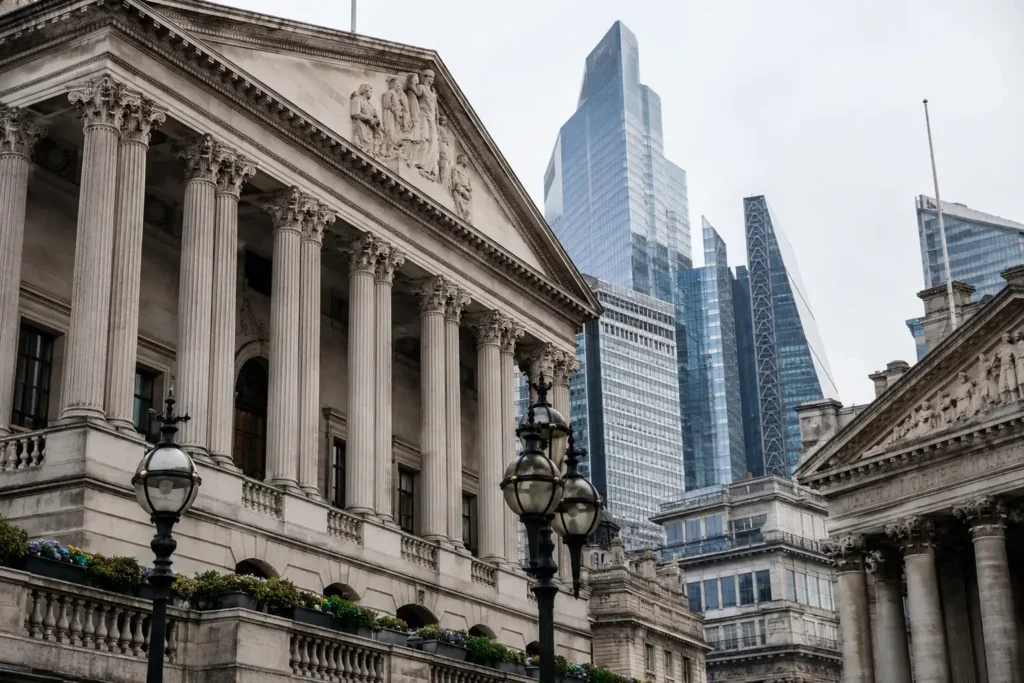
The banking industry tax warning UK debate has intensified as Britain’s largest banks push back against the possibility of another tax increase on the financial sector.
On 21 August 2026, reports said major UK banks had warned Prime Minister Andy Burnham against introducing what they regard as a potentially damaging windfall tax on financial institutions. The intervention comes ahead of Chancellor John Healey’s first Budget and amid pressure on the Government to find additional money for cost-of-living support and public services.
The argument has two very different sides.
Banks say they already operate under one of the heaviest tax burdens among major international financial centres and warn that another levy could discourage investment, move jobs overseas and restrict their capacity to lend.
Trade unions and campaign groups respond that major lenders are earning exceptionally strong profits and could contribute more towards supporting households without damaging the wider economy.
For businesses, investors and bank customers, the important point is that no new UK banking windfall tax has yet been confirmed. The debate concerns proposals that could be considered as part of future fiscal policy.
Why Has the UK Banking Industry Issued a Tax Warning?
The warning follows renewed speculation that the Government could raise additional revenue from banks.
High interest rates have helped many major lenders generate substantial profits. Collectively, HSBC, Barclays, Lloyds Banking Group and NatWest made approximately £29.2 billion in profits during the first half of 2026.
Those numbers have attracted attention from trade unions and campaign organisations arguing that some of the profits represent windfalls generated partly by the higher-interest-rate environment.
At the same time, the Government faces pressure to fund measures designed to reduce household living costs and strengthen public services.
The Trades Union Congress has therefore proposed raising taxes on banks, while campaign group Positive Money has suggested a separate windfall-style levy.
Bank executives argue that these proposals could undermine the Government’s separate objective of making Britain a more attractive place for financial investment.
That tension explains why banking taxation has become one of the most closely watched issues ahead of the next Budget.
What Taxes Do UK Banks Already Pay?
Banks do not simply pay ordinary Corporation Tax.
Large banking businesses can currently face several taxes and levies.
| Tax | Current general position |
| Corporation Tax | 25% main rate |
| Bank Corporation Tax Surcharge | 3% above the applicable £100m group allowance |
| Bank Levy | Charged on certain balance-sheet equity and liabilities |
| Employer taxes | Includes employer National Insurance and other employment-related charges |
| Other taxes | Can include irrecoverable VAT, stamp taxes and other business taxes |
The standard Corporation Tax main rate remains 25% for 2026, while the banking surcharge is 3% on relevant banking profits above the £100 million group allowance.
That means relevant banking profits can effectively face a 28% Corporation Tax rate before considering the separate bank levy and other taxes.
The bank levy also remains in place. Current rates are:
- 0.05% on qualifying long-term equity and liabilities.
- 0.10% on relevant short-term liabilities.
HMRC confirms those rates have applied since January 2021.
How Much Tax Does the UK Banking Sector Already Pay?
UK Finance estimates that the banking industry contributed approximately £43.3 billion in UK taxes in the financial year ending March 2025.
That represented around 4.3% of total UK tax receipts.
The total included taxes paid directly by banks as well as taxes collected through their activities and employment.
According to the UK Finance and PwC analysis:
| Banking-sector contribution | Approximate amount |
| Total annual tax contribution | £43.3bn |
| Employment taxes | £24.1bn |
| Share of total UK tax receipts | 4.3% |
| Banking jobs supported | 473,000 |
| Jobs outside London and South East | 52% |
UK Finance says the industry’s tax contribution has risen from approximately £33.4 billion in 2014 to £43.3 billion in 2025.
These figures are central to the banking industry’s argument against another tax rise.
Is Banking Tax Higher in the UK Than Other Financial Centres?
Industry comparisons suggest that the UK does have a relatively high banking tax burden.
A UK Finance/PwC model estimated London’s banking-sector total tax rate at 46.4% in 2025, rising to approximately 46.6% in 2026, partly because of the full-year effect of higher employer National Insurance contributions.
The study compared London with several competing financial centres.
| Financial centre | Model total tax rate |
| London | 46.4% in 2025 |
| Amsterdam | 42.2% |
| Frankfurt | 38.9% |
| Dublin | 28.9% |
| New York | 27.9% |
These figures represent a modelled overall tax burden rather than simply the Corporation Tax rate.
The industry’s concern is that banks deciding where to locate international teams, trading operations and investment projects may compare the total cost of operating in London with other financial centres.
UK Finance describes financial services as generating around 9% of UK economic output and supporting large volumes of mortgage and small-business lending.
What Banking Windfall Tax Is Being Proposed?
There is currently no single confirmed Government proposal.
Several alternatives have been suggested by campaign organisations and unions.
The TUC has previously proposed reversing the reduction in the banking surcharge that took effect in April 2023.
Before that change, the surcharge was 8%. It is currently 3%.
One TUC proposal would therefore increase it back to 8%.
The union estimates this could raise approximately £9 billion over four years.
More aggressive options discussed by the TUC have included significantly higher surcharge rates.
| Potential proposal | Estimated revenue cited by supporters |
| Restore surcharge from 3% to 8% | Around £9bn over four years |
| Raise surcharge further | Potentially around £24bn |
| Much larger windfall-style increase | Up to around £60bn under the most aggressive scenario |
These are campaign proposals, not announced Government tax policy.
Could a Separate Windfall Tax Raise £19 Billion?

Another proposal has come from campaign group Positive Money.
It suggested creating a levy inspired partly by Spain’s banking windfall-tax model.
The proposal could apply a 38% charge to certain UK bank revenues or profits above a defined threshold, with the organisation estimating that a version of the policy could raise around £18.9 billion to £19 billion.
The calculation is partly based on the unusually strong profitability of Britain’s largest banks.
However, revenue estimates for hypothetical taxes are inherently uncertain.
The amount actually raised would depend on:
- Which banks were covered.
- How taxable profits were defined.
- Whether losses or allowances were permitted.
- How banks changed their behaviour.
- Whether activities moved outside the UK.
- How long the levy remained in force.
A headline estimate should therefore not be treated as guaranteed Treasury revenue.
Why Are UK Banks Making Such Large Profits?
A significant part of the debate relates to interest rates.
Banks typically earn money through what is known as net interest income.
In simplified terms:
Interest charged to borrowers − interest paid to savers = net interest income
When interest rates remain relatively high, the margin between lending rates and deposit rates can increase.
That can boost earnings from:
- Mortgages.
- Business lending.
- Credit cards.
- Personal loans.
- Customer deposits.
- Central bank balances.
Bank profits have also been supported by wealth management, insurance, investment banking and other financial services.
For example, HSBC reported around £7.5 billion of profit for the second quarter of 2026, helping push the combined first-half profits of the four largest banks to approximately £29.2 billion.
Supporters of higher taxation argue that some of these gains are the consequence of economic conditions rather than exceptional improvements in banking productivity.
Banks reject the suggestion that strong profits alone justify an additional sector-specific tax.
What Has JP Morgan Warned the Government About?
JP Morgan chief executive Jamie Dimon has been among the most prominent banking executives opposing higher UK bank taxes.
In August 2026, Dimon reportedly warned Chancellor John Healey about the potential consequences of increasing taxes on the sector.
He argued that overly aggressive taxation can result in jobs and investment moving to more competitive jurisdictions.
JP Morgan has particular significance in the debate because it plans a major new London headquarters.
The bank announced plans for a roughly £3 billion Canary Wharf headquarters, which could accommodate a substantial portion of its UK workforce.
Dimon has previously indicated that future investment decisions could depend partly on Britain’s business environment.
This does not mean JP Morgan has announced that it will leave Britain if taxes rise.
It does demonstrate how the banking industry is using major investment decisions to reinforce its argument for tax stability.
Why Do Banks Say Higher Taxes Could Damage the UK?
Bank executives generally make four main arguments.
Investment Could Move Overseas
International banks can allocate staff, capital and new operations between London, New York, Frankfurt, Paris, Dublin and other financial centres.
Higher operating costs could therefore make another location more attractive.
Financial Jobs Could Be Lost
UK Finance estimates that banking supports hundreds of thousands of jobs.
Industry representatives argue that some highly mobile investment-banking, trading and technology jobs could be relocated if Britain becomes significantly more expensive.
Lending Could Be Affected
Banks need capital to support lending.
The industry argues that policies reducing retained profits can potentially affect the capital available for:
- Business loans.
- Mortgages.
- Infrastructure finance.
- Corporate investment.
UK Finance says the sector currently provides almost £200 billion in lending and overdrafts to SMEs.
Policy Stability Matters
Large financial institutions make investment decisions that can span decades.
Banks therefore argue that repeated speculation over sector-specific taxes reduces certainty and makes long-term UK projects harder to justify.
Why Do Supporters Want Banks to Pay More Tax?
Supporters of higher banking taxes take a different view.
Their central argument is that the industry’s current profits are large enough to absorb additional taxation.
The big four banks reportedly generated £45.7 billion in profits during 2025 before earning another £13.8 billion collectively during the first quarter of 2026.
Supporters also point out that households have faced higher:
- Mortgage payments.
- Rent.
- Energy bills.
- Food prices.
- Consumer borrowing costs.
They argue that higher interest rates have simultaneously placed pressure on households while helping banks earn greater net interest income.
The TUC therefore argues that collecting additional tax from the sector could help finance cost-of-living support without increasing taxes on ordinary workers.
That debate also sits alongside other discussions about how the Government might finance public spending. Another proposal currently being examined concerns a possible social care tax levy, although that too remains unconfirmed.
Would Higher Bank Taxes Automatically Affect Customers?
Not necessarily, but there could be indirect effects.
Banks cannot simply add a line labelled “windfall tax” to an ordinary customer’s account.
However, businesses respond to higher costs in different ways.
Possible responses could include changes to:
- Savings rates.
- Mortgage pricing.
- Business-loan pricing.
- Fees.
- Hiring.
- Bonuses.
- Dividends.
- Investment spending.
The extent to which a tax is ultimately borne by shareholders, employees or customers is difficult to predict.
Banks could absorb some of the cost through lower profits or shareholder distributions rather than passing it on through pricing.
This is one reason the economic effect of a windfall tax is contested.
Could Small Businesses Be Affected?
Small businesses would not normally pay a banking windfall tax themselves.
However, they could experience secondary effects if banking behaviour changes.
The most important issue would be business finance.
UK Finance says banks currently provide almost £200 billion in lending and overdrafts to UK SMEs.
If higher taxation materially reduced banks’ willingness to lend, businesses could potentially experience:
- Tougher lending criteria.
- Higher borrowing costs.
- Smaller credit facilities.
- Reduced investment finance.
However, whether a particular tax increase would actually cause those outcomes depends on the scale and design of the measure.
A modest surcharge increase would not necessarily produce the same economic response as a very large windfall tax.
Businesses should therefore distinguish between political warnings and measurable changes in lending conditions.
Could Higher Banking Taxes Damage London’s Competitiveness?
This is perhaps the industry’s strongest argument.
London competes internationally for:
- Banking headquarters.
- Trading desks.
- Investment funds.
- Fintech businesses.
- Asset managers.
- Insurance companies.
- Professional services.
- Highly paid financial workers.
The UK already has two taxes specifically associated with banking—the bank surcharge and bank levy—in addition to ordinary Corporation Tax.
UK Finance argues that this makes Britain’s tax structure unusual compared with many competitors.
The organisation’s modelling suggests removing both bank-specific taxes would reduce the hypothetical London banking tax rate from around 46.6% to approximately 40% in 2026.
Campaigners, however, argue that London’s attraction does not depend entirely on tax rates.
The UK also offers:
- Deep capital markets.
- English commercial law.
- Skilled financial professionals.
- Global time-zone advantages.
- Established infrastructure.
- Major professional-services industries.
A higher tax rate therefore does not automatically mean financial institutions will leave.
Has the UK Increased Bank Taxes Before?
Yes.
Special banking taxation largely developed after the 2008 financial crisis, when substantial public support was required to stabilise parts of the financial system.
The bank levy was introduced in 2011.
A separate banking surcharge on profits subsequently began in 2016.
The surcharge was initially 8%, with a £25 million allowance.
From April 2023, the surcharge was reduced to 3%, while the allowance increased to £100 million.
The Government at the time argued that lowering the surcharge was necessary because the ordinary Corporation Tax rate was simultaneously rising from 19% to 25%.
The combined headline rate on relevant banking profits therefore became approximately 28%.
The current argument is partly about whether that 2023 reduction should now be reversed.
Is a New UK Bank Tax Confirmed?
No.
As of 21 August 2026, neither Prime Minister Andy Burnham nor Chancellor John Healey has announced a new banking windfall tax.
There is:
No confirmed rate.
No confirmed threshold.
No legislation.
No implementation date.
No HMRC collection mechanism.
The current story is about political pressure, lobbying and potential Budget options.
That distinction is important because some headlines can make a possible tax sound as though it has already been approved.
Businesses have seen similar uncertainty around other fiscal proposals. For example, the latest inheritance tax changes include measures that have actually taken effect as well as further reforms scheduled for 2027. Confirmed legislation should always be distinguished from proposals still being debated.
What Could Happen in the Next Budget?
There are several plausible outcomes.
The Government Could Leave Bank Taxes Unchanged
The Chancellor could conclude that maintaining financial-sector competitiveness is more important than raising additional revenue.
The 3% Bank Surcharge Could Rise
Restoring the previous 8% rate would be one comparatively straightforward option because the surcharge mechanism already exists.
A Separate Windfall Tax Could Be Introduced
The Government could create a temporary levy targeting unusually high profits or revenues.
This would require detailed rules covering the tax base, allowances and duration.
Another Banking Tax Could Be Modified
Existing bank-levy rules could theoretically be adjusted instead of introducing a completely new tax.
Banks Could Avoid Higher Taxes but Make Other Commitments
Another possibility is that the Government could seek commitments around:
- SME lending.
- Infrastructure investment.
- Regional development.
- Mortgage availability.
- Financial inclusion.
This could allow ministers to claim broader economic benefits without imposing an additional tax.
What Should Businesses and Investors Watch?
There is little reason for ordinary businesses to change financial plans purely because of the current banking industry tax warning.
The most important developments to monitor are:
- The Chancellor’s Budget announcement.
- Any Treasury consultation on bank taxation.
- Changes to the 3% bank surcharge.
- Any new windfall-tax legislation.
- Bank responses involving investment or lending.
- Changes to mortgage and business-finance pricing.
A political proposal only becomes a meaningful business cost when the Government confirms the policy and publishes its detailed rules.
Banking Industry Tax Warning UK: Key Numbers
| Issue | Current figure |
| Standard Corporation Tax | 25% |
| Bank surcharge | 3% |
| Surcharge group allowance | £100m |
| Combined relevant profit rate | Around 28% |
| UK bank tax contribution | £43.3bn |
| Share of UK tax receipts | Around 4.3% |
| Model London banking tax rate in 2025 | 46.4% |
| Projected 2026 model rate | 46.6% |
| Big four H1 2026 profits | £29.2bn |
| Possible Positive Money windfall-tax estimate | Around £19bn |
| TUC 8% surcharge proposal estimate | Around £9bn over four years |
The figures measure different things and should not be compared directly. For example, the 46.4% figure is a broader modelled total tax rate, while the 28% figure refers primarily to Corporation Tax plus the banking surcharge.
Final Thoughts
The banking industry tax warning UK debate reflects a difficult policy trade-off for the Government.
British banks are highly profitable, and supporters of additional taxation argue that a sector earning tens of billions of pounds can afford to contribute more towards the cost-of-living response and public services.
The banking industry responds that it already contributed approximately £43.3 billion in tax, operates under a modelled tax burden substantially higher than several competing financial centres and supports hundreds of thousands of jobs and significant amounts of business lending.
Those competing arguments mean the issue is not simply whether banks can pay more tax. The broader question is whether the additional government revenue would outweigh any effect on investment, jobs, lending and London’s international competitiveness.
As of 21 August 2026, a new UK bank windfall tax remains a possibility rather than confirmed policy.
Until the Chancellor sets out the Government’s position, figures such as a £9 billion, £19 billion or £60 billion banking tax should be understood as estimates attached to different proposals—not money the Treasury has already decided to collect.
Frequently Asked Questions
What is the Banking Industry Tax Warning in the UK?
Major banks are warning that additional sector-specific taxation, including a possible windfall tax, could reduce Britain’s financial competitiveness and potentially shift investment and jobs overseas.
Has the UK Government Announced a Bank Windfall Tax?
No. As of 21 August 2026, no new bank windfall tax has been formally announced. Several proposals are being promoted by trade unions and campaign groups.
How Much Tax Do UK Banks Currently Pay?
UK Finance estimates that the banking sector contributed around £43.3 billion in taxes in the year ending March 2025, equivalent to approximately 4.3% of total UK tax receipts.
What is the UK Bank Surcharge in 2026?
The banking Corporation Tax surcharge is 3% on applicable profits above the £100 million group allowance. It is charged in addition to ordinary Corporation Tax.
Why Are Unions Calling for a Bank Tax?
Supporters argue that banks have benefited from high interest rates and generated unusually large profits while households have faced higher mortgages, borrowing costs and living expenses.
Could a Bank Tax Raise £19 Billion?
Positive Money estimates that its proposed windfall-style tax could raise around £18.9 billion. That is a campaign estimate rather than confirmed Treasury revenue.
Could Higher Bank Taxes Affect Mortgages?
Potentially, although the effect would depend on how banks responded. Costs could be absorbed through lower profits or shareholder returns, or potentially influence lending prices and investment decisions.
Why is JP Morgan Concerned About UK Bank Taxes?
Chief executive Jamie Dimon has argued that excessive taxes could reduce Britain’s competitiveness and encourage investment or jobs to move elsewhere. JP Morgan is also planning a major £3 billion London headquarters.

More in Finance & Tax

Best 1 Year Fixed Rate ISA UK 2026: Top Cash ISA Rates Compared
The best 1 year fixed rate ISA in the UK currently pays up to 4.98% AER tax-free, with UBL UK offering the highest verified rate in our October 2026 comparison. Shawbrook Bank follows at 4.97%, while Vanquis Bank offers a competitive 4.96% alongside a lower minimum opening deposit. However, choosing the best one-year fixed Cash […]

Moneybox Lifetime ISA Review 2026: Interest Rates, Bonuses, Fees and Is It Worth It?
The Moneybox Lifetime ISA is a UK savings and investment account designed to help eligible adults save for their first home or retirement. It offers a 25% government bonus on contributions of up to £4,000 each tax year, potentially adding £1,000 annually to a saver’s money. Moneybox offers both Cash and Stocks & Shares Lifetime […]