
The best 1 year fixed rate ISA in the UK currently pays up to 4.98% AER tax-free, with UBL UK offering the highest verified rate in our October 2026 comparison. Shawbrook Bank follows at 4.97%, while Vanquis Bank offers a competitive 4.96% alongside a lower minimum opening deposit.
However, choosing the best one-year fixed Cash ISA involves more than finding the highest interest rate. Minimum investment requirements, early withdrawal penalties, ISA transfer eligibility and maturity arrangements can all influence the value of an account.
We analysed published product conditions, current UK savings market comparisons and official ISA regulations to identify which accounts provide the strongest combination of returns and practical benefits.
Our assessment also considers the financial needs of working professionals, company directors, self-employed individuals and entrepreneurs who want predictable returns on their personal savings without committing their money for several years.
What Is the Best 1 Year Fixed Rate ISA in the UK Right Now?
As of 22 October 2026, UBL UK’s one-year fixed Cash ISA leads our comparison at 4.98% AER.
Its nearest competitors include Shawbrook Bank at 4.97%, Vanquis Bank at 4.96% and Hodge Bank at 4.92%.
The difference between the highest two rates is extremely small. On a £10,000 deposit, 4.98% generates approximately £498 over one year, compared with £497 at 4.97%.
This means an account paying slightly less interest may offer better overall value if it has a lower minimum investment, more convenient application process or more favourable withdrawal conditions.
Best 1 Year Fixed Rate ISA Comparison Table – October 2026
| Provider | 1-Year Rate (AER) | Minimum Deposit | ISA Transfers In | Our Editorial Rating |
| UBL UK | 4.98% | £2,000 | Yes | 90% |
| Shawbrook Bank | 4.97% | £10,000 | Yes, at application | 83% |
| Vanquis Bank | 4.96% | £1,000 | Yes | 93% |
| Hodge Bank | 4.92% | £1,000 | No external transfers | 79% |
| Zopa | 4.87% | £1 | Yes | 90% |
| Virgin Money | 4.77% | £1 | Yes | 90% |
Rates are a snapshot of offers checked on 21–22 October 2026, not a guarantee of continued availability. Confirm the rate and summary box directly with the provider before applying. The table focuses on six offers whose rates and important conditions could be checked on provider websites; it is not an exhaustive market listing.
How Did We Calculate Our Percentage Ratings?
Our ratings are independent editorial assessments based on four factors:
- Interest rate competitiveness: 50 points.
- Minimum deposit accessibility: 20 points.
- Acceptance of external ISA transfers: 10 points.
- Early withdrawal terms and flexibility: 20 points.
For the interest component, the highest verified rate receives 50 points, with 0.5 points deducted for every 0.01 percentage point below that benchmark. Other components assess the published product conditions.
The ratings are designed to reflect practical suitability rather than simply ranking accounts by interest rate. They are not customer survey results, verified user satisfaction percentages or regulatory safety ratings.
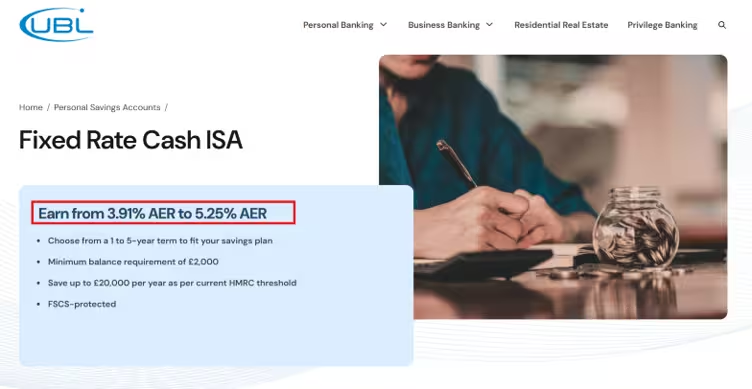
One-year fixed Cash ISA comparison showing current interest rates, minimum opening balances and account terms.
How Does a 1 Year Fixed Rate Cash ISA Work?
A one-year fixed-rate Cash ISA is a tax-efficient savings account that guarantees an agreed interest rate for approximately 12 months.
When someone opens the account, they generally deposit a lump sum or transfer qualifying savings from an existing ISA.
The savings provider then applies the fixed interest rate throughout the agreed term.
Unlike an easy-access Cash ISA, the interest rate does not change simply because the Bank of England increases or reduces its base rate.
The main advantage is predictable earnings.
For example, a saver depositing £15,000 at 4.98% AER could earn approximately £747 over a full year, assuming the money remains invested for the entire term and interest is retained until maturity.
The return is free from UK income tax under ISA rules.
Nevertheless, fixed-rate Cash ISAs are not completely inaccessible. Savers can generally request early access or transfer their ISA before maturity, but the provider may deduct an interest penalty.
This distinction is important because a fixed Cash ISA is different from a conventional fixed-rate savings bond, where early access may be prohibited.
People who already hold fixed ISAs with other providers can compare the wider range of fixed Cash ISA rates in the UK before selecting a new term.
Which Banks Offer the Best 1 Year Fixed Rate ISA?
1. UBL UK 1 Year Fixed Rate Cash ISA – Best for the Highest Interest Rate
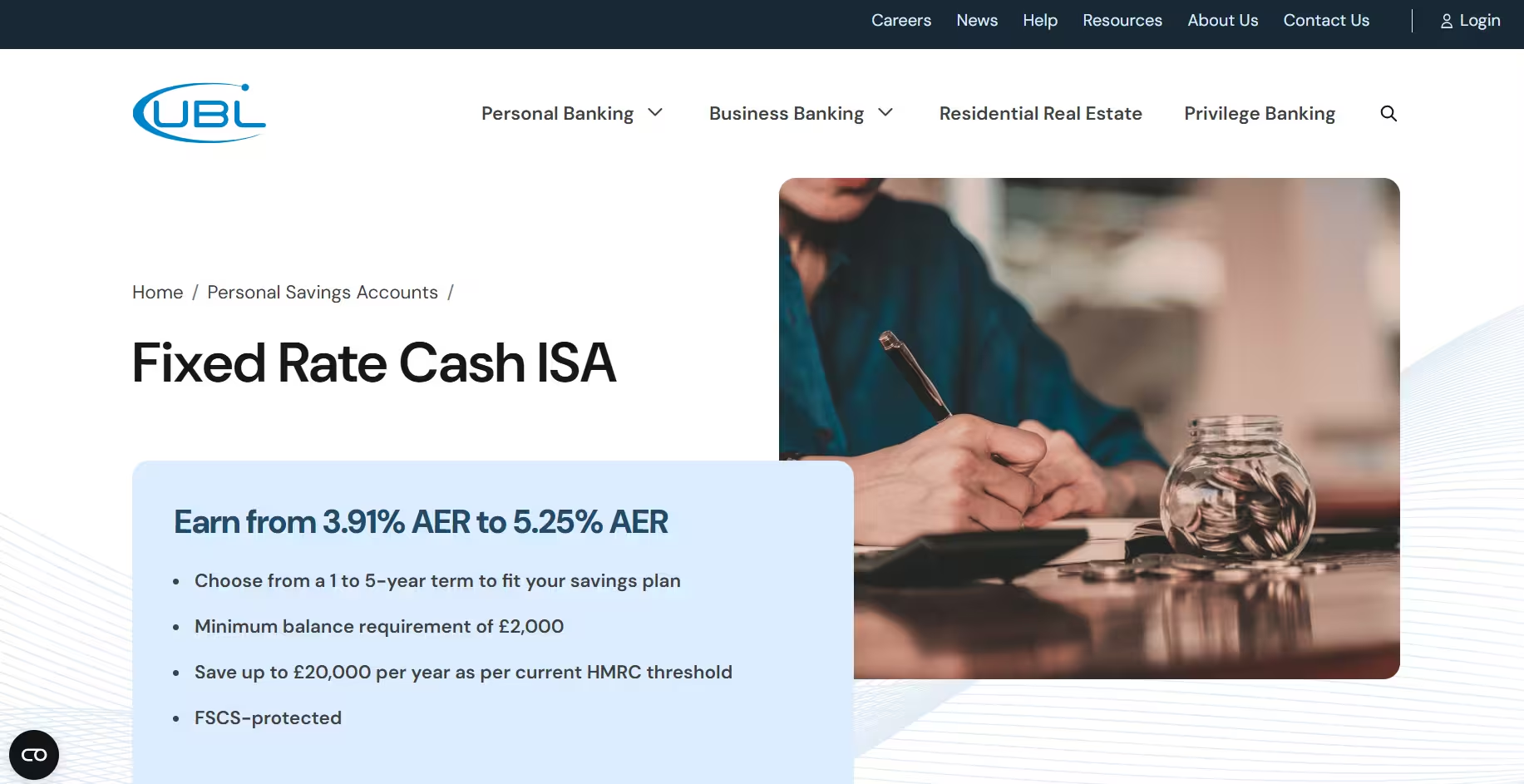
Check the UBL 1 Year Fixed Rate ISA Here
Interest Rate: 4.98% AER Fixed
Our Editorial Rating: 90% – Strongest Headline Return
UBL UK takes the leading position in our October comparison because its one-year fixed-rate Cash ISA offers 4.98% AER.
The account is designed for individuals who have at least £2,000 available and want to guarantee their interest rate for the following year.
Interest is calculated daily, and the one-year product pays interest at maturity.
This makes the account particularly straightforward for someone saving towards a known future expense, such as a home renovation, property deposit or major personal purchase.
| Feature | Details |
| Provider | UBL UK |
| Account | 1 Year Fixed Rate Cash ISA |
| Interest rate | 4.98% AER |
| Fixed period | One year |
| Minimum deposit | £2,000 |
| Interest payment | At maturity |
| ISA transfers | Accepted |
| Early withdrawal | 90 days’ gross interest |
| Partial early withdrawals | Not permitted |
| Opening methods | Online, mobile, branch or post |
| Funding period | 10 days under published conditions |
Why Does UBL UK Rank Highly?
UBL UK provides one of the strongest combinations of rate competitiveness and ISA transfer availability.
The option to transfer an existing Cash ISA is particularly valuable for savers who have accumulated balances over several tax years.
Someone with £40,000 in existing Cash ISAs could potentially transfer that balance into a qualifying new account without the transfer itself consuming the current year’s £20,000 ISA subscription allowance.
This differs from paying £40,000 of new money into an ISA, which would exceed the ordinary annual subscription limit.
One disadvantage is the account’s early-access structure. UBL UK does not permit partial early withdrawals from its fixed ISA, and early closure involves a penalty equivalent to 90 days’ gross interest.
The bank also has a relatively short funding period. Applications should therefore be made when the money is ready, rather than several weeks beforehand.
Our verdict: UBL UK is the strongest option for rate-focused savers who can meet the £2,000 minimum and expect to leave their money untouched for the full year.
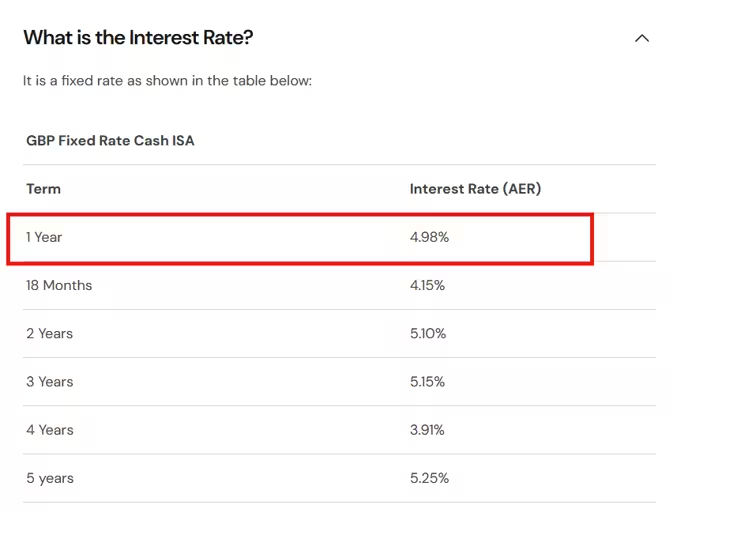
UBL UK’s official one-year fixed Cash ISA summary showing the 4.98% AER rate, deposit requirements and early withdrawal conditions.
2. Shawbrook Bank 1 Year Fixed Rate Plus Cash ISA – Best for Larger Deposits
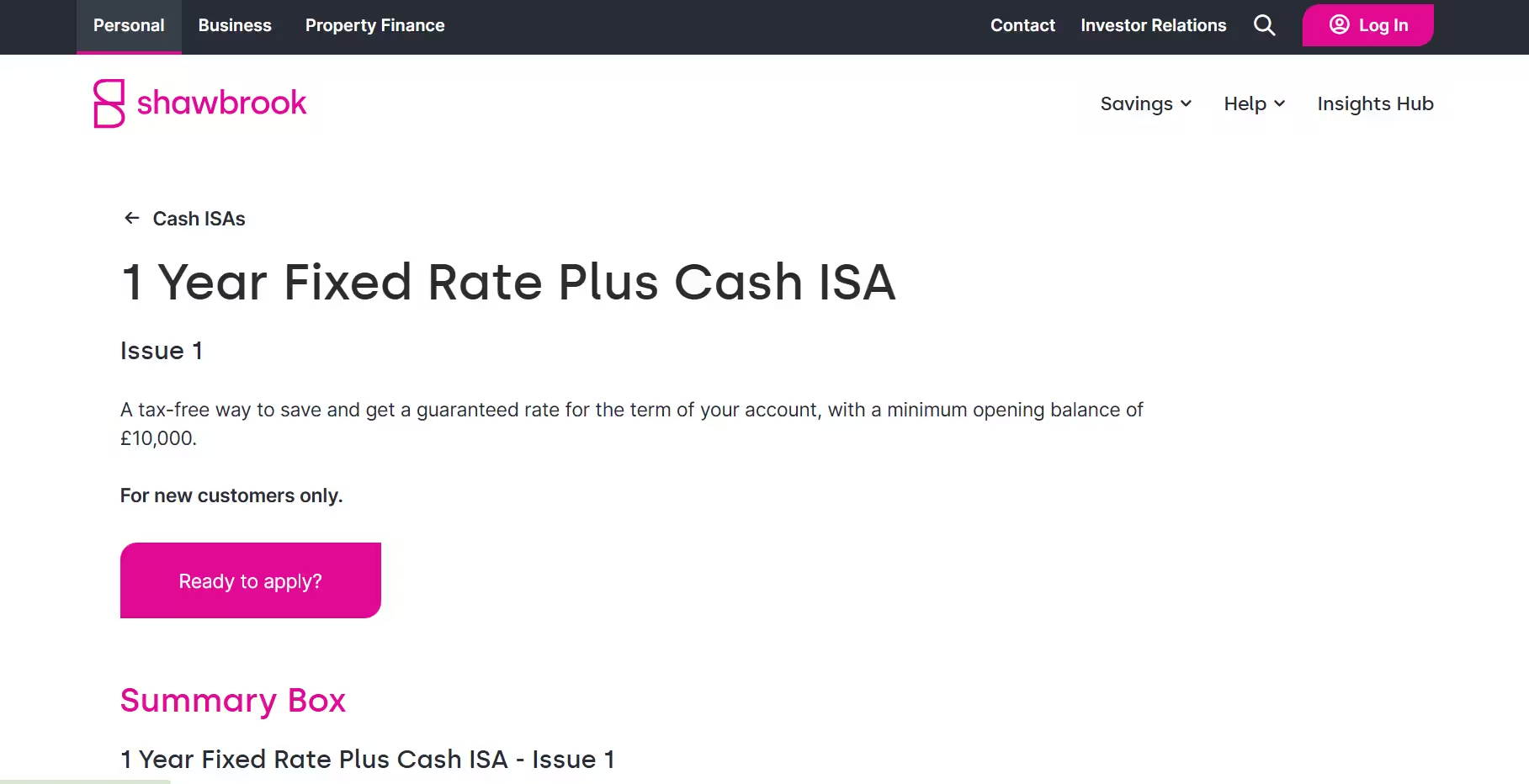
Check the Shawbrook 1 Year Fixed Rate ISA Here
Interest Rate: 4.97% AER Fixed
Our Editorial Rating: 83% – Competitive for Established Savers
Shawbrook Bank offers a one-year Fixed Rate Plus Cash ISA paying 4.97% AER.
The product is available to new Shawbrook customers and requires a minimum opening balance of £10,000.
Although its interest rate is 0.01 percentage points below UBL UK’s leading rate, the financial difference is negligible for most savers.
A £20,000 balance would generate approximately £994 in one year at 4.97%, compared with £996 at 4.98%.
| Feature | Details |
| Provider | Shawbrook Bank |
| Account | 1 Year Fixed Rate Plus Cash ISA |
| Interest rate | 4.97% AER |
| Minimum deposit | £10,000 |
| Maximum account balance | £250,000 |
| Availability | New customers only |
| Interest options | Monthly or annually |
| ISA transfers | Accepted during application |
| Early withdrawal penalty | 90 days’ interest |
| Application | Online |
Is Shawbrook Worth Choosing Over UBL UK?
Shawbrook may appeal to savers who already intend to deposit £10,000 or more and prefer its interest payment arrangements.
However, the bank’s transfer conditions require attention.
Transfer requests should normally be submitted with the initial application. Requests received later may be refused.
This could inconvenience somebody who opens an account before organising the transfer of their existing ISA.
From a financial planning perspective, the £10,000 opening requirement makes Shawbrook less accessible to someone building a new savings balance gradually.
It is more appropriate for an established saver who already has the required funds.
Our verdict: Shawbrook offers an excellent headline rate for larger deposits, although its new-customer restriction and £10,000 minimum reduce its overall accessibility.
3. Vanquis Bank 1 Year Fixed Rate Cash ISA – Best Overall Balance
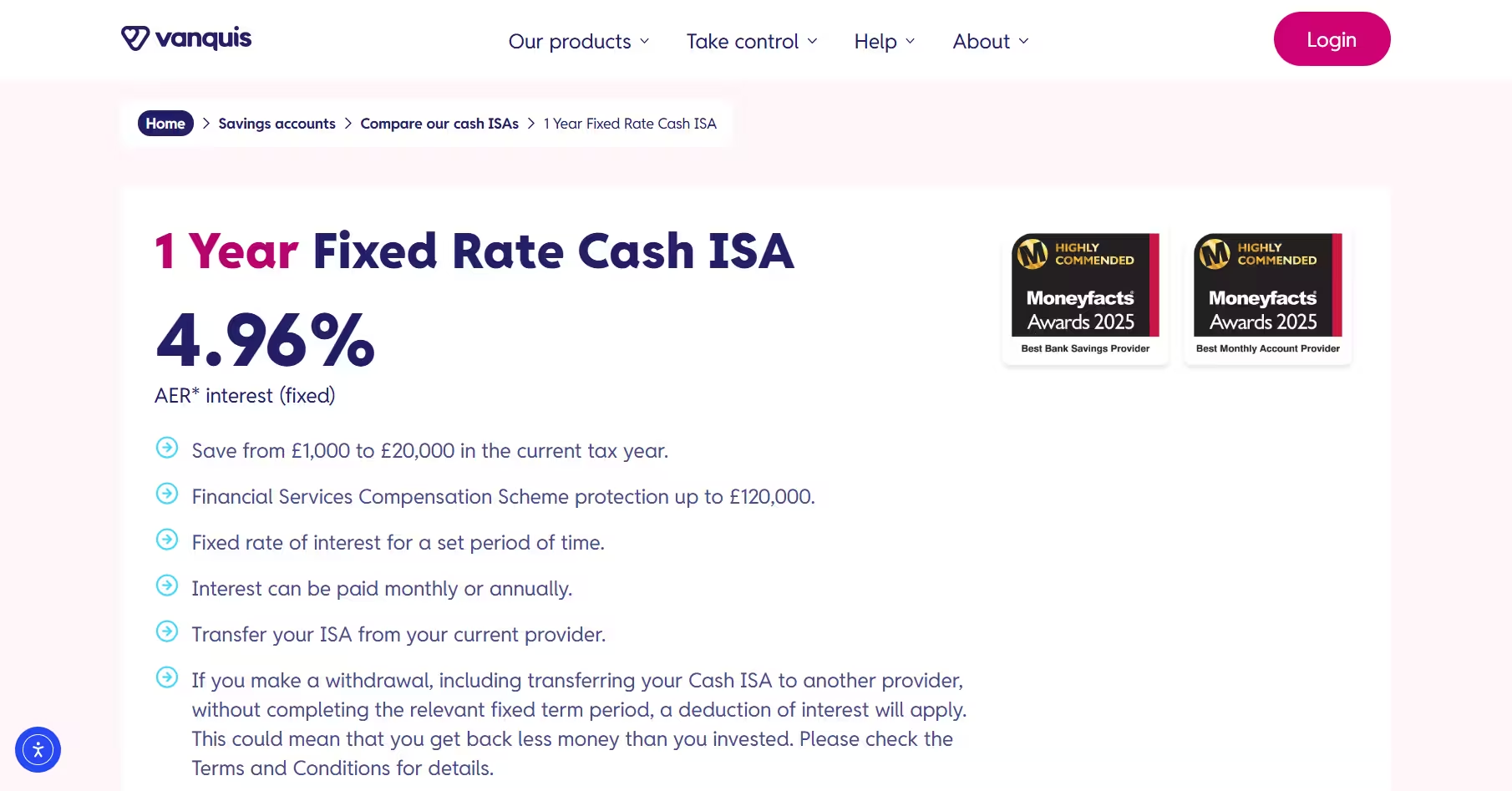
Check the Vanquis 1 Year Fixed Rate ISA Here
Interest Rate: 4.96% AER Fixed
Our Editorial Rating: 93% – Best Overall Balance
Vanquis Bank offers a compelling alternative to the highest-paying one-year Cash ISAs.
Its fixed-rate product pays 4.96% AER and requires an opening balance of £1,000.
Compared with Shawbrook, this lower minimum makes Vanquis accessible to a wider range of savers.
The account also accepts eligible ISA transfers and allows customers to choose monthly or annual interest arrangements.
| Feature | Details |
| Provider | Vanquis Bank |
| Account | 1 Year Fixed Rate Cash ISA |
| Interest rate | 4.96% AER |
| Minimum deposit | £1,000 |
| Fixed term | One year |
| Interest payments | Monthly or annually |
| ISA transfers | Accepted |
| Early withdrawal charge | 90 days’ interest |
| Funding window | 30 days |
| Application | Online |
What Makes Vanquis Competitive?
A saver depositing £10,000 at 4.96% AER could earn approximately £496 over one year.
This is only £2 less than the return from UBL UK’s 4.98% account.
Vanquis also describes its Cash ISA as flexible. However, this does not mean withdrawals from the fixed-rate product are penalty-free.
Early withdrawal attracts a charge equivalent to 90 days’ interest, and replacing withdrawn money may require another eligible ISA product rather than reopening the same fixed-rate arrangement.
This distinction matters for anyone comparing flexibility with early-access costs.
We consider Vanquis particularly suitable for savers who want a competitive fixed return without needing the larger initial commitment required by some competing providers.
Our verdict: Vanquis offers one of the strongest overall combinations of rate, minimum investment and practical account features.
4. Hodge Bank 1 Year Fixed Rate Cash ISA – Best for New ISA Contributions

Check the Hodge 1 Year Fixed Rate ISA Here
Interest Rate: 4.92% AER Fixed
Our Editorial Rating: 79% – Strong for New Savings
Hodge Bank offers a one-year fixed-rate Cash ISA paying 4.92% AER.
The account requires a minimum deposit of £1,000 and offers monthly or annual interest payment options.
Its principal limitation is that Hodge currently does not accept ISA transfers from other providers into this product.
Consequently, the account is more relevant to individuals contributing new money than to people attempting to move their existing ISA balances.
| Feature | Details |
| Provider | Hodge Bank |
| Account | 1 Year Fixed Rate Cash ISA |
| Interest rate | 4.92% AER |
| Minimum deposit | £1,000 |
| Fixed period | One year |
| Interest payments | Monthly or annually |
| External ISA transfers in | Not accepted |
| Early access charge | 90 days’ interest |
| Funding period | 14 days |
| Application | Online |
Who Should Consider Hodge Bank?
Someone opening their first Cash ISA may find Hodge competitive because of its relatively modest deposit requirement.
For example, a £5,000 deposit could generate approximately £246 over one year.
However, somebody with £25,000 already held in a Cash ISA elsewhere should consider another provider if transferring those funds is a priority.
The distinction between new subscriptions and existing ISA transfers can be more important than a small difference in interest rates.
Hodge also has a limited funding period, requiring customers to have their savings available shortly after account opening.
Our verdict: Hodge is a competitive choice for new ISA deposits, but the lack of external transfer-in functionality limits its suitability for savers consolidating older balances.
5. Zopa 1 Year Fixed Term Smart ISA – Best for Smaller Savings
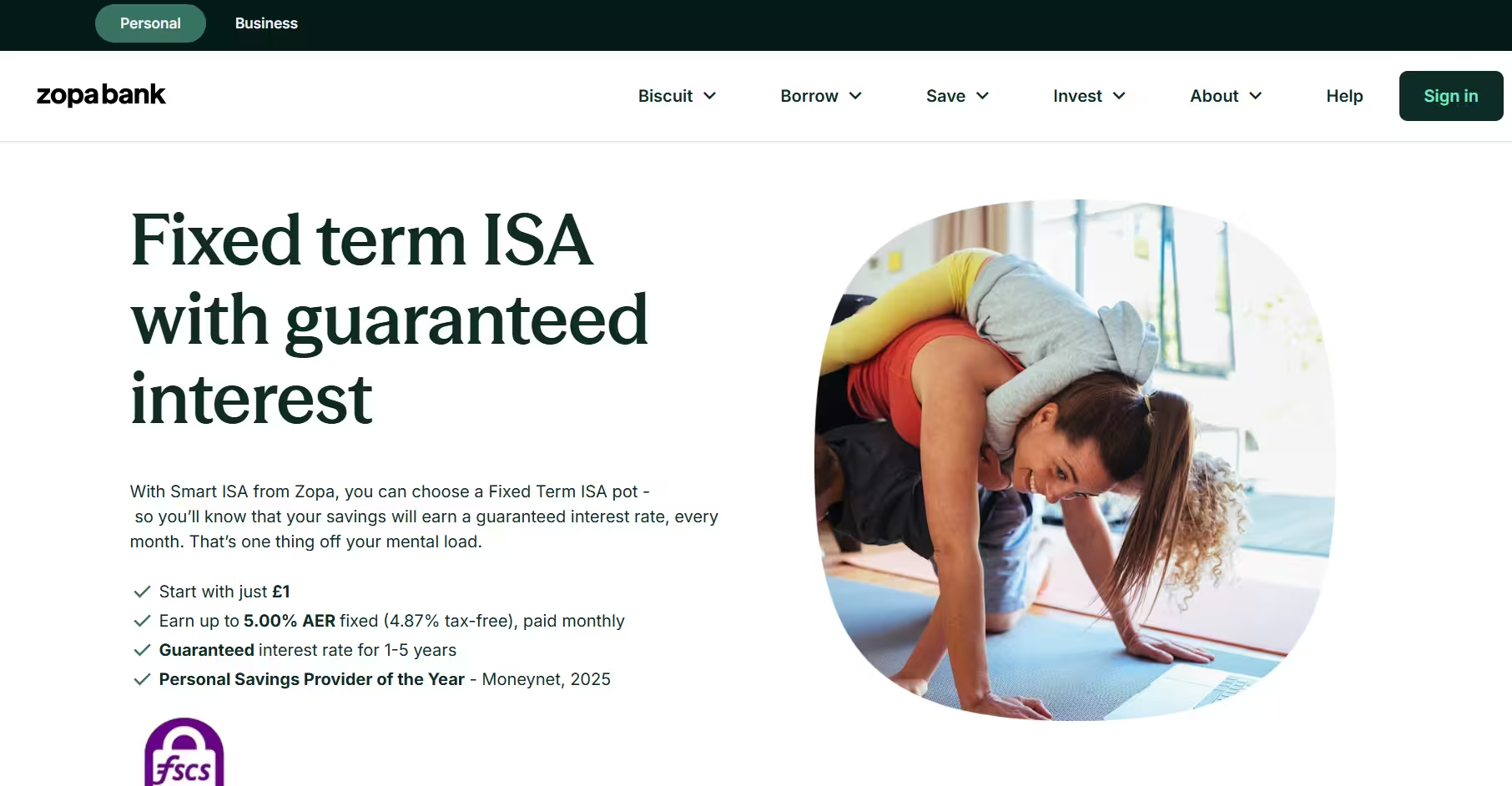
Check the Zopa 1 Year Fixed Rate ISA Here
Interest Rate: 4.87% AER Fixed
Our Editorial Rating: 90% – Accessible Digital Saving
Zopa offers a one-year fixed-term ISA within its Smart ISA savings system.
The account can be opened with just £1, making it one of the most accessible products in our comparison.
Its app-based system allows customers to organise savings into separate pots, including easy-access and fixed-term options.
| Feature | Details |
| Provider | Zopa |
| Account | Smart ISA – 1 Year Fixed Term Pot |
| Interest rate | 4.87% AER |
| Minimum opening deposit | £1 |
| Fixed period | One year |
| Interest payment | Monthly |
| ISA transfers | Accepted |
| Early closure penalty | 90 days’ interest |
| Management | Mobile app |
| Additional deposits | Within permitted initial funding window |
Why Might Smaller Savers Prefer Zopa?
Some leading fixed Cash ISAs require a deposit of £1,000, £2,000 or even £10,000.
Zopa’s £1 minimum removes much of this initial financial barrier.
An individual who has only £500 available can still consider the product.
The app-based structure also makes it possible to separate money needed for immediate expenses from savings intended to remain invested.
However, Zopa’s fixed-term ISA pot should not be confused with its easy-access ISA pot.
The fixed-term balance remains subject to an interest penalty if the account holder breaks the agreed term early.
The wider Smart ISA’s flexibility does not automatically remove the fixed-term product’s withdrawal restrictions.
Our verdict: Zopa is a practical choice for savers prioritising a low starting balance, digital management and the ability to organise their money into separate savings pots.
6. Virgin Money 1 Year Fixed Rate Cash E-ISA – Best for a Lower Exit Penalty
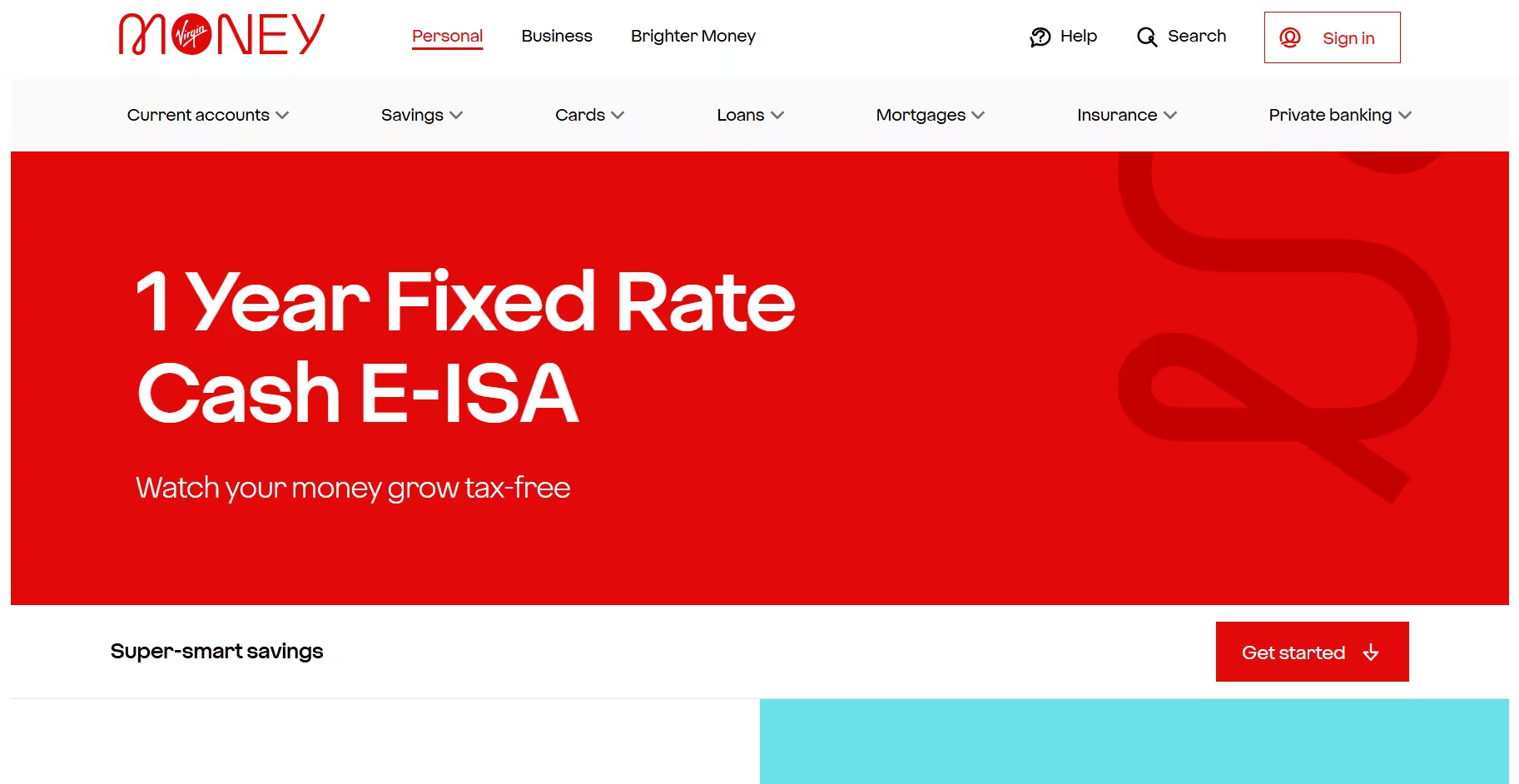
Check the Virgin Money 1 Year Fixed Rate ISA Here
Interest Rate: 4.77% AER Fixed
Our Editorial Rating: 90% – Flexible Exit Terms
Virgin Money offers a one-year Fixed Rate Cash E-ISA paying 4.77% AER.
Although this rate is lower than those offered by UBL UK, Shawbrook and Vanquis, the account has two attractive features.
First, its minimum opening balance is only £1.
Second, the early-access charge is equivalent to 60 days’ interest, compared with 90 days on several competing products.
| Feature | Details |
| Provider | Virgin Money |
| Account | 1 Year Fixed Rate Cash E-ISA |
| Interest rate | 4.77% AER |
| Minimum deposit | £1 |
| Advertised maturity | 24 October 2027 |
| ISA transfers | Accepted |
| Early withdrawal penalty | 60 days’ interest |
| Funding window | 30 days |
| Account management | Online |
Is Virgin Money Better for Someone Who Might Need Early Access?
Virgin Money’s lower early withdrawal charge could appeal to people who want some flexibility if their circumstances change.
However, early withdrawals still have a cost.
For example, on a £10,000 balance at 4.77%, a simplified 60-day interest calculation produces a penalty of approximately £78.
By comparison, a 90-day charge at 4.98% would represent approximately £123.
The exact contractual charge depends on the provider’s calculation method and the timing of withdrawal.
This does not mean Virgin Money is equivalent to an easy-access account.
Nevertheless, the shorter penalty period may provide some reassurance for savers who expect to hold the money for a year but want to understand their options if plans change.
Further details about account eligibility, interest payments and restrictions are covered in our assessment of Virgin Money ISA rates.
Our verdict: Virgin Money is worth considering when a low opening deposit and shorter early-access penalty are more important than securing the absolute highest rate.
Why Do Different Comparison Websites Show Different Fixed ISA Rates?
One issue we identified during our analysis is that comparison websites and providers do not always display identical rates at the same time.
For example, October comparisons have shown Investec Save and Close Brothers among the stronger one-year fixed ISA providers, but their product pages have also displayed lower rates at different checking times.
Possible explanations include:
- A rate being increased or reduced after a comparison was published.
- An older product issue closing to new customers.
- Search engines displaying cached product information.
- Different product versions or eligibility conditions.
- A new offer appearing before every comparison database has been updated.
This is why we have not treated every rate appearing in a comparison table as a confirmed live application offer.
The correct rate to rely on is the one available for the specific account issue when the provider accepts the application.
It is also worth checking the current account issue number, rather than relying solely on the bank’s brand name.
How Much Interest Can You Earn With the Best 1 Year Fixed Rate ISA?
To make the comparison more practical, we calculated the potential annual interest from different deposit amounts using the leading verified rate of 4.98% AER.
One-Year Interest Calculator at 4.98% AER
| Opening Deposit | Estimated Annual Interest | Estimated Balance After One Year |
| £2,000 | £99.60 | £2,099.60 |
| £3,000 | £149.40 | £3,149.40 |
| £5,000 | £249.00 | £5,249.00 |
| £10,000 | £498.00 | £10,498.00 |
| £12,000 | £597.60 | £12,597.60 |
| £15,000 | £747.00 | £15,747.00 |
| £20,000 | £996.00 | £20,996.00 |
These are illustrative figures based on a full 12 months at 4.98%, with interest retained and no withdrawals or charges. Actual credited interest can differ slightly depending on dates and product calculation rules.
Does a Higher Interest Rate Always Make a Big Difference?
Not necessarily.
Consider two accounts:
- Account A offers 4.98% AER.
- Account B offers 4.92% AER.
On a £10,000 deposit:
- Account A generates approximately £498.
- Account B generates approximately £492.
The difference is only £6 over one year.
Someone choosing between these accounts should therefore consider whether a £6 advantage outweighs differences in transfer eligibility, funding deadlines or convenience.
The same principle applies to larger savings balances, although the monetary difference becomes more significant as the deposit increases.
Is a 1 Year Fixed Rate ISA Better Than a Normal Savings Account?
A fixed-rate Cash ISA is not automatically the most profitable savings account for every individual.
The main difference is tax treatment.
Interest earned inside a Cash ISA is exempt from UK income tax.
Interest earned in an ordinary savings account may become taxable when the saver exceeds their available tax-free savings allowances.
The Personal Savings Allowance is particularly important.
| Income Tax Position | Personal Savings Allowance |
| Basic-rate taxpayer | £1,000 |
| Higher-rate taxpayer | £500 |
| Additional-rate taxpayer | £0 |
Other rules, including the starting rate for savings, may also apply depending on income.
Example: Comparing a 4.98% ISA With a 5.10% Taxable Savings Account
Assume someone has £20,000 available and is comparing:
- A fixed Cash ISA paying 4.98%.
- A standard savings account paying 5.10%.
The 5.10% account is a hypothetical comparison rate, not a claim about a specific currently available provider.
| Calculation | Cash ISA | Standard Savings Account |
| Deposit | £20,000 | £20,000 |
| Interest rate | 4.98% | 5.10% |
| Gross annual interest | £996 | £1,020 |
| Interest before tax | £996 | £1,020 |
| Net interest for a basic-rate taxpayer with their full £1,000 PSA available | £996 | £1,016 |
| Net interest for a higher-rate taxpayer with their full £500 PSA available | £996 | £812 |
The calculation assumes the basic-rate taxpayer pays 20% tax on £20 of interest above their £1,000 allowance. The higher-rate taxpayer pays 40% on £520 above their £500 allowance.
Under these assumptions, the ordinary savings account is slightly better for the basic-rate taxpayer.
However, the Cash ISA is considerably more valuable for the higher-rate taxpayer.
If the basic-rate taxpayer has already used their entire Personal Savings Allowance on other savings interest, the after-tax calculation would also change significantly.
This demonstrates why comparing interest rates without considering tax can produce misleading conclusions.
For individuals with substantial cash savings, the tax-free ISA wrapper may be more valuable than a small difference in headline interest rates.
What Are the Early Withdrawal Penalties on a 1 Year Fixed ISA?
Most fixed-rate Cash ISAs charge an interest penalty if the customer accesses their money before the agreed term ends.
A common one-year penalty is equivalent to 90 days’ interest, although providers may apply different charges.
Example: Withdrawing £10,000 Early
Assume a saver deposits £10,000 into an account paying 4.98% AER.
The approximate annual interest is £498.
A simplified 90-day interest penalty would be:
£498 × 90 ÷ 365 = £122.79.
If the customer closes the account before earning enough interest to cover the charge, the provider’s contractual terms determine how the shortfall is handled.
Some providers may deduct part of the penalty from the original deposit, meaning the customer could receive less than they invested.
UBL UK’s published terms, however, state that the combined deposit and interest returned will not be less than the original fixed ISA deposit at the start of the term.
Shawbrook’s published conditions warn that an early exit charge can reduce the amount returned below the original investment.
The difference illustrates why savers should never assume every 90-day penalty operates identically.
A one-year fixed ISA should therefore be used primarily for money that is unlikely to be required before the maturity date.
Can You Transfer an Existing ISA Into a 1 Year Fixed Rate ISA?
Yes, provided the receiving account accepts transfers.
An existing ISA transfer can be particularly useful for individuals who have accumulated savings over several tax years.
For example, somebody might hold £50,000 in an older Cash ISA paying a lower variable rate.
If a new provider accepts the transfer, that person may be able to move the existing ISA balance without treating the £50,000 as a new contribution against the current annual ISA allowance.
How to Transfer an ISA Correctly?
- Identify a one-year fixed Cash ISA accepting transfers.
- Check any early exit charge with the existing provider.
- Open or apply for the receiving ISA.
- Complete the new provider’s official ISA transfer instruction.
- Allow the providers to move the funds.
- Check that the full eligible balance and applicable interest have transferred correctly.
A Cash ISA-to-Cash ISA transfer should normally be completed within 15 working days.
The important financial distinction is that withdrawing money personally and subsequently paying it into another ISA is not the same as completing an official ISA transfer.
An incorrect withdrawal could cause the money to lose its existing ISA protection or require additional subscription allowance to reinvest it.
People managing several accounts should also understand whether they can hold more than one ISA before arranging new contributions and transfers.
What Will Change for Cash ISAs From April 2027?
One of the most important developments for people considering a one-year fixed ISA in October 2026 is the change to Cash ISA contribution limits from 6 April 2027.
Under the announced ISA reform, the annual Cash ISA subscription allowance will reduce from £20,000 to £12,000 for individuals under 65.
People aged 65 or over will retain the higher £20,000 Cash ISA allowance.
The overall adult ISA allowance will remain at £20,000.
Cash ISA Allowance Comparison
| Rule | 2026/27 | From 6 April 2027 |
| Overall adult ISA allowance | £20,000 | £20,000 |
| Cash ISA limit for people under 65 | £20,000 | £12,000 |
| Cash ISA limit for people aged 65 or over | £20,000 | £20,000 |
| Tax on qualifying Cash ISA interest | Tax-free | Tax-free |
| Existing ISA balances | Remain sheltered | Remain sheltered under applicable rules |
The higher age-related allowance applies from the start of the tax year in which an eligible individual turns 65.
The reforms also introduce restrictions on certain transfers from non-Cash ISAs into Cash ISAs.
These changes should be considered separately from ordinary transfers between eligible Cash ISAs.
Will a £20,000 Fixed ISA Opened in 2026 Be Affected?
A qualifying £20,000 contribution made during the 2026/27 tax year is assessed under the allowance applicable to that tax year.
The planned reduction in the following tax year does not automatically remove the tax-free status of money already held within an ISA.
For example, someone aged 40 who contributes £20,000 to a Cash ISA in December 2026 could retain those savings within the ISA system after April 2027.
However, their new Cash ISA subscriptions from 6 April 2027 would be subject to the reduced annual cash limit.
This makes the distinction between existing ISA balances and new subscriptions especially important.
The full government explanation is available in the official HMRC Cash ISA limit reduction policy.
Those planning larger future contributions can also review how much can be paid into an ISA to understand how different ISA limits operate together.
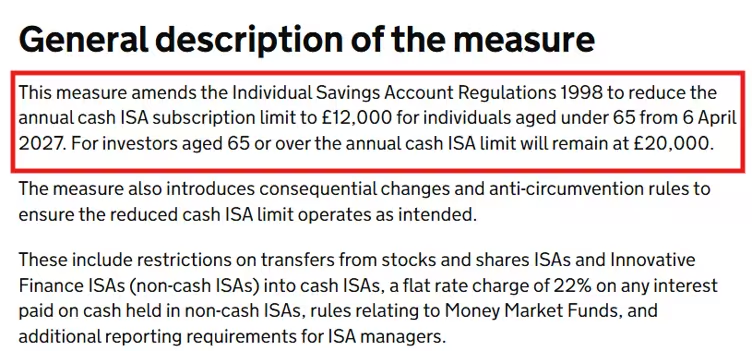
HMRC’s official Cash ISA reform information confirming the £12,000 annual cash subscription limit for people under 65 from 6 April 2027.
Are 1 Year Fixed Rate ISAs Worth It for Business Owners and Entrepreneurs?
For business owners, entrepreneurs and self-employed professionals, a one-year fixed Cash ISA can provide a predictable return on surplus personal savings.
However, there is an important distinction between personal money and business funds.
A Cash ISA is an individual savings product.
A limited company cannot simply place company-owned operating cash directly into a director’s personal ISA and treat it as ordinary business savings.
Money paid personally to a director or shareholder must be extracted and accounted for through an appropriate legal mechanism, such as salary or a properly declared dividend, with the relevant tax consequences considered.
For a sole trader, personal and business income are legally treated differently from a limited company’s assets, but adequate cash still needs to remain available for business commitments.
Example: A Self-Employed Consultant With £25,000 in Savings
Consider a self-employed consultant with £25,000 in a personal savings account.
They expect to need:
- £5,000 for upcoming tax payments.
- £5,000 for personal emergencies.
- £15,000 for longer-term personal savings.
Rather than placing the full £25,000 into a fixed Cash ISA, the consultant could consider retaining £10,000 in appropriately accessible accounts and fixing only the £15,000 not expected to be required during the following year.
At 4.98% AER, the £15,000 fixed balance could earn approximately £747 over a year.
The benefit is not simply the interest rate.
It is the ability to establish a predictable return while maintaining sufficient accessible cash for obligations that cannot be postponed.
In our assessment, this distinction is particularly relevant for people with irregular monthly income.
A higher fixed rate becomes less valuable if securing it forces someone to borrow or incur an early-exit penalty when expenses arise.
How Safe Is a 1 Year Fixed Rate Cash ISA?
Eligible Cash ISA deposits held with UK-authorised banks and building societies are generally protected by the Financial Services Compensation Scheme.
The standard FSCS deposit protection limit increased from £85,000 to £120,000 on 1 December 2025.
This protection applies per eligible person, per authorised institution, rather than separately to every savings account.
How Does FSCS Protection Work?
For example, suppose someone holds:
- £70,000 in a Cash ISA.
- £40,000 in an ordinary savings account.
- Both accounts under the same authorised banking institution.
The combined balance is £110,000.
Assuming all deposits qualify, this falls within the standard £120,000 protection limit.
However, holding £100,000 in each of two accounts under the same banking licence would not create £240,000 of standard FSCS protection.
Some banking brands share an authorisation, which makes it important to check the underlying institution.
Virgin Money and Nationwide, for instance, state that eligible deposits across the two brands share their applicable protection limit.
The official FSCS deposit protection information explains the £120,000 threshold and how protection works across banking groups.
What Happens When a 1 Year Fixed Rate ISA Matures?
When a fixed-rate ISA reaches the end of its agreed term, the provider will normally notify the customer about their available options.
These commonly include withdrawing the money, transferring it to another eligible ISA or reinvesting it into a new product.
However, the default outcome varies between banks.
Some providers move matured savings to a variable-rate ISA account.
Others may automatically reinvest the balance under the terms disclosed to the customer.
This can have a significant financial impact.
Why Should You Check the Maturity Rate?
Assume a saver has £20,000 invested at 4.98%.
The estimated first-year interest is £996.
If the balance subsequently moves into an account paying only 2.00% AER, the annual return on £20,000 would fall to approximately £400.
This is a reduction of £596 compared with the original annual interest amount.
The example is illustrative, rather than a forecast of any particular provider’s maturity rate.
Savers should therefore review their account before its maturity date and confirm whether they want to reinvest, transfer or withdraw.
A straightforward precaution is to place a reminder in the calendar two or three weeks before maturity.
Should You Choose a 1 Year, 2 Year or 5 Year Fixed ISA?
A one-year ISA is particularly useful for people seeking a guaranteed rate without making a long-term commitment.
However, longer fixed terms can offer higher rates.
Recent October 2026 comparisons have shown two-year fixed Cash ISA rates exceeding 5%, with some longer-term products offering still higher returns.
A longer fix can be useful when the saver expects interest rates to fall.
The disadvantage is reduced flexibility.
Comparing Fixed ISA Terms
| Fixed ISA Term | Main Advantage | Main Disadvantage | Suitable For |
| One year | Short commitment | Reinvestment risk after 12 months | Short-term savings goals |
| Two years | Longer rate certainty | Longer restriction on access | Medium-term personal savings |
| Three years | Potentially competitive fixed returns | Larger early-access charges | Planned future expenses |
| Five years | Long-term interest certainty | Extended commitment | Longer-term cash savings |
The best term depends on how soon the saver may need their money.
Someone expecting to buy a property in 12 months might prefer a one-year ISA even if a five-year account offers a higher rate.
Meanwhile, a saver with substantial long-term cash reserves may prefer to lock in an attractive rate for several years.
A person interested in comparing a building society’s range of Cash ISA terms can also consider the available Leeds Building Society ISA rates.
What Should You Check Before Opening the Best 1 Year Fixed Rate ISA?
Before applying, we recommend reviewing the following conditions.
- The exact AER and product issue: Confirm the rate shown on the current application and summary box.
- Minimum opening deposit: Some providers accept £1, while others require £10,000.
- ISA transfer acceptance: Make sure the account can receive existing ISA funds if a transfer is planned.
- Funding deadline: Many fixed products allow only a limited period for initial deposits.
- Early withdrawal charge: Check whether the penalty can reduce the original deposit.
- Interest arrangements: Confirm whether interest is paid monthly, annually or at maturity.
- Maturity instructions: Find out where the money will go if no further action is taken.
- FSCS protection: Check the authorised institution and any other savings held under the same banking licence.
The most suitable account is not necessarily the one with the highest published rate.
It is the one offering an attractive after-tax return while matching the saver’s access requirements, available balance and intended savings period.
Our Final Verdict: Which 1 Year Fixed Rate ISA Is Best in 2026?
Based on the verified October 2026 offers, UBL UK provides the highest one-year fixed Cash ISA rate at 4.98% AER.
However, Vanquis Bank achieves the highest score in our broader editorial assessment because it combines a near-leading rate with a £1,000 minimum deposit, transfer acceptance and additional ISA flexibility provisions.
Shawbrook remains highly competitive for new customers with at least £10,000 available.
Hodge Bank offers an attractive rate for new ISA subscriptions, while Zopa is particularly accessible for people starting with smaller amounts.
Virgin Money deserves consideration where the shorter 60-day early withdrawal charge is important.
Our overall conclusion is that rate competitiveness, tax treatment and access restrictions should be evaluated together.
For someone able to leave their personal savings untouched for 12 months, a one-year fixed Cash ISA can offer predictable, tax-free interest without the long commitment associated with multi-year savings products.
But where access to cash remains uncertain, preserving liquidity may be more important than gaining an additional fraction of a percentage point in interest.
Frequently Asked Questions
What Is the Highest 1 Year Fixed Rate ISA in the UK?
As of our 22 October 2026 review, UBL UK offers the highest verified one-year fixed Cash ISA rate at 4.98% AER. Rates can change for new applications.
Can I Put £20,000 Into a 1 Year Fixed Rate ISA?
Yes. During the 2026/27 tax year, eligible adults can contribute up to £20,000 across their adult ISAs combined, subject to any allowance already used and individual account conditions.
Can I Open Two 1 Year Fixed Rate ISAs?
Yes. Under current rules, eligible adults can generally pay into multiple Cash ISAs in the same tax year, provided total contributions remain within the applicable allowance.
Is Interest on a 1 Year Fixed Rate ISA Tax-Free?
Yes. Interest earned within a qualifying Cash ISA is exempt from UK income tax, regardless of whether the saver has used their Personal Savings Allowance.
Can I Withdraw Money From a Fixed Rate ISA Before 12 Months?
Yes, generally subject to the provider’s early withdrawal conditions. Many one-year fixed Cash ISAs charge a penalty equivalent to 60 or 90 days’ interest.
Is a 1 Year Fixed ISA Better Than an Easy Access ISA?
A fixed ISA provides a guaranteed rate for the agreed term, while an easy-access ISA normally allows withdrawals without a fixed-term exit penalty but has a variable rate.
Will the Cash ISA Limit Reduce to £12,000 in 2027?
From 6 April 2027, the planned annual Cash ISA limit is £12,000 for people under 65. Those aged 65 or over retain a £20,000 cash limit, while the overall adult ISA allowance remains £20,000.
Can a Business Owner Put Company Money Into a Personal Cash ISA?
A Cash ISA belongs to an individual. Limited-company funds must first be paid out through an appropriate lawful arrangement, with any applicable accounting and tax consequences addressed.
What Happens If I Forget to Renew My Fixed ISA?
The provider will apply its maturity arrangements, which may involve transferring the money to a variable-rate ISA, another holding account or an eligible reinvestment product.
Is a 4.98% Fixed ISA Better Than a 5% Ordinary Savings Account?
It depends on tax. The Cash ISA pays tax-free interest, while the ordinary savings account may offer a higher net return if the saver has enough unused savings allowances to cover the interest.
Can I Transfer £50,000 Into a 1 Year Fixed ISA?
Potentially, yes, if the receiving account accepts the balance and the funds are already held within qualifying ISAs. A valid ISA transfer does not automatically count as a new £50,000 annual subscription.
Are One-Year Fixed Cash ISAs Covered by FSCS?
Eligible deposits with UK-authorised institutions are generally covered up to £120,000 per eligible person, per authorised institution, including other deposits held under the same banking licence.

More in Finance & Tax

Moneybox Lifetime ISA Review 2026: Interest Rates, Bonuses, Fees and Is It Worth It?
The Moneybox Lifetime ISA is a UK savings and investment account designed to help eligible adults save for their first home or retirement. It offers a 25% government bonus on contributions of up to £4,000 each tax year, potentially adding £1,000 annually to a saver’s money. Moneybox offers both Cash and Stocks & Shares Lifetime […]

Leeds Building Society ISA Rates 2026: Current Cash ISA Rates, Fixed Terms and Our Expert Review
Leeds Building Society ISA rates currently reach 4.90% AER tax-free, with fixed-rate Cash ISAs available over one, two, three and five years. Savers can also choose an Online Access Cash ISA paying 4.16% AER variable, alongside monthly-income and limited-access products. However, the highest interest rate does not automatically represent the best account. Withdrawal charges, maturity […]