
The best fixed ISA rates in the UK currently reach 5.25% AER, with Shawbrook Bank offering one of the strongest five-year fixed Cash ISA deals in October 2026.
Competitive alternatives are available from Close Brothers Savings, Tandem Bank, West Bromwich Building Society, OakNorth and other providers, depending on how long savers are prepared to commit their money.
However, our analysis of the UK fixed Cash ISA market suggests that choosing the highest interest rate is not always the most financially effective decision.
A five-year fixed ISA paying 5.25% might generate greater long-term returns, but a two-year account offering around 5% could provide a more practical balance between interest earnings and financial flexibility.
We reviewed published market comparisons, provider information, minimum investment requirements, interest payment arrangements, ISA transfers and early withdrawal conditions to identify competitive fixed Cash ISA options for UK savers, self-employed professionals and business owners managing their personal savings.
What Are the Best Fixed ISA Rates in the UK Right Now?
The strongest advertised fixed Cash ISA rates in recent October 2026 comparisons range from approximately 4.9% for one-year terms to 5.25% for five-year terms.
| Fixed ISA period | Leading October comparison rate | Provider example |
| 1 Year | 4.94% AER | Shawbrook Bank |
| 2 Years | 5.06% AER | Shawbrook Bank |
| 3 Years | 5.11% AER | Close Brothers Savings |
| 4 Years | 3.91% AER | UBL UK |
| 5 Years | 5.25% AER | Shawbrook Bank |
These are recently advertised market rates, not a guarantee of application availability. The figures were recorded in comparison data published between 5 and 7 October 2026. Individual providers may have since changed their rates.
For example, Shawbrook’s own product listing has also displayed 4.83% for one year and 4.99% for two years.
An important finding is that four-year fixed ISAs are not necessarily more competitive than three-year accounts. Fewer attractive four-year products may be available, so savers should compare the actual term and rate rather than assuming longer automatically means better.
Which Fixed Cash ISA Providers Offer the Best Deals in 2026?
The following shortlist considers interest-rate competitiveness, funding requirements, flexibility, transfer options and how suitable each product may be for different savings objectives.
| Provider | Selected fixed term | Advertised AER | Minimum deposit | Our editorial rating |
| Shawbrook Bank | 5 Years | 5.25% | £1,000 | 95% |
| Close Brothers Savings | 3 Years | 5.11% | £10,000 | 89% |
| Tandem Bank | 5 Years | 5.11% | £0 listed minimum | 93% |
| West Brom Building Society | 3 Years | 5.10% | £1 | 94% |
| Vida Savings | 5 Years | 5.11% | £1,000 | 90% |
| Castle Trust Bank | 3 Years | 5.05% | £1,000 | 89% |
| OakNorth Bank | 2 Years | 5.02% | £1 | 94% |
| Aldermore | 2 Years | 5.01% | £1,000 | 92% |
| Zopa | 1 Year | 4.87% | £1 | 91% |
| Virgin Money | 1 Year | 4.77% | £1 | 91% |
Rate note: Close Brothers, Vida Savings, Castle Trust and Zopa figures reflect recent October comparison snapshots and should be reconfirmed with the providers.
The other rates have also been identified on provider product pages. A £0 minimum does not remove the requirement to fund an account under its terms.
How we rated providers: Our percentages are editorial assessments, not independently surveyed customer satisfaction scores.
They consider rate competitiveness (35%), minimum deposit accessibility (20%), early-access conditions (20%), ISA transfer support (15%) and account management convenience (10%). They indicate our assessment of the product’s overall appeal rather than a prediction of investment performance.
1. Shawbrook Bank Fixed Rate Cash ISA – Best for Maximum Five-Year Returns
Check the Shawbrook Fixed Cash ISAs Here
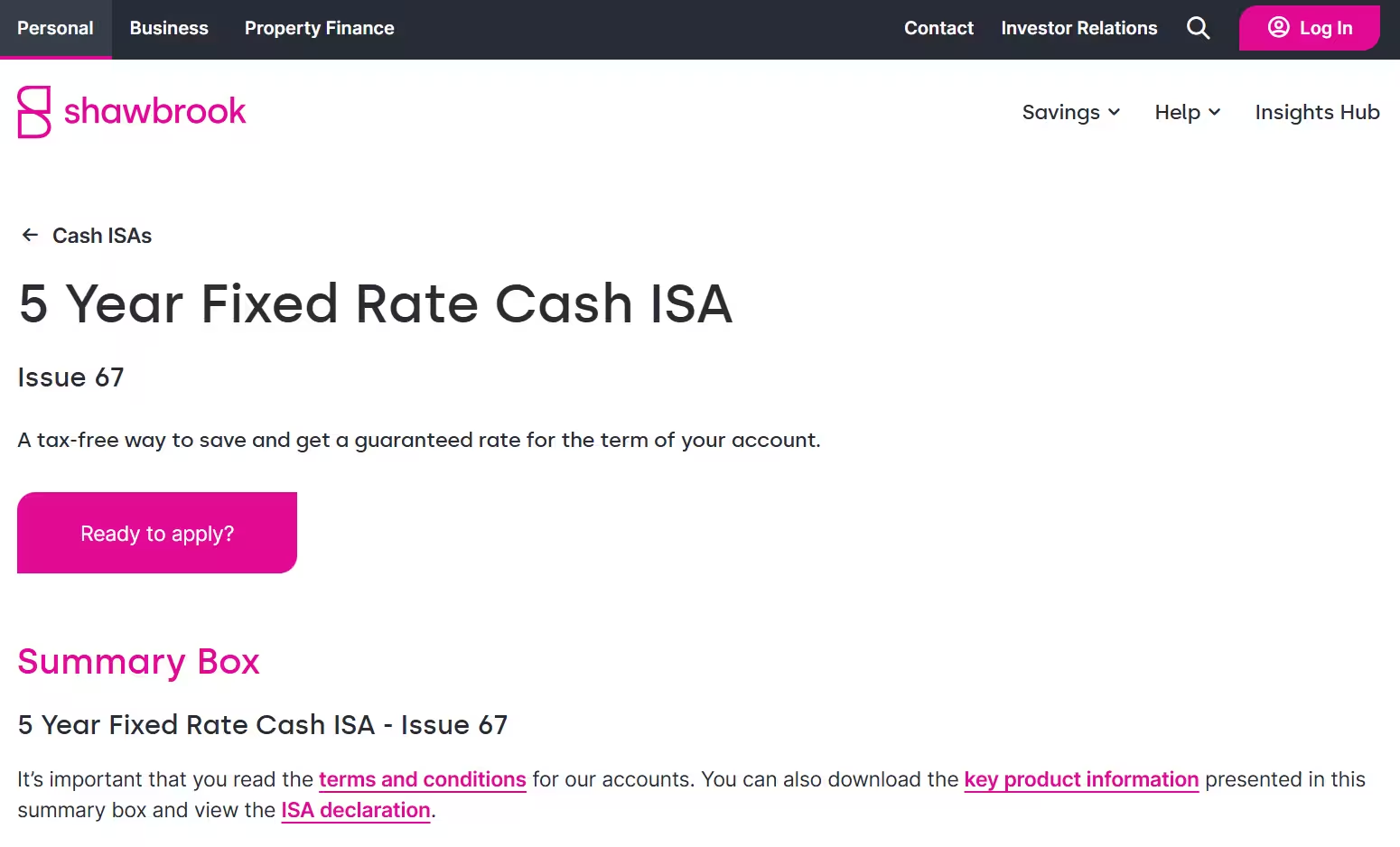
Interest Rate: 5.25% AER Fixed
Our Rating: 95%
Shawbrook Bank takes the leading position for savers prioritising a competitive guaranteed long-term interest rate.
Its five-year Fixed Rate Cash ISA has been advertised at 5.25% AER, making it one of the strongest longer-term options available in October 2026.
The account may appeal to individuals who have already built sufficient accessible savings and want to earn predictable interest on money that will not be required for several years.
Key Features
- Interest Rate: 5.25% AER fixed.
- Fixed Period: Five years.
- Minimum Deposit: £1,000.
- Interest Payments: Monthly or annually, depending on the chosen option.
- ISA Transfers: Accepted, subject to account conditions.
- Early Withdrawal: Charge equivalent to 360 days’ interest.
- Account Management: Online, with telephone support.
How Much Interest Could You Earn?
Assuming 5.25% AER is maintained for the full five years and interest is compounded annually:
| Initial savings | Approximate balance after 5 years | Total interest |
| £5,000 | £6,458 | £1,458 |
| £10,000 | £12,916 | £2,916 |
| £20,000 | £25,832 | £5,832 |
These figures assume no withdrawals and all interest remains invested. Actual amounts depend on the provider’s calculation and payment arrangements.
For somebody investing £20,000 of personal savings, the illustration suggests more than £5,800 in tax-free interest across the five-year period.
What Are the Advantages?
The main attraction is certainty. Once the fixed-rate account is opened and funded, the contracted interest rate is protected for the agreed term.
This could become particularly valuable if general UK savings rates decline over the following years.
Another advantage is that Shawbrook accepts eligible ISA transfers, allowing existing tax-free savings to be moved without using additional annual ISA allowance.
What Are the Disadvantages?
The principal drawback is the early-exit charge.
A penalty equivalent to 360 days’ interest is substantial, particularly if an account is closed soon after opening. In some circumstances, an early closure could return less than the original deposit.
Our assessment is that this account is most appropriate for surplus personal cash rather than emergency funds or money earmarked for a property purchase.
Our Verdict: Shawbrook offers an attractive combination of a high five-year AER and ISA transfer support, but its long commitment period requires careful financial planning.
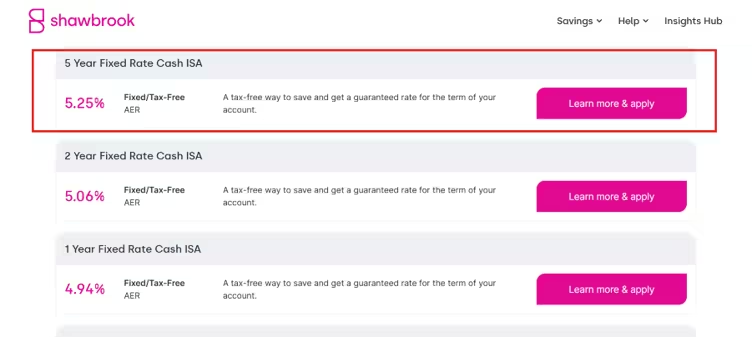
Shawbrook Bank’s official Cash ISA product listing showing the five-year fixed rate of 5.25% AER, available interest payment options and applicable account conditions.
2. Close Brothers Savings Fixed Rate Cash ISA – Best for Larger Three-Year Deposits
Check the Close Brothers Fixed Cash ISAs Here
Interest Rate: 5.11% AER in October Market Comparisons
Our Rating: 89%
Close Brothers Savings is an important option for people who want to commit a larger amount of money without selecting a five-year fixed term.
Recent October comparisons highlighted a three-year fixed Cash ISA rate of 5.11%, putting the provider near the top of the three-year market.
However, the provider’s own product information retrieved during our review displayed a different rate for its three-year account. Savers should therefore confirm the rate offered at the application stage rather than relying on the earlier comparison figure.
Key Features
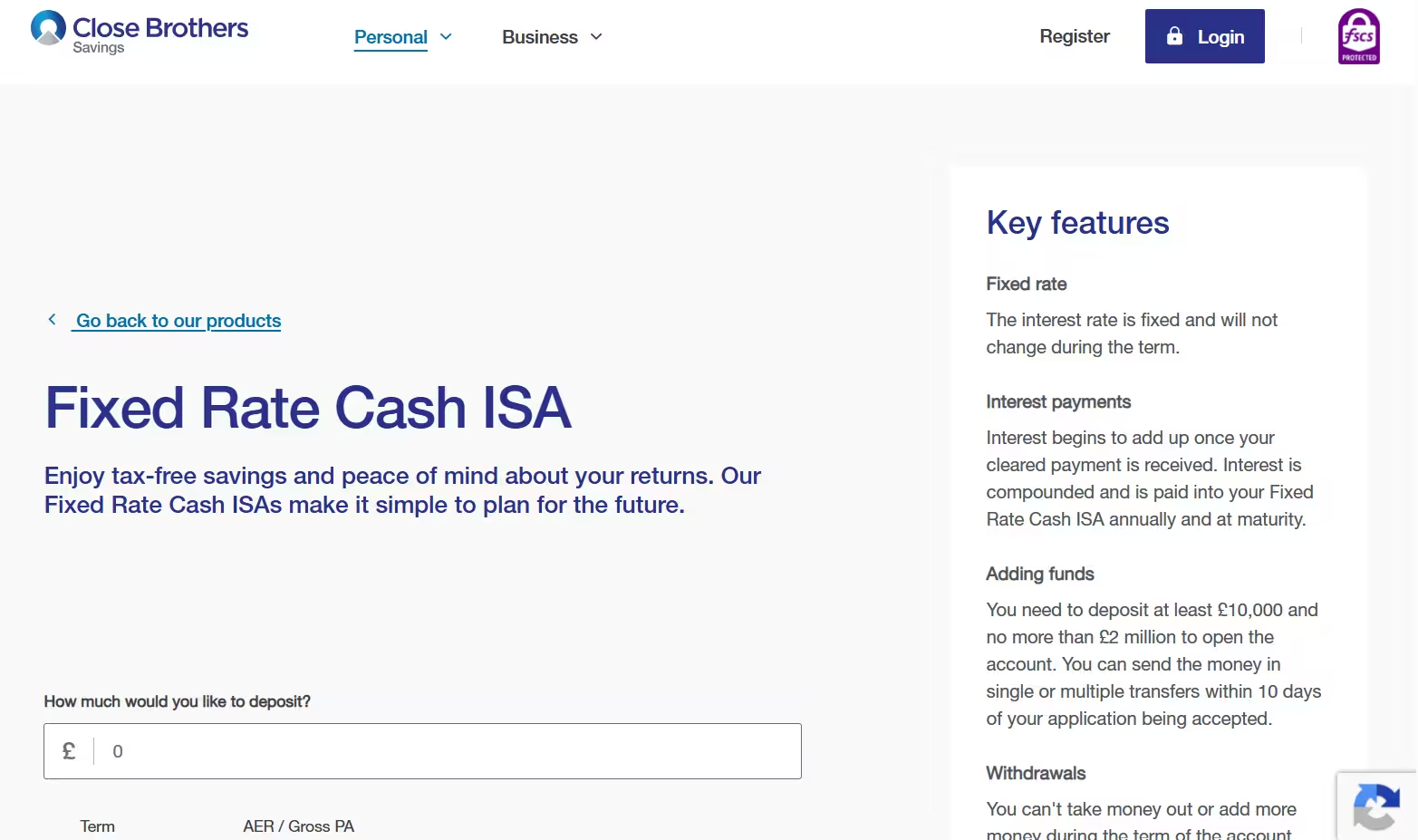
- Comparison Rate: 5.11% AER for three years.
- Minimum Deposit: £10,000.
- Maximum Account Balance: Subject to the provider’s published limit, up to £2 million.
- Interest Payments: Annual, compounded within the account.
- ISA Transfers: Available under the account’s funding conditions.
- Funding Window: Normally 10 days from application acceptance.
- Account Type: Personal savings, not a business account.
Why Does the £10,000 Minimum Matter?
The relatively high opening requirement makes this account less accessible for savers who are gradually building their first emergency or savings fund.
However, it could appeal to an individual transferring several years of accumulated ISA balances.
For example, a saver who has accumulated £60,000 inside existing Cash ISAs can potentially transfer that balance to another eligible ISA provider without treating it as £60,000 of new subscriptions.
This is different from depositing £60,000 of previously unwrapped personal savings, which would be restricted by the applicable annual ISA subscription allowance.
What Are the Main Risks?
The short funding window requires preparation.
Savers planning an ISA transfer should arrange the transfer through the receiving provider and confirm that any outstanding transfer instructions meet its deadline.
The account’s restrictions on withdrawals and additional deposits should also be checked carefully.
Our Verdict: Close Brothers Savings deserves consideration for larger established ISA balances, but its £10,000 minimum and the need to reconfirm the currently available rate reduce its suitability for some savers.
3. Tandem Bank Fixed Rate Cash ISA – Best for App-Based Long-Term Saving
Check the Tandem Fixed Cash ISAs Here
Interest Rate: Up to 5.11% AER Fixed
Our Rating: 93%
Tandem Bank is a competitive option for savers comfortable managing their money through a mobile application.
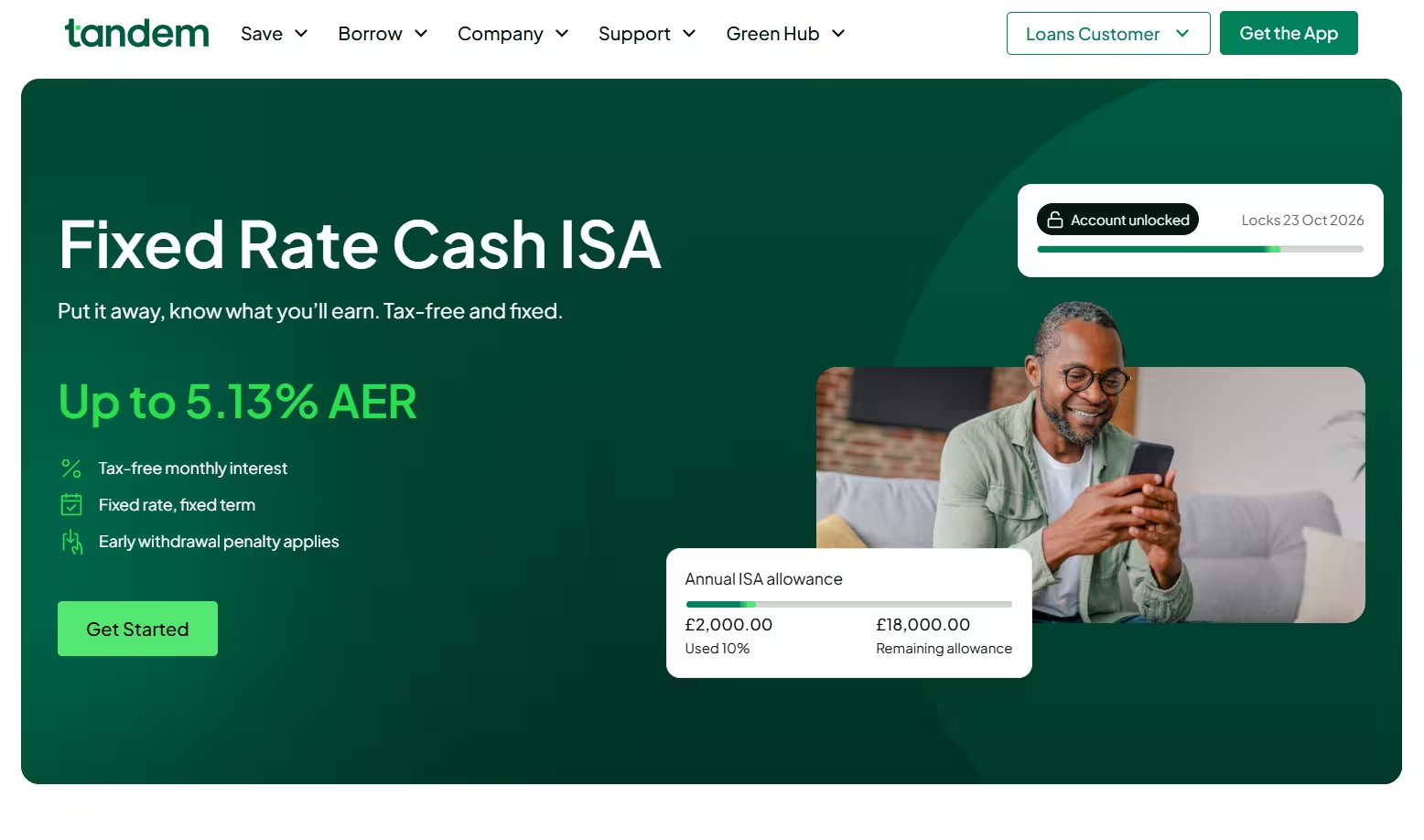
Its Cash ISA range has advertised fixed rates of up to 5.11% AER, with the five-year option among the strongest deals in recent market comparisons.
Unlike a traditional high-street building society account, Tandem is designed around digital account management.
Key Features
- Maximum Advertised Fixed Rate: 5.11% AER.
- Selected Fixed Term: Five years.
- Account Access: Mobile app.
- Interest Payments: Monthly.
- ISA Transfers: Supported.
- Minimum Deposit: No stated minimum in recent comparison data.
- Withdrawals: Possible subject to an early withdrawal penalty.
Why Might Tandem Appeal to Younger Savers?
One of its advantages is accessibility.
A saver who is comfortable using financial applications can monitor an account without relying on branch visits or postal correspondence.
The monthly interest payment structure also makes earnings easier to monitor.
However, receiving interest monthly does not necessarily create a higher effective return than an annually paying account. AER accounts for the effect of compounding, making it the appropriate comparison measure.
Is Tandem Better Than Shawbrook?
Based on the advertised five-year rates:
- Shawbrook Bank: 5.25%.
- Tandem Bank: 5.11%.
- Difference: 0.14 percentage points.
On a £20,000 balance, that difference represents approximately £28 over the first year before taking account of compounding.
For some individuals, the convenience of digital management could be worth more than the relatively small interest difference.
Our Verdict: Tandem provides a strong alternative for app-based savers who value straightforward online management alongside competitive long-term interest rates.
4. West Bromwich Building Society Fixed Rate ISA – Best Three-Year Building Society Option
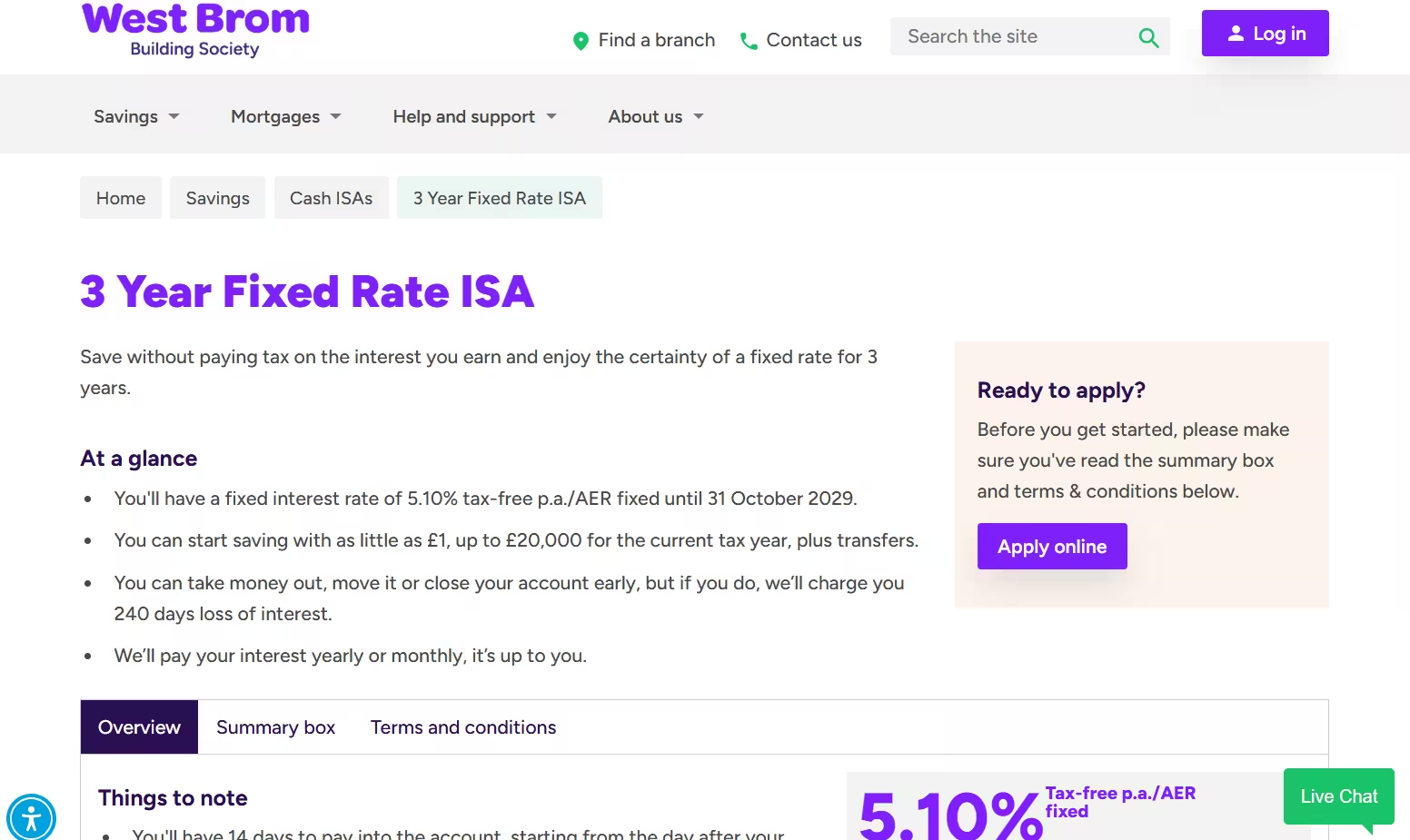
Check the West Bromwich Fixed Cash ISAs Here
Interest Rate: 5.10% AER Fixed
Our Rating: 94%
West Bromwich Building Society stands out for combining an attractive three-year interest rate with a low minimum deposit.
Its three-year Fixed Rate ISA has been advertised at 5.10% AER, fixed until 31 October 2029.
For savers unwilling to commit for five years, this offers an alternative with a defined maturity date.
Key Features
- Interest Rate: 5.10% AER fixed.
- Fixed Until: 31 October 2029.
- Minimum Deposit: £1.
- Interest Options: Monthly or yearly.
- ISA Transfers: Accepted under the account’s conditions.
- Early Withdrawal Penalty: 240 days’ interest.
- Opening Methods: Online and in branch.
Why Is the £1 Minimum Important?
A low minimum deposit makes the account accessible to savers who cannot commit £1,000 or £10,000 initially.
It also makes the product relevant to someone dividing savings between multiple accounts rather than investing everything in one fixed term.
However, the available funding period must be checked because fixed-rate ISAs are not necessarily designed for ongoing deposits.
How Significant Is the Early Withdrawal Charge?
West Brom applies a charge equivalent to 240 days’ interest when funds are accessed early.
For illustration, withdrawing £10,000 at a 5.10% annual interest rate could involve a charge of approximately £335, using a simplified daily-interest calculation.
The exact amount depends on the provider’s contractual calculation and the withdrawal circumstances.
This makes the account less appropriate for savings that might be required to cover unexpected household or business-related personal expenditure.
Our Verdict: West Brom is among the strongest three-year options for savers who want an accessible opening deposit, a competitive rate and a fixed maturity date.
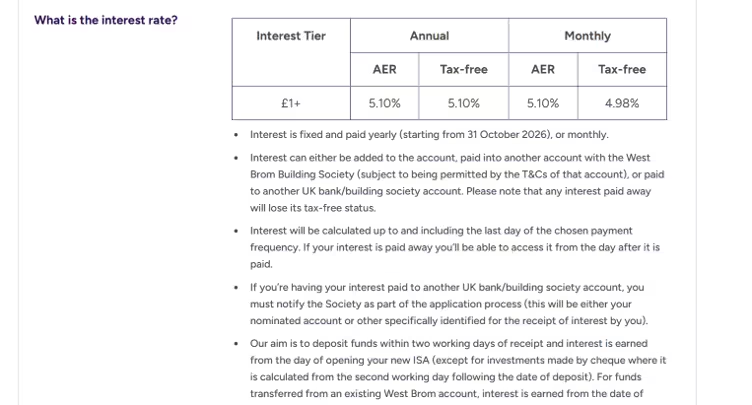
West Bromwich Building Society’s official three-year Fixed Rate ISA showing its 5.10% AER, £1 minimum deposit, 31 October 2029 maturity date and 240-day early-access charge.
5. Vida Savings Fixed Rate ISA – Best Alternative Five-Year Deal
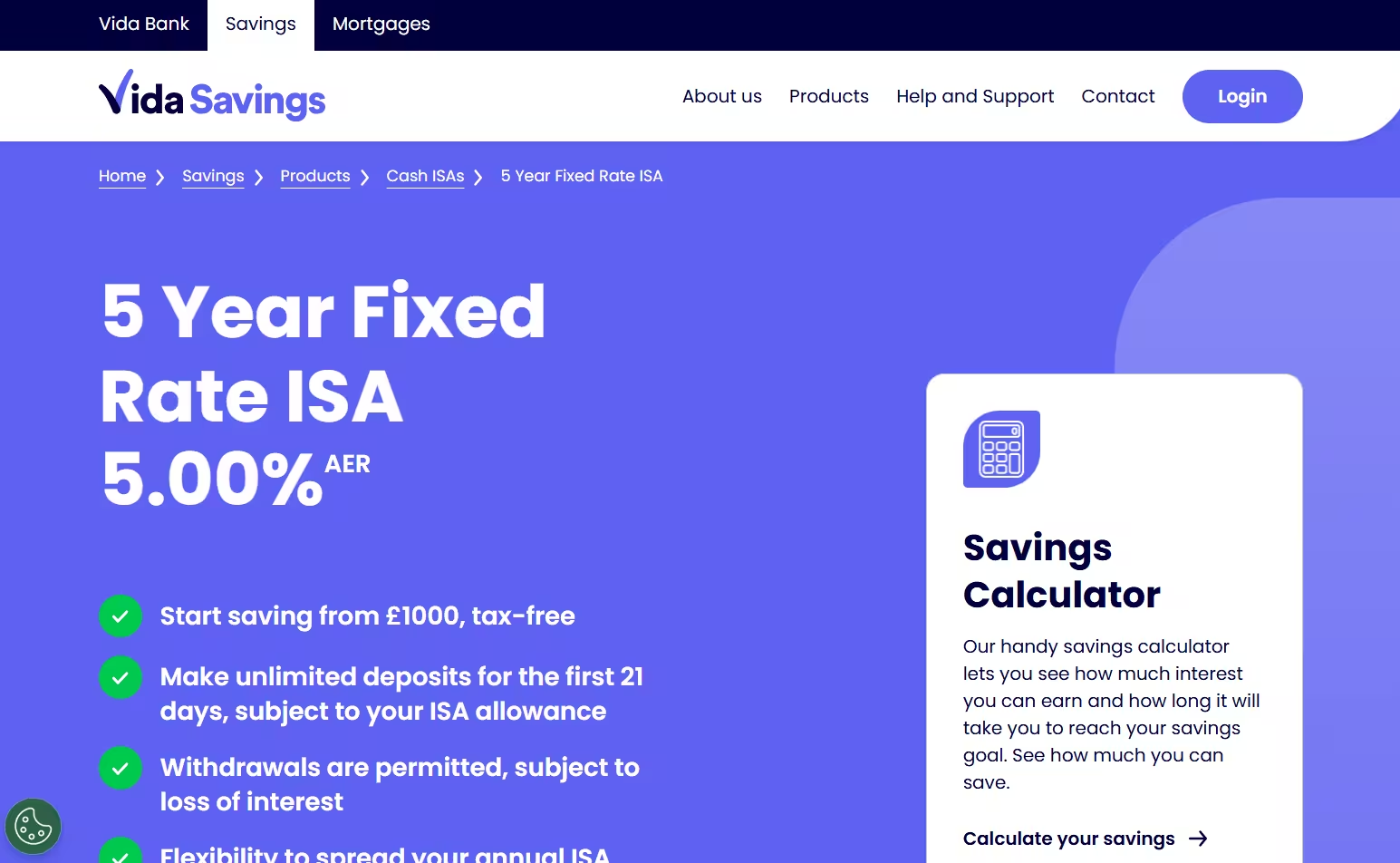
Check the Vida Fixed Cash ISAs Here
Interest Rate: 5.11% AER in October Market Comparisons
Our Rating: 90%
Vida Savings is another provider worth reviewing for savers considering longer fixed terms.
Its five-year Fixed Rate ISA was listed at 5.11% AER in early October market data.
While this is below Shawbrook’s advertised 5.25%, the difference is relatively modest and savers should compare the complete account terms rather than selecting purely on headline interest.
Key Features
- Comparison Rate: 5.11% AER.
- Selected Fixed Period: Five years.
- Minimum Deposit: £1,000.
- Interest Payments: Monthly or annually.
- ISA Transfers: Accepted.
- Opening Method: Online.
What Should Savers Check?
The most important considerations are the applicable early withdrawal penalty, funding deadline, interest crediting method and maturity process.
A high fixed rate can make an account appealing, but the product must match the date when the saver expects to require their funds.
For a business owner who has recently received personal income from dividends or another legitimate distribution, timing may also matter because future tax liabilities should be provided for separately.
Our Verdict: Vida is worth comparing against Shawbrook and Tandem, particularly for five-year savers who want an alternative provider. Confirm the live rate and full conditions before applying.
6. Castle Trust Bank Fixed Rate e-Cash ISA – Best for Defined Maturity Planning
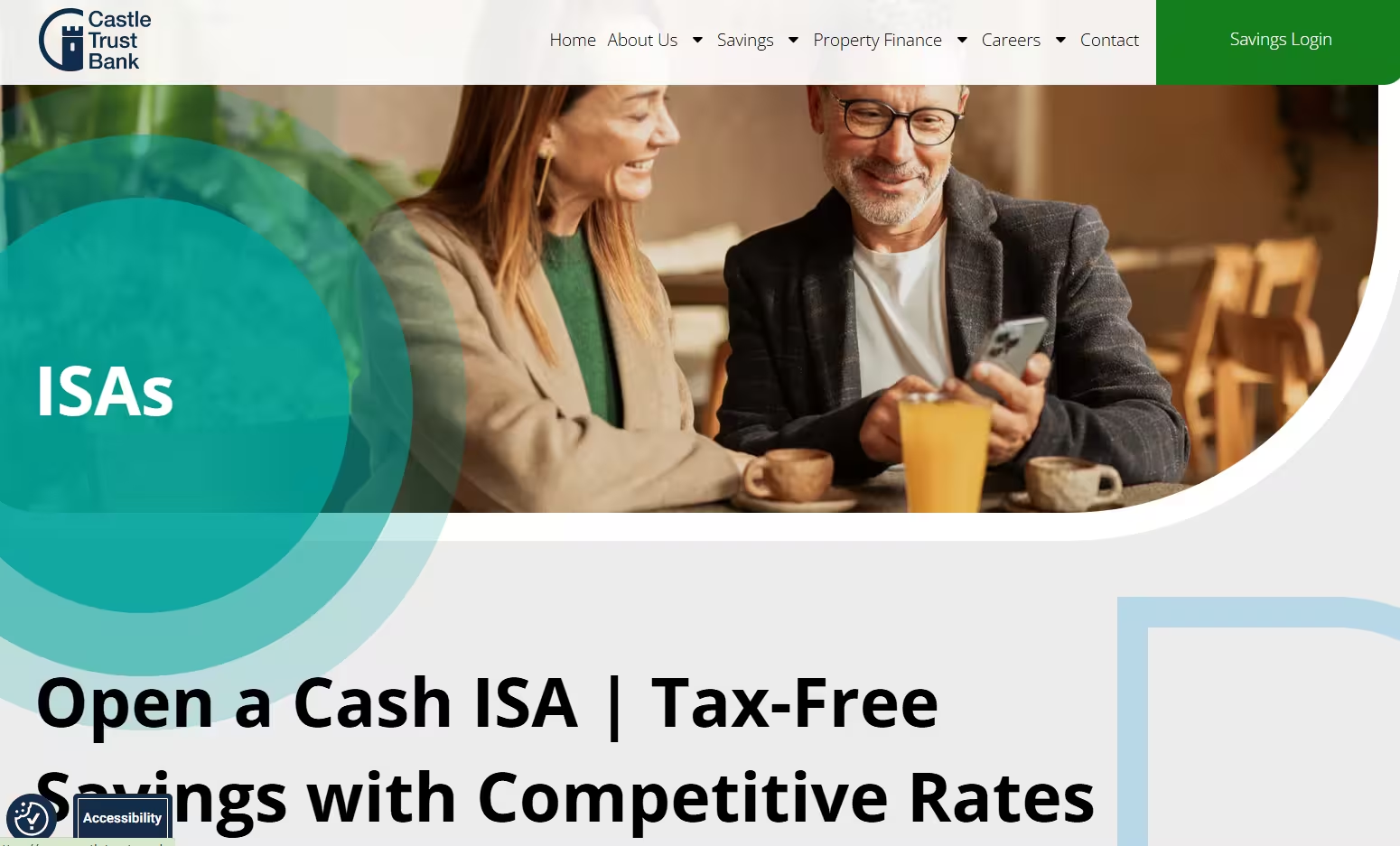
Check the Castle Trust Fixed Cash ISAs Here
Interest Rate: 5.05% AER in October Market Comparisons
Our Rating: 89%
Castle Trust Bank offers fixed-rate Cash ISA products aimed at people comfortable managing savings online.
Recent comparison data listed a three-year product at 5.05% AER, although the rate offered on the provider’s current issue should be checked before opening.
Key Features
- Comparison Rate: 5.05% AER.
- Fixed Period: Three years.
- Minimum Opening Deposit: £1,000.
- Interest Payment: At maturity.
- ISA Transfers: Accepted where available for the issue.
- Account Management: Online and mobile.
- Three-Year Early Exit Charge: 270 days’ interest under the published fixed-rate terms.
How Does Interest Paid at Maturity Work?
Some fixed-rate accounts credit interest monthly or annually, while others make it available at the maturity date.
With a maturity-payment account, the saver should check whether interest is compounded or accrued according to the provider’s stated terms.
This matters when comparing two offers with apparently similar annual interest rates.
Castle Trust’s fixed-term products have also had defined deposit funding windows, so opening an account too early or failing to complete a transfer may create complications.
Our Verdict: Castle Trust could suit savers who want a defined savings outcome and do not require regular interest withdrawals.
7. OakNorth Bank Fixed Rate Cash ISA – Best Two-Year Option for Smaller Deposits
Check the OakNorth Fixed Cash ISAs Here
Interest Rate: 5.02% AER Fixed
Our Rating: 94%
OakNorth Bank combines competitive two-year interest with a low minimum deposit.
Its 24-month Fixed Rate Cash ISA has been advertised at 5.02% AER, with deposits starting from £1.
In our assessment, that makes it a practical alternative for savers who want to fix their rate but are reluctant to commit money for three to five years.
Key Features
- Interest Rate: 5.02% AER fixed.
- Fixed Period: 24 months.
- Minimum Deposit: £1.
- Interest Payments: Monthly.
- ISA Transfers: Supported.
- Early Withdrawal Charge: 180 days’ interest.
- Account Management: Online and mobile app.
How Much Could You Earn?
Assuming £10,000 remains invested for two years at an effective annual rate of 5.02%:
| Period | Approximate balance |
| Initial Deposit | £10,000 |
| After Year One | £10,502 |
| After Year Two | £11,029 |
The estimated total interest is approximately £1,029, assuming annual-equivalent compounding and no withdrawals.
Why Does OakNorth Score Highly?
Three factors support its appeal.
First, the £1 minimum deposit makes it accessible.
Second, the two-year fixed period is shorter than many accounts offering slightly higher rates.
Third, its published early withdrawal charge is clearly defined, making it easier to assess the financial consequences of accessing funds.
However, the account is not a flexible Cash ISA. Withdrawn money cannot simply be replaced without regard to the ISA rules.
Our Verdict: OakNorth is one of the stronger all-round options for savers wanting a two-year fixed rate without a substantial initial investment.
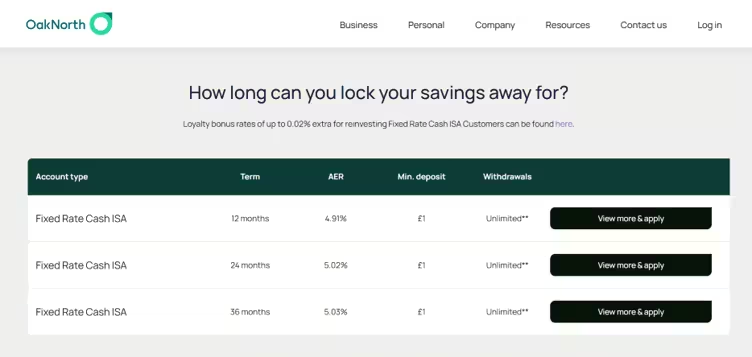
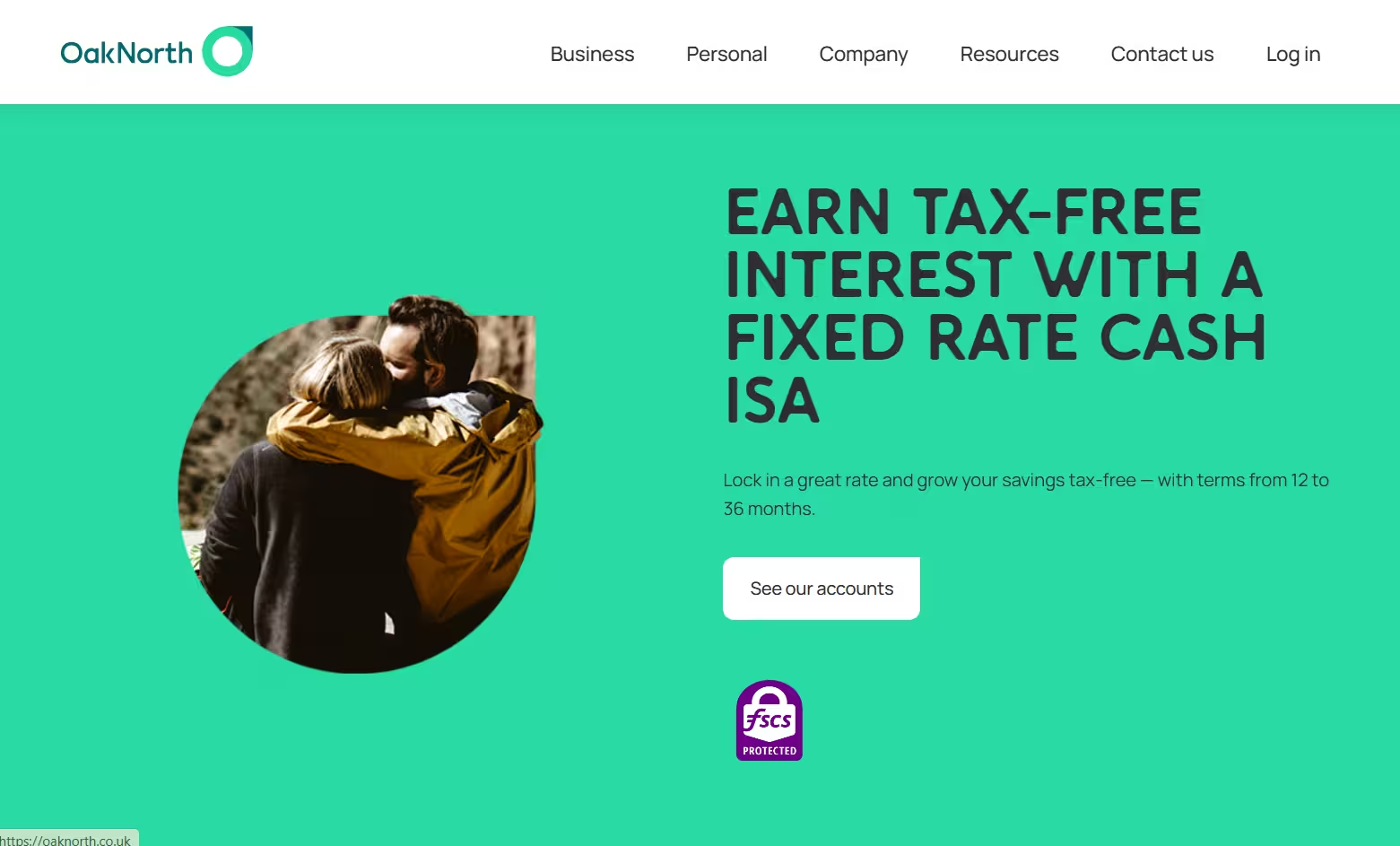
OakNorth Bank’s official fixed-rate Cash ISA comparison showing the 24-month term, 5.02% AER, £1 minimum deposit and early withdrawal conditions.
8. Aldermore Fixed Rate Cash ISA – Best for a Straightforward Two-Year Commitment
Check the Aldermore Fixed Cash ISAs Here
Interest Rate: 5.01% AER Fixed
Our Rating: 92%
Aldermore provides a competitive option for savers who prefer a traditional fixed-rate savings structure.
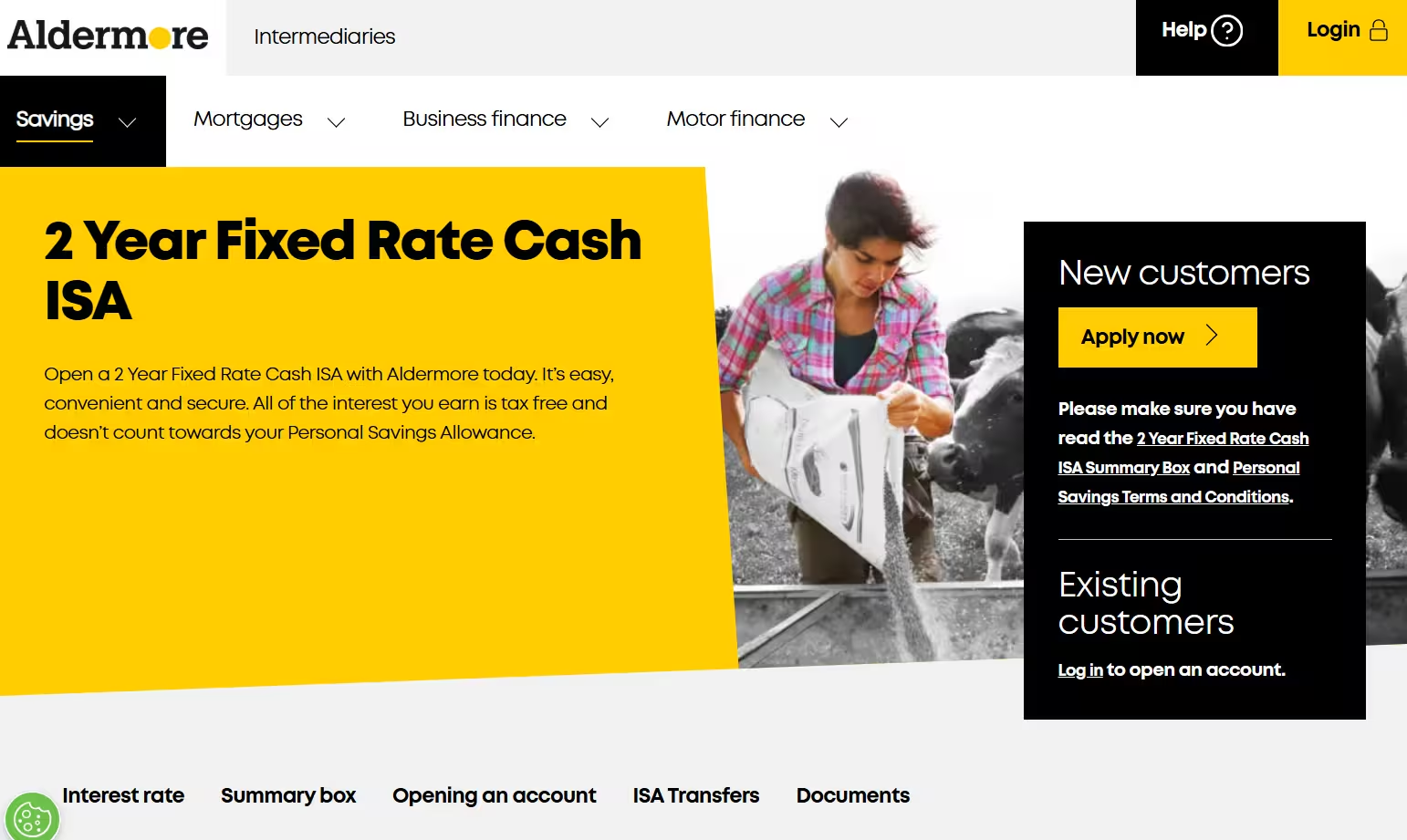
Its two-year Fixed Rate Cash ISA has been advertised at 5.01% AER.
The account is designed for individuals who already have a lump sum available and are prepared to leave it invested for the agreed period.
Key Features
- Interest Rate: 5.01% AER fixed.
- Term: Two years.
- Minimum Deposit: £1,000.
- ISA Transfers: Supported.
- Interest Options: Monthly or annual arrangements may be available.
- Early Access: Subject to an interest deduction.
- Application: Online.
What Makes Aldermore Competitive?
At 5.01%, Aldermore’s rate is close to OakNorth’s advertised 5.02%.
On £20,000, the 0.01 percentage-point difference is only approximately £2 over one year.
That means the choice between these accounts should probably depend more on their deposit requirements, interest payment preferences, customer support and withdrawal rules.
It is also worth distinguishing provider satisfaction from product rates.
A high interest rate does not automatically imply the provider offers the strongest service experience.
Our Verdict: Aldermore is an attractive two-year alternative for people depositing at least £1,000 who value predictable tax-free savings returns.
9. Zopa Smart ISA – Best for Managing Multiple Savings Pots
Check the Zopa Fixed Cash ISAs Here
Interest Rate: 4.87% AER in October Market Comparisons
Our Rating: 91%
Zopa takes a different approach from many traditional banks by allowing customers to organise their ISA savings using separate pots.
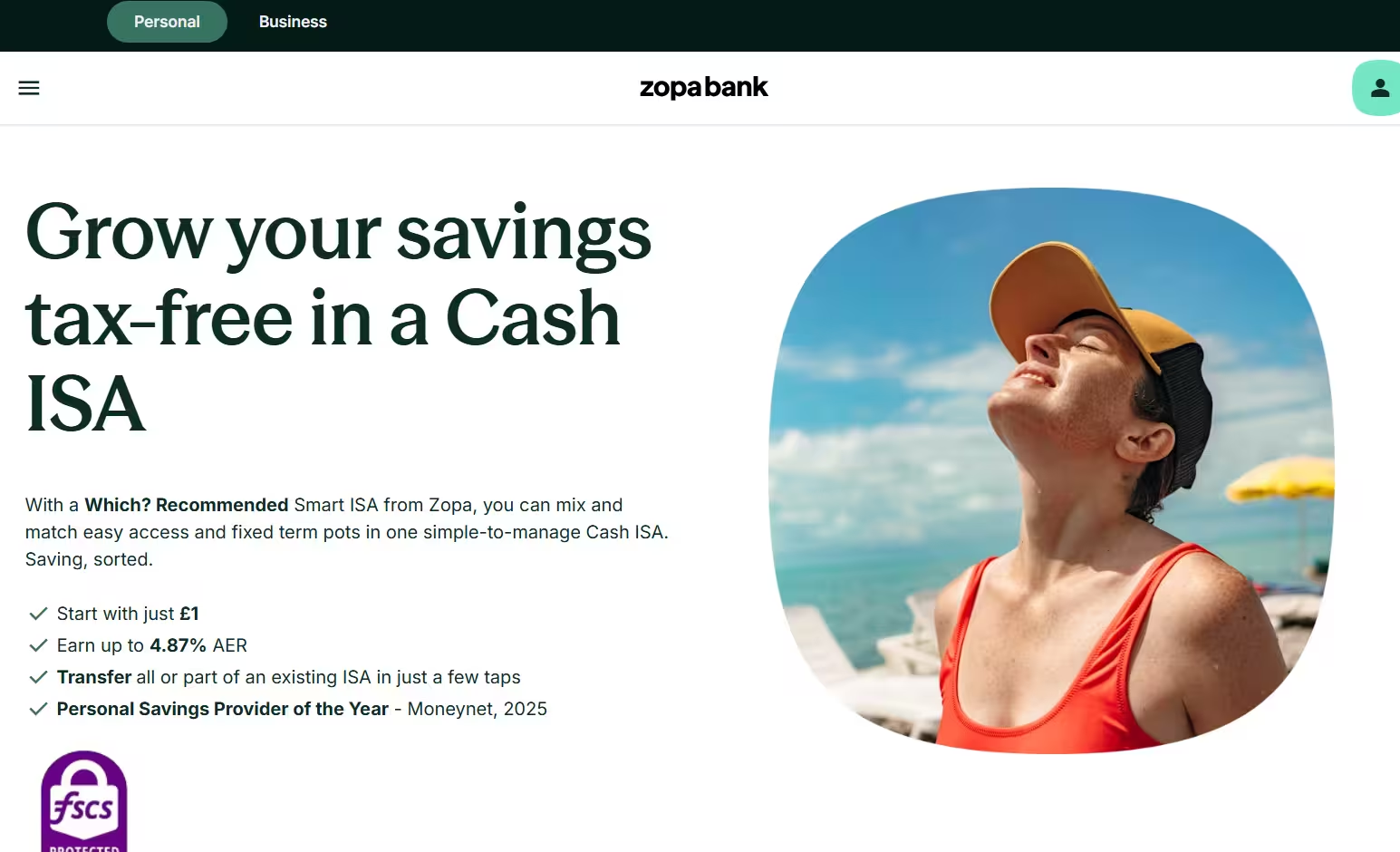
Its one-year Fixed Term ISA pot was listed at 4.87% AER in comparison data dated 5 October 2026.
The appeal is not simply the interest rate. It is the ability to manage multiple savings objectives within an app-based structure.
Key Features
- Comparison Rate: 4.87% AER for the one-year fixed pot.
- Minimum Deposit: £1.
- Selected Term: One year.
- Account Management: Mobile app.
- ISA Transfers: Supported.
- Early Withdrawal: 90 days’ interest charge for the one-year fixed term.
- Savings Structure: Multiple ISA pots.
Who Might Benefit?
Zopa may suit savers who want to separate money earmarked for different financial goals.
For example, an individual could maintain accessible funds for unexpected expenses while placing money not needed for the next year into a fixed-term pot, subject to the account’s rules.
It is important to understand that breaking a fixed-term pot can trigger a charge.
Zopa also warns that an early break may sometimes result in receiving less than the original amount deposited.
Our Verdict: Zopa offers a practical structure for digitally confident savers who value organisation and account management flexibility, although the fixed pots themselves still carry early-access charges.
10. Virgin Money Fixed Rate Cash E-ISA – Best for a Low-Deposit One-Year Fix
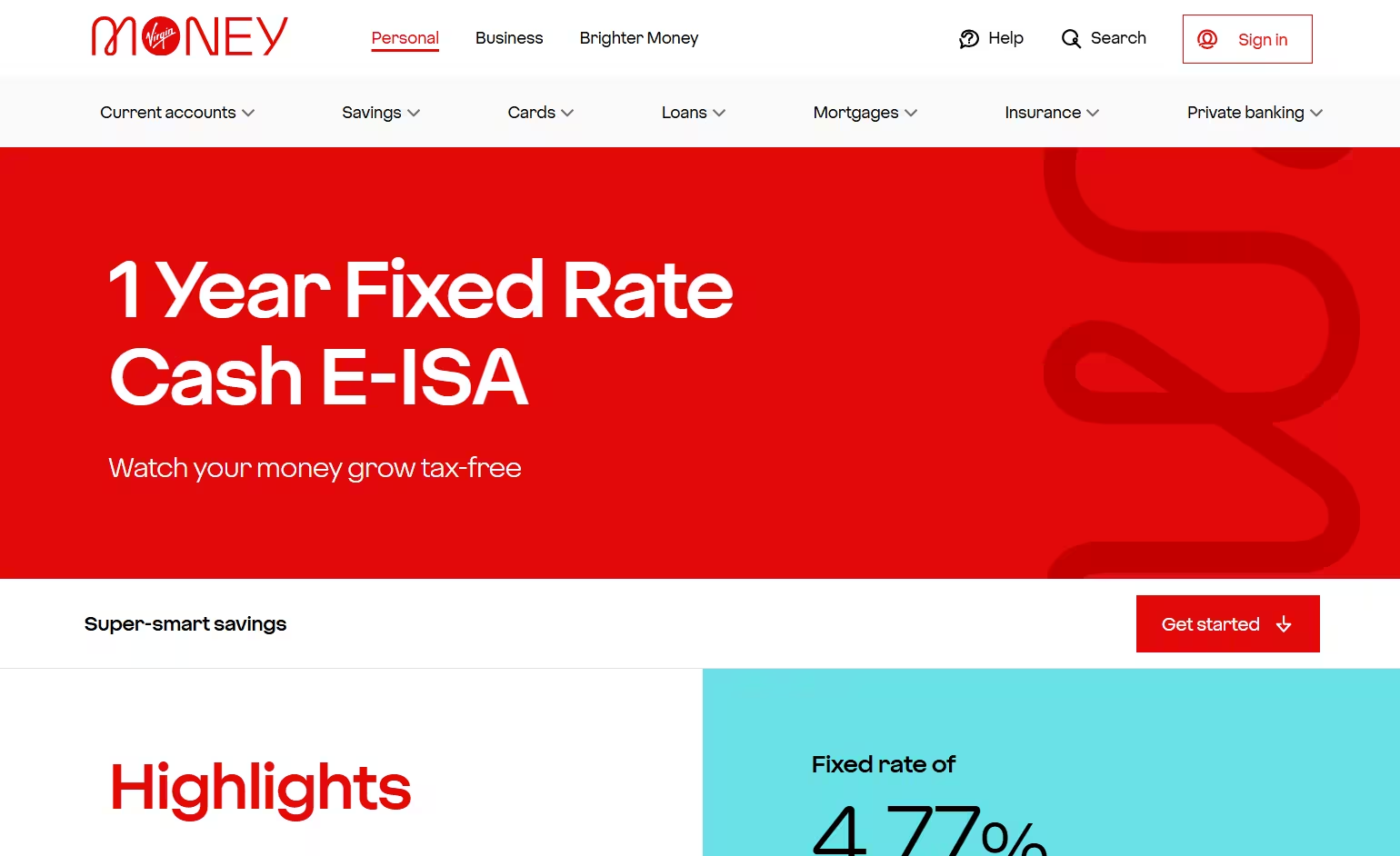
Check the Virgin Money Fixed Cash ISAs Here
Interest Rate: 4.77% AER Fixed
Our Rating: 91%
Virgin Money completes our shortlist with a one-year fixed Cash ISA that combines a low minimum deposit with a comparatively modest early withdrawal charge.
The 1 Year Fixed Rate Cash E-ISA Issue 708 offers 4.77% AER, fixed until 24 October 2027.
This is below some of the best one-year rates highlighted in broader October comparisons, but its account conditions make it worth considering.
Key Features
- Interest Rate: 4.77% AER.
- Fixed Until: 24 October 2027.
- Minimum Deposit: £1.
- Funding Deadline: Within 30 days of opening.
- Early Withdrawal Charge: 60 days’ interest on the amount withdrawn.
- ISA Transfers: Accepted.
- Account Management: Online.
Why Does the Withdrawal Penalty Matter?
Many fixed ISA products charge 90 days’ interest for a one-year early withdrawal.
Virgin Money’s charge of 60 days’ interest is comparatively lower.
For somebody who believes they may need their money earlier than expected, this could be a meaningful consideration.
However, an easy-access account may still be more suitable if withdrawals are likely.
What Happens if You Do Not Fund the Account?
Virgin Money states that money must reach the account within 30 days of opening.
If it does not receive the required funding, the account may be closed.
The fixed rate also runs to the specified maturity date rather than necessarily providing exactly 365 days of interest from the date each customer applies.
Is Virgin Money a Safe Choice?
Virgin Money is now part of Nationwide. Customers should recognise that eligible deposits with the two brands share the relevant FSCS protection limit.
This becomes particularly important for savers holding large amounts across both brands.
Our Verdict: Virgin Money is an appealing one-year option for smaller deposits and savers who place value on a comparatively lower early-access charge.
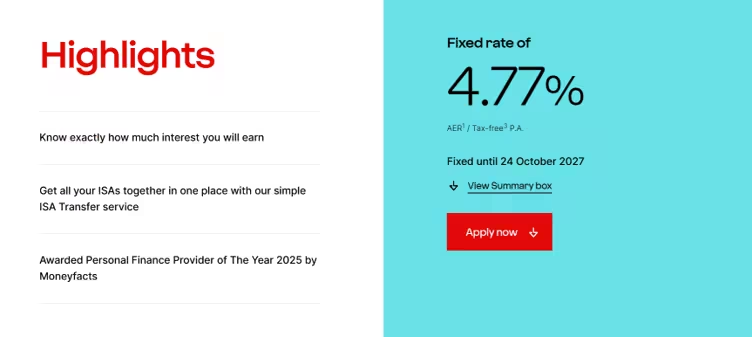
Virgin Money’s official 1 Year Fixed Rate Cash E-ISA Issue 708, displaying its 4.77% AER, 24 October 2027 maturity date and 60-day early withdrawal charge.
How Much Interest Could £5,000, £10,000 or £20,000 Earn in a Fixed ISA?
The interest rate and length of commitment both influence potential returns.
The following table shows illustrative interest earned over a single year at different fixed Cash ISA rates.
| Fixed ISA rate | £5,000 | £10,000 | £20,000 |
| 4.50% | £225 | £450 | £900 |
| 4.75% | £237.50 | £475 | £950 |
| 5.00% | £250 | £500 | £1,000 |
| 5.10% | £255 | £510 | £1,020 |
| 5.25% | £262.50 | £525 | £1,050 |
These are simple one-year illustrations, not guaranteed cash payments or complete fixed-term maturity forecasts.
The difference between 4.50% and 5.25% is £150 per year on £20,000.
Across multiple years, compounding increases the difference if interest remains within the account.
However, a higher rate that requires five years of commitment may not be preferable to a slightly lower rate requiring only one or two years.
Is a One-Year Fixed ISA Better Than a Five-Year Fixed ISA?
The correct choice depends on the saver’s expected need for the money.
A one-year ISA generally provides an earlier opportunity to review available rates, while a five-year ISA offers longer protection against falling rates.
| Consideration | One-Year Fixed ISA | Five-Year Fixed ISA |
| Rate certainty | One year | Five years |
| Money committed | Shorter period | Longer period |
| Interest opportunity | May need annual reinvestment | Potential long-term compounding |
| Early-exit penalty | Generally lower | Generally higher |
| Falling market rates | Reinvestment may earn less | Existing fixed rate protected |
| Rising market rates | Can switch at maturity sooner | Existing rate remains fixed |
| Best suited to | Nearer-term savings goals | Long-term surplus personal savings |
Our assessment is that a five-year ISA should not be chosen simply because the advertised rate is marginally higher.
For someone planning a home purchase in two years, the shorter term could be substantially more useful.
For a saver with established emergency reserves, a five-year deal may be appropriate.
What Are the Main Risks of Fixed Cash ISAs?
Cash ISAs do not expose eligible deposits to stock market fluctuations, but they are not free of financial disadvantages.
Early Withdrawal Penalties
Fixed-rate providers typically impose charges when money is withdrawn or transferred before maturity.
For example:
| Provider and product | Published early access charge |
| Virgin Money 1 Year | 60 days’ interest |
| Zopa 1 Year | 90 days’ interest |
| OakNorth 2 Year | 180 days’ interest |
| West Brom 3 Year | 240 days’ interest |
| Shawbrook 5 Year | 360 days’ interest |
Charges depend on the specific issue and term. They may exceed the interest earned when the account is closed early, potentially reducing the original deposit.
Inflation Risk
A fixed interest rate protects the nominal return, not the purchasing power of the savings.
If inflation exceeds the fixed ISA rate, the real value of the savings may decline.
For example, a fixed ISA paying 4.50% while inflation runs at 5% would deliver positive cash interest but a small negative real return over that period.
Reinvestment Risk
At maturity, the saver may discover that new fixed-rate products pay less than the original account.
This is particularly relevant for one-year fixed ISAs if market savings rates fall.
Opportunity Cost
If savings rates increase after an account is opened, the saver remains committed to the previously agreed rate unless the account is broken and the applicable charge is paid.
This uncertainty is one reason why spreading savings across several maturities can be useful.
Can You Withdraw Money From a Fixed Cash ISA Early?
Generally, fixed Cash ISAs allow access before maturity, but this normally incurs a charge.
The withdrawal policy varies by provider. Some products allow partial withdrawals, while others require full closure.
The contractual details are essential because charges may differ significantly even between accounts offering similar interest rates.
A saver considering an early exit should calculate:
- Interest already earned.
- Applicable early-access charge.
- Interest available from the replacement account.
- Remaining period before the original ISA matures.
- Whether the replacement is worth the loss of interest.
An ISA transfer can also trigger the same early-exit charge. Moving money between ISAs does not automatically remove the penalty.
How Can You Transfer an Existing Cash ISA Without Losing Its Tax Benefits?
An existing Cash ISA can generally be transferred to another eligible ISA provider through the formal ISA transfer process.
The important rule is that the receiving provider should arrange the transfer.
Simply withdrawing the money into a current account and redepositing it may result in losing the existing ISA shelter or using new subscription allowance.
What Is the Correct Transfer Process?
- Choose a new Cash ISA that accepts transfers.
- Check the new provider’s current interest rate and funding deadline.
- Complete the receiving provider’s ISA transfer instructions.
- Confirm whether the existing account imposes an exit charge.
- Allow the providers to complete the transfer.
- Check that the money and any relevant accrued interest have arrived correctly.
Cash ISA-to-Cash ISA transfers should normally be completed within 15 working days.
Some fixed products only accept transfer applications during a limited initial funding period.
What Are the Cash ISA Allowance Rules for 2026/27?
The annual ISA allowance is £20,000 for the tax year from 6 April 2026 to 5 April 2027.
This is the combined allowance across eligible adult ISA products.
Someone paying £15,000 into a Cash ISA and £5,000 into a Stocks and Shares ISA would generally have used the full annual allowance.
The allowance resets on 6 April. The timing and treatment of subscriptions are explained in more detail in when the ISA allowance resets.
A common misconception is that savers cannot contribute to multiple Cash ISAs during one tax year.
Since April 2024, people have generally been permitted to subscribe to more than one ISA of the same type, provided they remain within the applicable allowance and meet the providers’ conditions.
The rules for holding more than one ISA are therefore particularly relevant to anyone spreading savings across fixed-rate and easy-access accounts.
What Happens to the Cash ISA Allowance in April 2027?
A major change takes effect on 6 April 2027.
The annual Cash ISA contribution limit will decrease to £12,000 for individuals under 65, while those qualifying for the age-65 exemption will retain the £20,000 annual Cash ISA limit.
The total annual adult ISA allowance remains £20,000.
| Saver | Cash ISA limit in 2026/27 | Cash ISA limit from April 2027 |
| Under 65 | £20,000 | £12,000 |
| Aged 65 or over | £20,000 | £20,000 |
| Overall adult ISA allowance | £20,000 | £20,000 |
This change concerns new annual contributions. It does not mean existing eligible Cash ISA balances above £12,000 must be withdrawn.
The reform also introduces restrictions on certain transfers from non-Cash ISAs into Cash ISAs and other anti-circumvention rules.
The legislation and the scope of the changes are explained in the HMRC Cash ISA limit reduction policy.
Why Does This Matter When Choosing a Fixed ISA?
Someone opening a five-year ISA in October 2026 may hold that account beyond the April 2027 allowance change.
However, a new tax year does not automatically mean the fixed product will accept further deposits.
Even where somebody has additional ISA allowance available, the provider’s funding window and product conditions remain relevant.
For this reason, savers should distinguish between their annual tax allowance and the amount they are contractually permitted to deposit into a specific fixed-rate product.
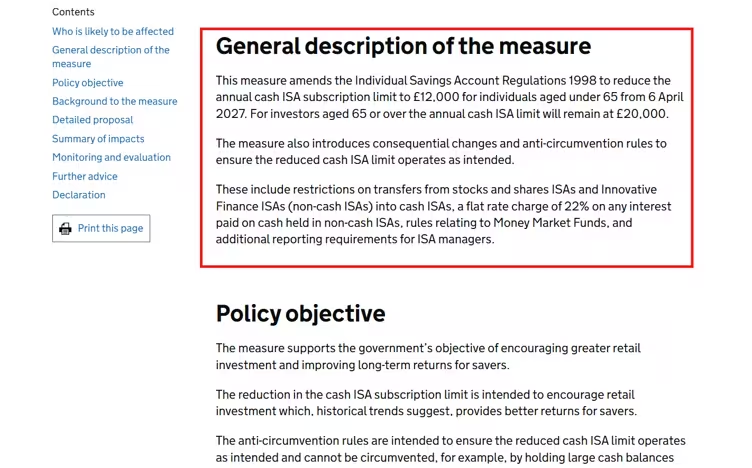
HMRC’s official September 2026 policy confirming the reduction of the annual Cash ISA limit to £12,000 for eligible under-65 savers from 6 April 2027.
How Safe Is Money Held in a Fixed Cash ISA?
Eligible Cash ISA deposits held with UK-authorised banks and building societies benefit from Financial Services Compensation Scheme protection.
The standard FSCS deposit protection limit increased to £120,000 per eligible person, per authorised institution on 1 December 2025.
This is particularly important for savers transferring accumulated ISA balances from previous tax years.
For example, someone holding £75,000 in a Cash ISA and £60,000 in another savings account with the same authorised bank would have a combined balance of £135,000.
The standard £120,000 FSCS protection limit would not necessarily cover the entire amount.
Some different banking brands share one authorised institution, so using two different brand names does not always provide two separate protection limits.
The official FSCS deposit protection information explains the limits, shared banking licences and temporary high balance provisions.
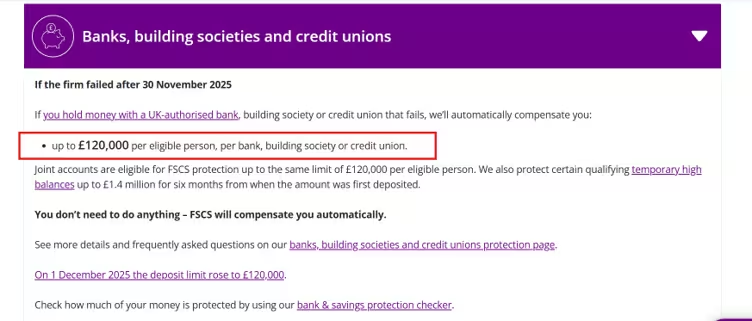
The Financial Services Compensation Scheme’s official deposit protection guidance confirming the £120,000 standard limit introduced in December 2025.
Are Fixed Cash ISAs Worth It for Business Owners and Self-Employed Professionals?
For entrepreneurs, self-employed workers and company directors, a fixed Cash ISA may be a useful component of personal financial planning.
However, a Cash ISA is a personal savings product, not an account for holding limited-company funds.
Money belonging to a limited company must not simply be transferred into a director’s personal ISA without considering the appropriate legal and tax treatment.
After money has legitimately become the individual’s personal funds, a Cash ISA may offer a tax-efficient savings option.
Why Might Business Owners Prefer a Fixed Rate?
Some business owners receive uneven income throughout the year.
Where personal cash reserves are established, a fixed ISA can help separate money intended for longer-term financial goals from money required for everyday spending.
For instance, someone with substantial personal savings might choose to keep immediate emergency funds in an easy-access account while fixing another portion for two or three years.
This can be preferable to committing an entire balance to a long fixed term.
What Should Entrepreneurs Avoid?
Our analysis suggests particular caution is needed when personal savings could be required to support periods of reduced income.
Individuals should avoid treating money needed for tax payments, essential expenditure or uncertain near-term commitments as long-term surplus capital.
A fixed ISA is most useful where the saver can genuinely afford to leave the money untouched.
Is a Fixed Cash ISA Better Than an Ordinary Fixed Savings Account?
Not always.
The principal advantage of a Cash ISA is that qualifying interest is free from UK Income Tax.
An ordinary savings account may offer a higher rate, and the Personal Savings Allowance can shelter some ordinary savings interest.
For 2026/27, the usual Personal Savings Allowance amounts are:
| Taxpayer category | Personal Savings Allowance |
| Basic Rate | £1,000 |
| Higher Rate | £500 |
| Additional Rate | £0 |
Consider a basic-rate taxpayer earning £500 of annual interest outside an ISA with no other taxable savings interest.
That amount would normally be covered by the £1,000 Personal Savings Allowance.
In this situation, a higher-paying ordinary savings account may deliver a better net result than a lower-paying Cash ISA.
However, the position changes where savings balances grow, the taxpayer has other savings interest or the available tax allowances are exceeded.
From April 2027, the legislated rates of tax on savings income are also due to increase to 22%, 42% and 47% across the relevant bands, making the tax-free ISA wrapper potentially more valuable for affected savers.
The broader comparison of Cash ISA rates and alternative savings options can help put fixed-rate products into context.
How Do High-Street Banks Compare With Specialist ISA Providers?
Specialist savings banks often offer higher fixed ISA rates than familiar high-street brands.
However, established banks and building societies may offer other advantages, including branch access, integration with existing accounts or different early withdrawal conditions.
For example, savers comparing fixed accounts may also want to examine Nationwide ISA rates, particularly if account access and established customer relationships matter.
The Virgin Money ISA range offers another example of how funding deadlines, transfer rules and maturity arrangements can influence the real value of an ISA deal.
Similarly, comparing Santander’s Cash ISA options and Halifax ISA rates may help savers decide whether the convenience of an existing banking relationship justifies a lower interest rate.
The correct comparison should consider the total financial outcome, not simply the institution’s familiarity.
How Can Savers Build a Fixed ISA Ladder?
A fixed ISA ladder involves dividing savings across accounts with different maturity dates.
The strategy aims to balance the certainty of fixed returns with periodic opportunities to access or reinvest money.
For example, someone with £20,000 available could allocate:
| Fixed ISA term | Illustrative amount |
| 1 Year | £5,000 |
| 2 Years | £5,000 |
| 3 Years | £5,000 |
| 5 Years | £5,000 |
| Total | £20,000 |
This is an illustration rather than a recommended allocation for every saver.
The approach may offer several advantages.
A portion matures sooner, potentially reducing the need to break a longer-term account.
Savers can also reinvest maturing balances if more attractive rates become available.
However, ISA transfers, provider funding requirements and the annual subscription limits must still be respected.
The ladder does not eliminate interest-rate risk, nor does it guarantee that future rates will be higher.
What Should You Check Before Opening a Fixed Cash ISA?
Before selecting a product, our assessment is that savers should review five financial considerations.
The true annual return: Compare AER rather than confusing it with the underlying monthly or gross interest rate.
The fixed maturity date: An account described as one-year fixed may have a specific calendar maturity date rather than running for exactly a year from every customer’s funding date.
Transfer eligibility: Confirm that the product accepts ISA transfers if the intention is to move existing tax-free savings.
Early withdrawal cost: Calculate the amount that could be lost if the money is needed unexpectedly.
Maturity instructions: Establish what happens if the customer does nothing when the fixed term ends.
It is also worth checking the savings provider’s legal identity and regulatory status before depositing money.
An attractive rate should never override basic financial security checks.
What Is Our Final Assessment of the Best Fixed ISA Rates in 2026?
Based on the rates and account conditions reviewed in October 2026, Shawbrook Bank’s five-year Cash ISA at 5.25% AER stands out for savers seeking one of the highest advertised long-term rates.
West Bromwich Building Society provides a competitive shorter-term alternative at 5.10% AER for three years, while OakNorth’s two-year rate of 5.02% AER offers an attractive balance between return and commitment period.
Virgin Money and Zopa remain relevant to individuals seeking one-year fixes and lower opening deposit requirements.
The main conclusion from our market analysis is that the strongest fixed ISA is not automatically the one offering the highest percentage.
Early withdrawal charges, funding deadlines, ISA transfer eligibility, maturity arrangements and the saver’s wider financial position can be equally important.
With the Cash ISA contribution limit changing in April 2027, existing ISA balances and the ability to preserve their tax advantages also deserve greater consideration.
A fixed Cash ISA can be a useful part of a savings strategy, provided the money is genuinely available for the full fixed term.
Frequently Asked Questions
What is the highest fixed Cash ISA rate in October 2026?
Shawbrook Bank has advertised a five-year fixed Cash ISA rate of 5.25% AER, among the highest identified in October 2026 comparisons. Check the live application rate before opening an account.
Which bank has the best one-year fixed ISA rate?
Early October comparisons reported rates reaching 4.94% AER, although provider rates have been changing. Savers should compare current one-year offers and their withdrawal charges before applying.
Can I open a fixed Cash ISA with £1,000?
Yes. Several providers accept £1,000 or less, including Shawbrook, OakNorth and West Brom. Some products have higher minimum deposits.
Do fixed Cash ISAs pay interest monthly?
Some do. Other products pay annually or at maturity. The AER provides a standardised comparison of annual returns, accounting for compounding.
Will I lose money if I close a fixed ISA early?
Potentially. An early-exit charge can reduce interest and, if it exceeds interest already earned, may reduce the original deposit.
Can I open two fixed Cash ISAs in the same year?
Generally, yes, subject to the applicable annual ISA allowance, eligibility requirements and the individual providers’ account conditions.
Are fixed Cash ISA interest rates guaranteed?
The contracted fixed interest rate normally remains unchanged for the agreed term once the account is opened and funded. This does not protect the money’s purchasing power against inflation.
What happens when my fixed Cash ISA matures?
The provider usually supplies maturity options, such as reinvestment, transfer or withdrawal. If no instructions are received, the money may move into another ISA account paying a different rate.
Does a fixed ISA affect my credit score?
Opening a savings ISA does not normally involve borrowing and should not affect a credit score in the same way as applying for a loan or credit card.
Should I fix my Cash ISA for five years in 2026?
A five-year fix may suit money that will not be needed for a long period, particularly when securing a competitive interest rate is the priority. Shorter fixed terms or easy-access savings may be more appropriate where flexibility is important.

More in Finance & Tax

Best 1 Year Fixed Rate ISA UK 2026: Top Cash ISA Rates Compared
The best 1 year fixed rate ISA in the UK currently pays up to 4.98% AER tax-free, with UBL UK offering the highest verified rate in our October 2026 comparison. Shawbrook Bank follows at 4.97%, while Vanquis Bank offers a competitive 4.96% alongside a lower minimum opening deposit. However, choosing the best one-year fixed Cash […]

Moneybox Lifetime ISA Review 2026: Interest Rates, Bonuses, Fees and Is It Worth It?
The Moneybox Lifetime ISA is a UK savings and investment account designed to help eligible adults save for their first home or retirement. It offers a 25% government bonus on contributions of up to £4,000 each tax year, potentially adding £1,000 annually to a saver’s money. Moneybox offers both Cash and Stocks & Shares Lifetime […]